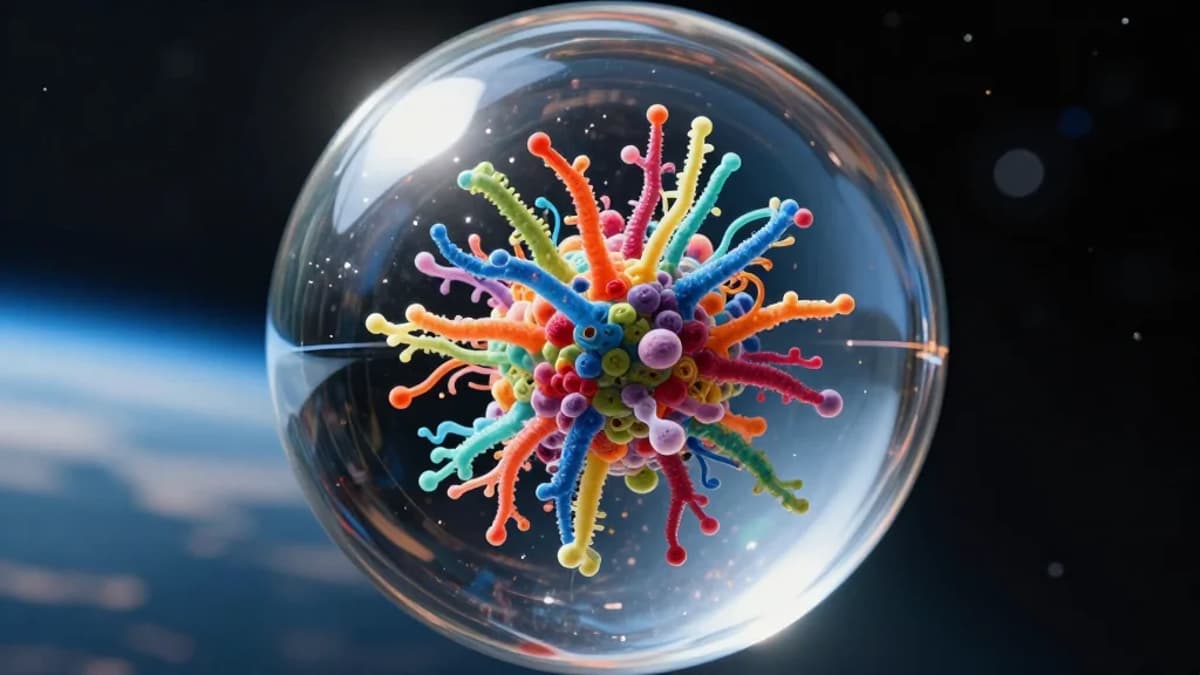
The Hidden Microbial Communities that Shape Health in Space
•January 22, 2026
0
Companies Mentioned

NASA
Why It Matters
Understanding and engineering biofilms in space will safeguard astronaut health and crop productivity, while the insights gained can improve microbial management in terrestrial agriculture and medicine.
Key Takeaways
- •Biofilms support health, not just infection risks.
- •Spaceflight alters biofilm structure, gene regulation.
- •Multiomics can decode plant‑root biofilm interactions.
- •Open‑science data accelerates cross‑mission biofilm research.
- •Insights inform Earth agriculture and medical strategies.
Pulse Analysis
Biofilms—complex microbial communities encased in protective matrices—are foundational to health on Earth, facilitating nutrient exchange, stress tolerance, and pathogen suppression. In the microgravity and radiation environment of space, these structures can shift dramatically, compromising their beneficial functions. Recognizing biofilms as a living interface rather than merely a contamination risk reframes how space agencies approach life‑support systems, prompting a need for systematic, mechanistic studies that capture the nuanced ways microgravity reshapes microbial behavior.
The authors propose a multi‑omics strategy that integrates genomics, transcriptomics, proteomics, and metabolomics to map biofilm dynamics across diverse species and host interactions. This approach is especially vital for plant cultivation aboard spacecraft, where root‑associated biofilms influence water uptake, nutrient acquisition, and disease resistance. By dissecting signaling pathways and metabolic exchanges, researchers can engineer resilient plant‑microbe partnerships, ensuring reliable food production on missions to the Moon, Mars, and beyond. The roadmap also calls for cross‑mission experiments, leveraging analog habitats and orbital platforms to validate findings.
Crucially, the study leverages NASA’s open‑science GeneLab repository, fostering global collaboration and data transparency. Open access accelerates the translation of space‑derived discoveries to terrestrial challenges, offering new avenues for combating agricultural pests, enhancing soil health, and managing human microbiomes in clinical settings. As biofilm research matures, the bidirectional flow of knowledge promises to strengthen both space exploration capabilities and Earth‑based sustainability initiatives.
The hidden microbial communities that shape health in space
0
Comments
Want to join the conversation?
Loading comments...