The Importance of Determining an Equilibrium State for Space Traffic Management
Why It Matters
Without equilibrium, orbital congestion will accelerate collisions, jeopardizing satellite services and raising costs for operators. Establishing a global STM framework safeguards the finite LEO resource and protects the growing space‑based economy.
Key Takeaways
- •Equilibrium means balanced debris generation and removal rates
- •Sun‑synchronous orbits face high congestion due to minimal atmospheric drag
- •AI‑driven STM can handle millions of conjunction calculations autonomously
- •Future global STM authority may impose orbital zoning and debris‑removal fees
Pulse Analysis
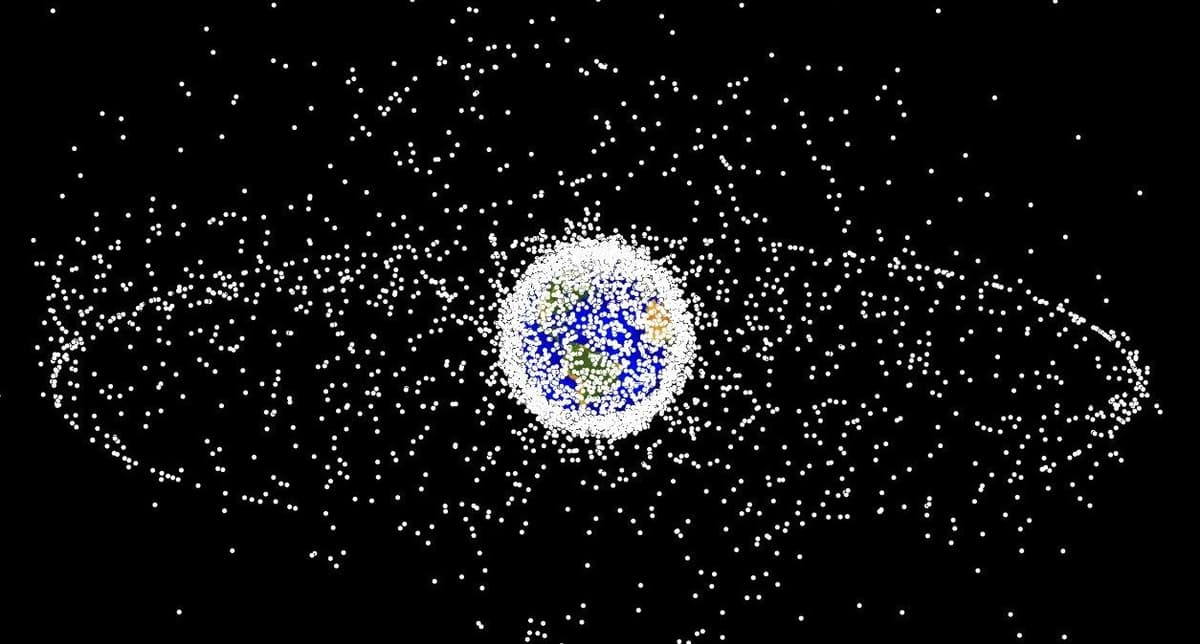
The rapid commercialization of low‑Earth orbit has transformed the region into a crowded highway for satellites, data‑center platforms, and even crewed stations. Each object travels at over 7 km/s, so even millimetre‑scale debris can cause catastrophic damage. As launch rates climb, the traditional ad‑hoc approach to collision avoidance becomes unsustainable, prompting researchers to treat the orbital environment as a source‑sink system where launches, fragmentations, and anti‑satellite tests add objects, while controlled de‑orbiting and active removal act as sinks. Reaching a statistical equilibrium—where the influx of hazardous objects matches their elimination—will keep collision probabilities low and preserve the orbital “carrying capacity.”
Sun‑synchronous orbits (SSOs) illustrate the equilibrium challenge. Concentrated between 500 and 900 km for consistent lighting, SSOs host thousands of Earth‑observation satellites and a legacy of decades‑old debris that decays only slowly. The dense traffic and long‑lived fragments raise conjunction frequencies, making autonomous, AI‑powered STM essential. Machine‑learning algorithms can ingest real‑time tracking data, predict congestion hotspots, and orchestrate coordinated manoeuvres across operators, reducing the human workload that would otherwise be impossible at mega‑constellation scales. Integrating AI with robust debris‑removal services will be the linchpin for maintaining a stable orbital environment.
Regulatory cohesion is the final piece of the equilibrium puzzle. Currently, no single body governs Earth orbit; responsibilities are fragmented among national agencies, militaries, and treaty frameworks. A future international STM authority—akin to the International Maritime Organization—could set orbital zoning limits, enforce mandatory post‑mission disposal, and levy fees proportional to an operator’s orbital footprint. Such governance would incentivize responsible design, fund active debris‑removal, and provide the legal backbone for shared ephemeris data and coordinated collision‑avoidance protocols. By aligning technical solutions with global policy, the space sector can secure a sustainable, economically viable future for LEO operations.
The importance of determining an equilibrium state for space traffic management
Comments
Want to join the conversation?
Loading comments...