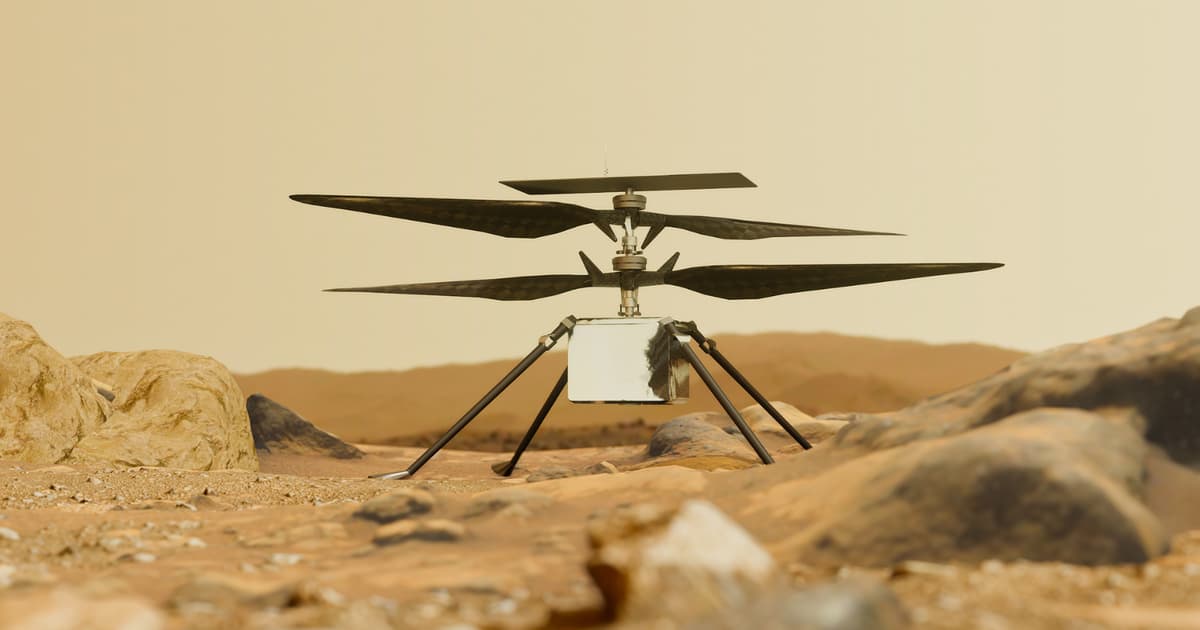
The Mars Helicopter Ingenuity Completed 72 Flights in an Atmosphere Less than One Percent as Dense as Earth’s Before Rotor Blade Damage Grounded It in 2024, and JPL Had Originally Designed It for Just Five Test Flights, and the Lessons From Its Overperformance Are Shaping NASA’s Next Generation of Mars Aircraft
Why It Matters
Ingenuity proved low‑cost, COTS‑based aerial systems can operate on Mars, reshaping how NASA and industry design future planetary aircraft and expanding the scientific reach of upcoming missions.
Key Takeaways
- •Ingenuity flew 72 missions, logging over two hours in thin Martian air
- •Rotor blade failure after hard landing ended mission, not navigation flaw
- •NASA’s next concepts (Mars Chopper, Nighthawk) target heavier payloads and longer range
- •Commercial smartphone processors proved viable, reducing need for radiation‑hardened hardware
- •Lessons reshape design philosophy toward agile, low‑mass aerial platforms on Mars
Pulse Analysis
Ingenuity’s record‑breaking flight campaign turned a modest technology demonstrator into a benchmark for planetary aviation. By spinning its six‑blade rotors at roughly 2,400 rpm, the 1.8‑kilogram craft lifted off in an atmosphere that is under one percent of Earth’s pressure, achieving flights up to 704 metres and more than two cumulative hours. The mission’s $85 million price tag, modest by deep‑space standards, highlighted how commercial off‑the‑shelf components—particularly smartphone‑grade processors—can survive extreme temperature swings, dust, and radiation, challenging the long‑standing assumption that Mars hardware must be custom‑built and heavily hardened.
The abrupt end of Ingenuity’s service stemmed from a hard landing that induced rotor‑blade overload, not a flaw in its navigation software. An investigation conducted without black‑box data revealed that high horizontal velocity on featureless sand‑ripple terrain caused the blades to snap near their tips, leading to a power surge and loss of communications. This incident underscores the importance of integrating terrain‑aware flight‑control algorithms and robust structural margins when operating near the edge of aerodynamic capability. Engineers now emphasize that future designs must balance lightweight agility with resilience to unexpected surface conditions.
Looking ahead, NASA’s JPL is leveraging Ingenuity’s lessons to draft a new generation of Mars aircraft. Concepts such as the SUV‑sized Mars Chopper, equipped with six rotors and a five‑kilogram payload capacity, aim to travel up to three kilometres per sol independently of rover relays. Complementary payload proposals like Nighthawk envision high‑resolution imaging and subsurface water detection, while industry partner AeroVironment’s Skyfall targets autonomous scouting for crewed missions. Collectively, these projects signal a shift toward scalable, low‑mass aerial platforms that could accelerate sample‑return operations and broaden scientific exploration across the Red Planet.
The Mars helicopter Ingenuity completed 72 flights in an atmosphere less than one percent as dense as Earth’s before rotor blade damage grounded it in 2024, and JPL had originally designed it for just five test flights, and the lessons from its overperformance are shaping NASA’s next generation of Mars aircraft
Comments
Want to join the conversation?
Loading comments...