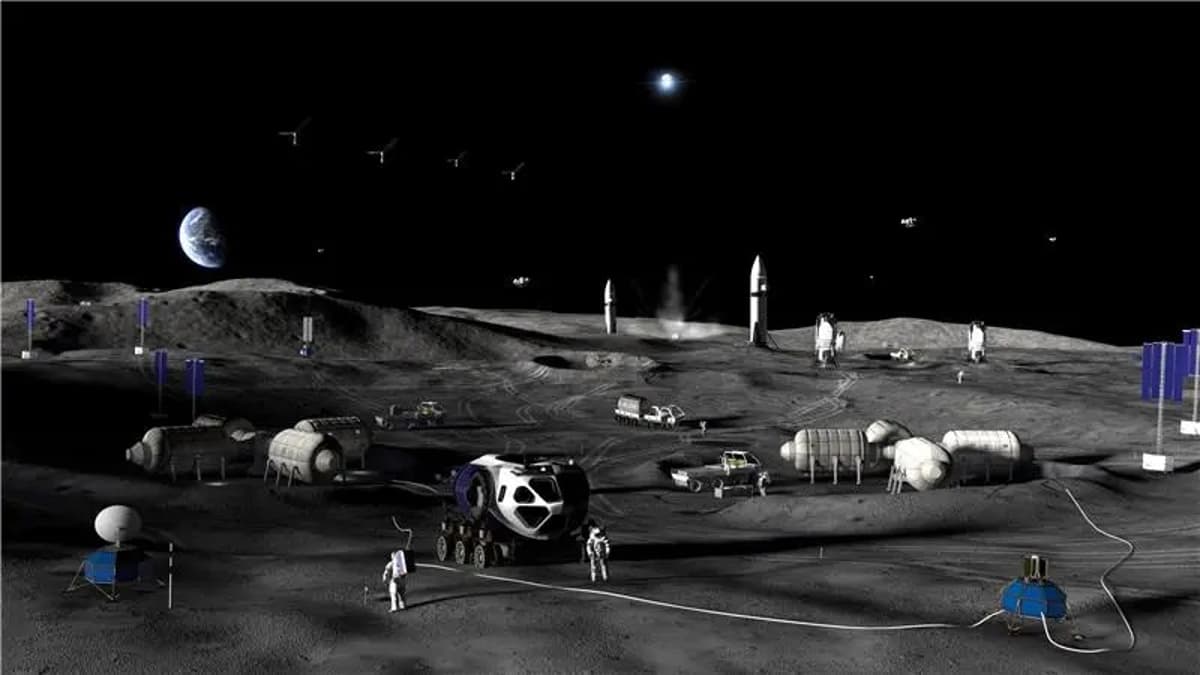
The Moon Base Has a Hardware Plan. It Needs a Software Strategy, Too.
Companies Mentioned

NASA
SpaceX
Why It Matters
Without modern, integrated software, the lunar base could stall, inflating costs and delaying strategic U.S. leadership in deep‑space exploration. Reliable, agile software is the linchpin that will turn hardware ambition into operational reality.
Key Takeaways
- •NASA plans permanent lunar base with phased launches
- •Current mission software fragmented across agencies and contractors
- •AI can accelerate procedure updates, but needs clean data
- •Epsilon3 offers mission execution platform to unify workflows
- •Software cycles must shrink to weeks, not years
Pulse Analysis
The Artemis program’s next evolution—establishing a permanent moon outpost—represents a strategic pivot from one‑off missions to sustained presence. This shift multiplies the complexity of operations, demanding coordination among dozens of commercial launch providers, habitat contractors, and international research teams. Legacy software, originally built for the Apollo era or early commercial missions, cannot keep pace with the rapid cadence and cross‑organizational data exchange required for a living lunar settlement.
Modernizing the software stack is therefore not optional but a mission‑critical prerequisite. Integrated platforms that unify launch processing, supply‑chain authorization, life‑support monitoring, and surface asset management can eliminate the current patchwork of spreadsheets, PDFs, and siloed tools. By adopting purpose‑built, modular applications—like those offered by Epsilon3—NASA and its partners can achieve real‑time visibility, auditable change control, and faster iteration cycles, reducing operational debt that historically eclipses hardware redesign costs.
Artificial intelligence further amplifies these gains, turning massive telemetry streams into actionable insights for anomaly detection, predictive maintenance, and automated procedure generation. However, AI’s effectiveness hinges on high‑quality, version‑controlled data; fragmented records undermine trust and could produce hazardous recommendations. As the moon base scales from Phase One’s 25 launches to a fully inhabited habitat, the industry must embed AI within a clean, interoperable data ecosystem, compressing software development timelines from years to weeks and ensuring the outpost remains viable for decades.
The moon base has a hardware plan. It needs a software strategy, too.
Comments
Want to join the conversation?
Loading comments...