Why It Matters
The unprecedented before‑and‑after data let scientists validate and refine impact‑cratering models, improving predictions for lunar surface evolution and hazard assessments for future missions.
Key Takeaways
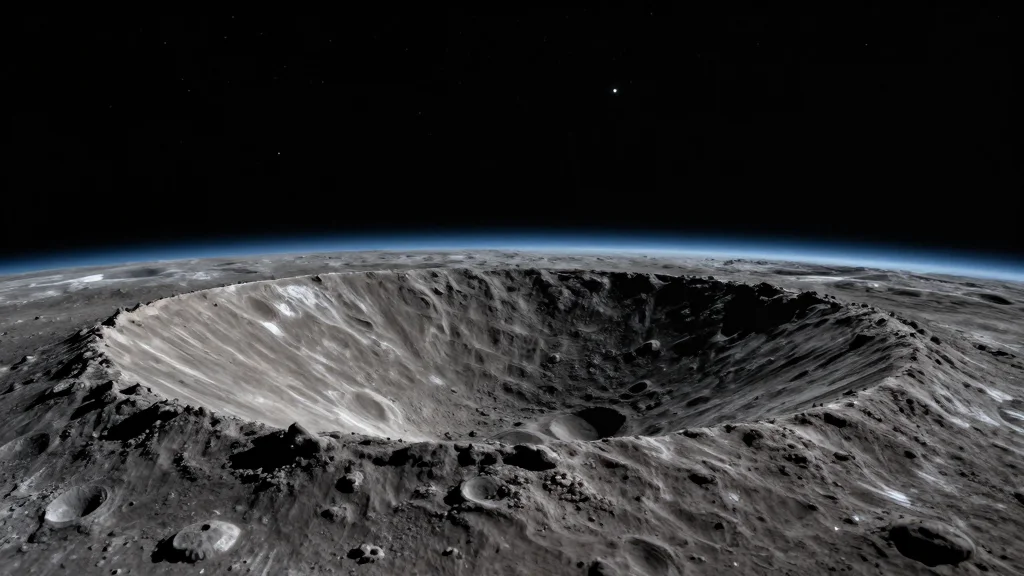
- •225‑meter crater formed on Moon in 2024, largest seen by LRO.
- •Impact frequency model predicts such event every ~139 years per area.
- •First meter‑scale before‑and‑after images enable crater formation validation.
- •Ejecta includes 13‑meter block and glassy melt, revealing impact physics.
- •Findings improve models for impact processes across the solar system.
Pulse Analysis
The Moon’s surface is a pristine record of solar‑system collisions, and the recent 225‑meter crater provides a live update to that archive. While lunar impacts occur daily, most are too small or too recent to be captured with high resolution. NASA’s Lunar Reconnaissance Orbiter, orbiting since 2009, finally delivered a before‑and‑after snapshot at meter‑scale precision, allowing researchers to measure ejecta distribution, rim morphology, and melt glass formation with unprecedented clarity. This dataset bridges a long‑standing gap between theoretical impact simulations and observable reality.
Beyond the sheer novelty of watching a fresh scar appear, the event reshapes our understanding of crater scaling laws. The impact’s depth‑to‑diameter ratio, the size of the largest ejecta block, and the presence of glassy melt all align with, yet also challenge, existing models that have been calibrated primarily on ancient, weathered craters. By feeding these concrete measurements back into numerical simulations, scientists can fine‑tune predictions for how energy dissipates during hypervelocity collisions, a process that governs surface evolution on bodies ranging from Mars to icy moons.
The implications extend to both scientific inquiry and mission planning. Accurate crater‑formation models improve risk assessments for crewed lunar habitats and robotic landers, where unexpected debris could jeopardize safety. Moreover, the methodology—leveraging continuous orbital imaging to capture transient events—sets a precedent for monitoring other airless worlds, such as Mercury or Phobos. As commercial and governmental entities eye a sustained lunar presence, the ability to anticipate and interpret new impacts becomes a strategic asset, reinforcing the Moon’s role as a testbed for planetary‑scale engineering and exploration.
The moon just got a new scar
Comments
Want to join the conversation?
Loading comments...