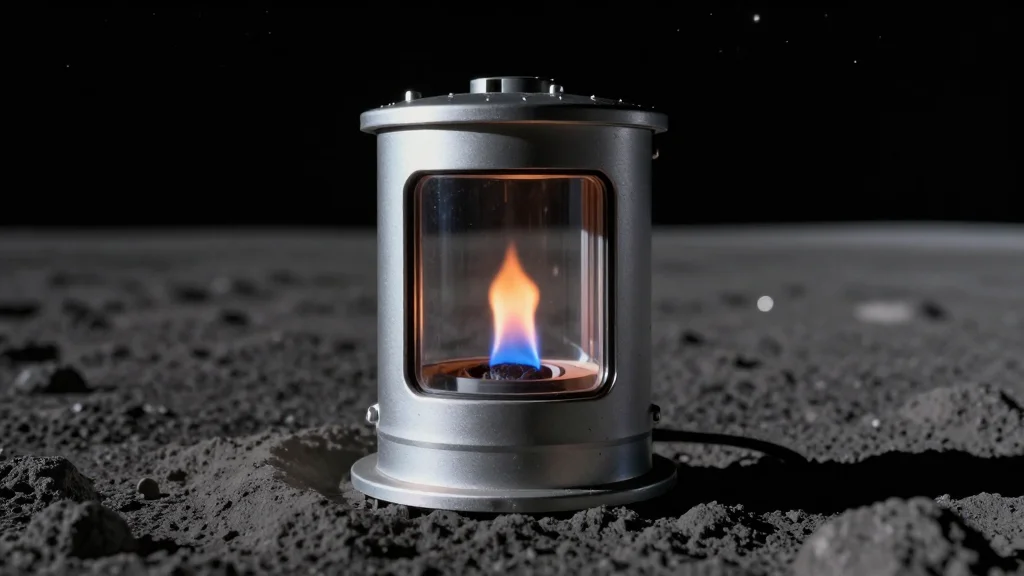
The Moon Might Be More Prone to Fires
Companies Mentioned

NASA
Why It Matters
Understanding lunar fire dynamics is critical for the safety of future crewed habitats and could prompt a revision of aerospace fire‑safety standards, protecting costly infrastructure and astronaut lives.
Key Takeaways
- •NASA‑STD‑6001B test was designed for Earth gravity, not lunar conditions
- •Lunar gravity slows hot‑gas rise, allowing continuous oxygen feed to flames
- •FM2 will burn four solid‑fuel samples on the Moon via CLPS
- •Sensors will capture minutes of flame data, far longer than drop‑test seconds
- •Results could force revisions to spacecraft fire‑safety standards
Pulse Analysis
Fire safety has long been a silent priority for space agencies, yet the standards that govern material flammability were forged in Earth’s 1‑g environment. NASA‑STD‑6001B, the benchmark for qualifying spacecraft components, assumes convection currents that pull hot gases upward and feed oxygen from below. In microgravity aboard the ISS, flames become spherical and spread slowly, a behavior already documented by the Saffire experiments. Those findings highlighted a gap between Earth‑based testing and the realities of space, but they still fell short of replicating the sustained low‑gravity conditions of a lunar outpost.
The FM2 experiment seeks to close that gap by taking fire testing to the Moon’s surface, where gravity is one‑sixth of Earth’s. This reduced pull on hot gases means that oxygen can continuously feed a flame without the “blow‑off” effect that often quenches marginal fires on Earth. By igniting four solid‑fuel samples inside a self‑contained chamber, FM2 will record flame shape, temperature, and oxygen consumption for several minutes—data volumes impossible to achieve in drop‑tower or parabolic‑flight tests. High‑resolution cameras and radiometers will provide a real‑time view of flame dynamics, offering the first empirical bridge between 1‑g, micro‑gravity, and partial‑gravity combustion.
The implications extend beyond academic curiosity. As NASA, commercial partners, and international agencies race to establish a permanent lunar base, reliable fire‑risk assessments become non‑negotiable. Data from FM2 could drive updates to NASA‑STD‑6001B, influencing material selection, habitat design, and emergency protocols. Moreover, the experiment demonstrates the growing utility of the Commercial Lunar Payload Service, showcasing how private launch capabilities can support critical scientific research that safeguards the next generation of deep‑space explorers.
The moon might be more prone to fires
Comments
Want to join the conversation?
Loading comments...