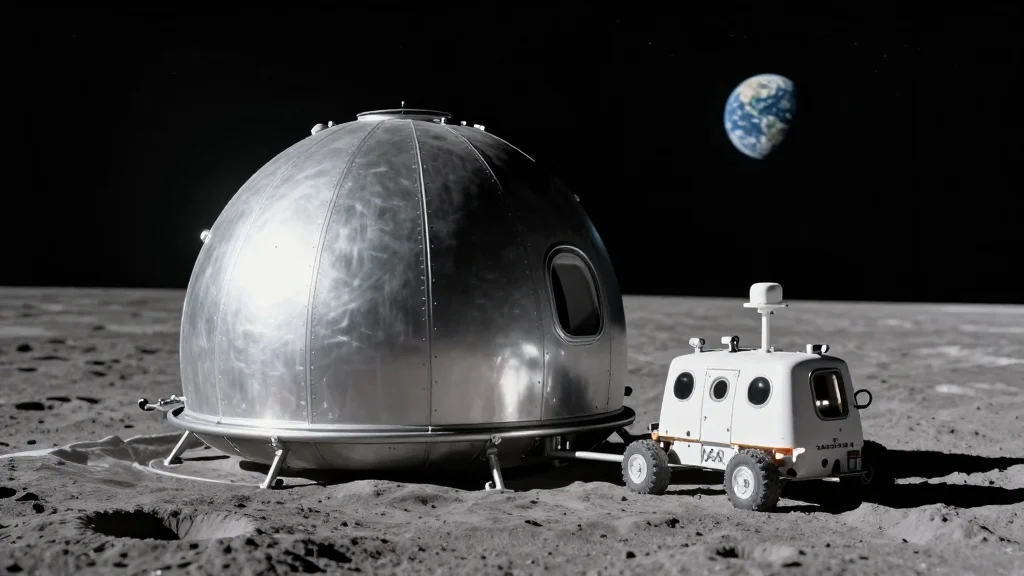
Why It Matters
NASA’s commitment creates a multi‑billion‑dollar market that could anchor U.S. leadership in deep‑space commerce and national security. The coordinated push accelerates technology maturation and opens new revenue streams from lunar resources and services.
Key Takeaways
- •NASA earmarks $30 billion for lunar base through 2036
- •Blue Origin targets frequent, low‑cost, high‑mass lunar landings
- •SpaceX pledges full force to support NASA’s Moonbase
- •CLPS contract ceiling raised to $4.2 billion for 2028
- •Industry readies scalable landers for near‑monthly launch cadence
Pulse Analysis
NASA’s Ignition event marked a decisive shift from the orbital Gateway concept to an ambitious lunar surface program. By committing roughly $30 billion across three phases—$10 billion each for 2026‑28, 2029‑32 and 2032‑36—the agency signaled intent to establish a permanent outpost near the Moon’s south‑pole. The roadmap includes a fleet of landers, rovers, power towers and habitats, and envisions a near‑monthly cadence of missions, far exceeding the handful of flights conducted in recent years. This financial and schedule commitment aims to cement U.S. leadership in cislunar operations while providing a testbed for technologies that will underpin future Mars endeavors.
Commercial partners have responded with unprecedented enthusiasm. Blue Origin’s "Blue Moon" lander concept emphasizes frequent, low‑cost, high‑mass deliveries, while SpaceX is mobilizing its Starship architecture to provide reliable, ISS‑level transport to the lunar surface. Lockheed Martin and Voyager Space are adapting inflatable habitat expertise for Moon use, and firms like Astrobotic and Interlune are positioning themselves to supply rovers, communication kits and helium‑3 extraction services. The recent CLPS contract ceiling increase from $2.6 billion to $4.2 billion reflects the agency’s expectation of a surge in demand, prompting companies to scale production lines and develop "build‑to‑print" landers capable of carrying several metric tons per flight.
The broader implications extend beyond scientific curiosity. A sustained lunar presence promises new commercial markets—resource mining, tourism, and in‑situ manufacturing—while enhancing national security by providing a strategic foothold in space. However, the program’s success hinges on resolving budget uncertainties, finalizing procurement pathways, and delivering the promised launch cadence. If NASA can translate its high‑level vision into concrete contracts and milestones, the Moon could become the first truly commercialized extraterrestrial platform, reshaping the economics of space exploration for the next decade.
The Moonbase moment
Comments
Want to join the conversation?
Loading comments...