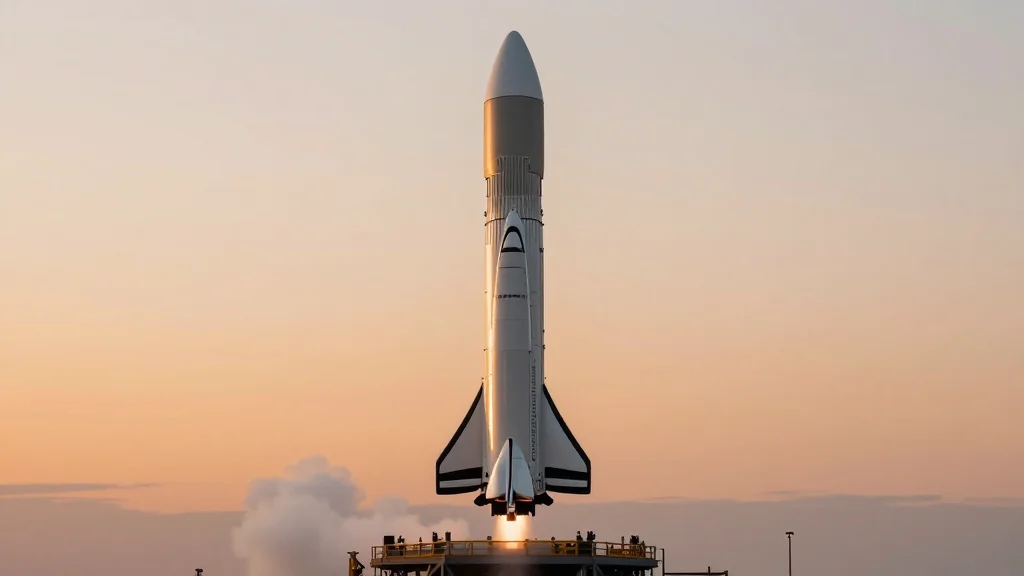
The National Space Society Congratulates SpaceX on Successful Starship Flight 12 Test
Why It Matters
Flight 12 proves critical hardware upgrades and a second launch pad, accelerating SpaceX’s timeline for lunar Artemis support and eventual crewed missions to Mars.
Key Takeaways
- •Version 3 Starship uses new Raptor 3 engines, boosting performance
- •Flight 12 validated heat‑shield data during controlled Indian Ocean splashdown
- •Second launch pad at Starbase increases launch cadence potential
- •Booster relight failed, but mission still met primary objectives
Pulse Analysis
SpaceX’s Starship program has entered a new phase with the debut of Version 3, a redesign centered on the more powerful and manufacturable Raptor 3 engines. The upgrade promises higher thrust, lower production costs, and a larger payload envelope, positioning Starship as the most capable launch system in development. By inaugurating Pad 2 at Starbase, SpaceX not only expands its launch infrastructure but also demonstrates an ability to run parallel operations, a prerequisite for the rapid‑turnaround cadence the company envisions for both commercial and government missions.
Flight 12’s primary achievements—successful lift‑off, ascent, stage separation, and the deployment of 22 Starlink simulator satellites—provided valuable data despite two notable hiccups. The Super Heavy booster failed to relight for a boost‑back maneuver, and the Starship upper stage lost one Raptor engine during flight. Nevertheless, the vehicle’s controlled re‑entry with two engines firing and a splashdown in the Indian Ocean confirmed heat‑shield performance under realistic conditions, a critical milestone for future crewed flights that will endure higher‑energy re‑entries from lunar or Martian trajectories.
The broader implications extend beyond SpaceX’s internal roadmap. Validated reusability and increased launch capacity directly support NASA’s Artemis program, which relies on heavy‑lift capability to ferry crew and cargo to the lunar Gateway. Moreover, the demonstrated progress shortens the horizon for crewed Mars missions, intensifying competition among emerging launch providers. As SpaceX refines its rapid‑reuse model, the industry can expect a cascade of cost reductions, more frequent deep‑space opportunities, and a reshaping of the commercial space market.
The National Space Society Congratulates SpaceX on Successful Starship Flight 12 Test
Comments
Want to join the conversation?
Loading comments...