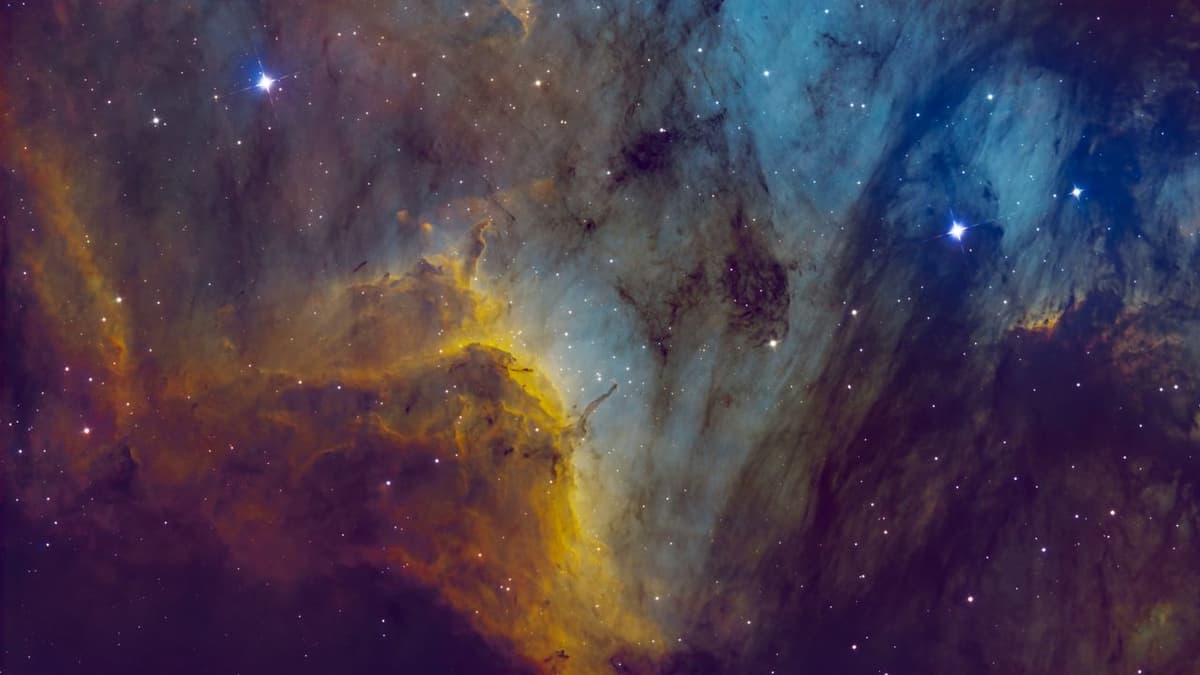
The Pelican Nebula Shines Near the Las Vegas Strip in Gorgeous Deep Space Photo
•February 1, 2026
0


Why It Matters
The image proves that advanced equipment and processing can overcome urban light pollution, expanding astrophotography’s reach and encouraging citizen‑science contributions from cities.
Key Takeaways
- •Nebula captured from backyard near Las Vegas Strip
- •Used narrowband filters to overcome heavy light pollution
- •27 hours of imaging produced detailed star‑forming region view
- •Young stars reshape Pelican Nebula, a stellar nursery
- •Camera ZWO ASI533MC Pro; Telescope Apertura CarbonStar 150
Pulse Analysis
The Pelican Nebula, a sprawling star‑forming cloud in Cygnus, is rarely photographed from urban settings. Jason Livingston, a NASA network engineer, proved that even the glow of the Las Vegas Strip cannot completely drown out the nebula’s faint emissions. By setting up his backyard observatory in Henderson, Nevada, he captured a vivid composite that rivals images taken from remote dark‑sky sites. This achievement underscores how advances in sensor technology and processing techniques are expanding the boundaries of amateur astrophotography, allowing enthusiasts to document deep‑space objects from locations once considered untenable.
Livingston’s setup combined a ZWO ASI533MC Pro CMOS camera with an Apertura CarbonStar 150 refractor, a pairing that delivers high quantum efficiency and sharp optics. Over 27 hours of exposure across several nights in August 2025, he employed narrow‑band filters targeting hydrogen‑alpha, oxygen‑III, and sulfur‑II lines, isolating the nebula’s specific wavelengths while suppressing broadband light‑pollution glare. The filtered data were then mapped to false‑color channels, revealing intricate filaments and ionized gas structures invisible to the naked eye. This workflow illustrates how narrowband imaging can transform heavily light‑polluted skies into productive astrophotography venues.
Beyond the striking visual, the image highlights the ongoing stellar birth within the Pelican Nebula, where young, massive stars sculpt surrounding gas with intense radiation. For the scientific community, such amateur contributions can supplement professional surveys, especially in monitoring variability or capturing transient events. Moreover, Livingston’s dual role at NASA bridges the gap between institutional research and public outreach, inspiring a new generation of citizen scientists to explore the cosmos despite urban challenges. As light‑pollution mitigation strategies evolve, the line between professional and hobbyist capabilities continues to blur, democratizing access to the night sky.
The Pelican Nebula shines near the Las Vegas Strip in gorgeous deep space photo
0
Comments
Want to join the conversation?
Loading comments...