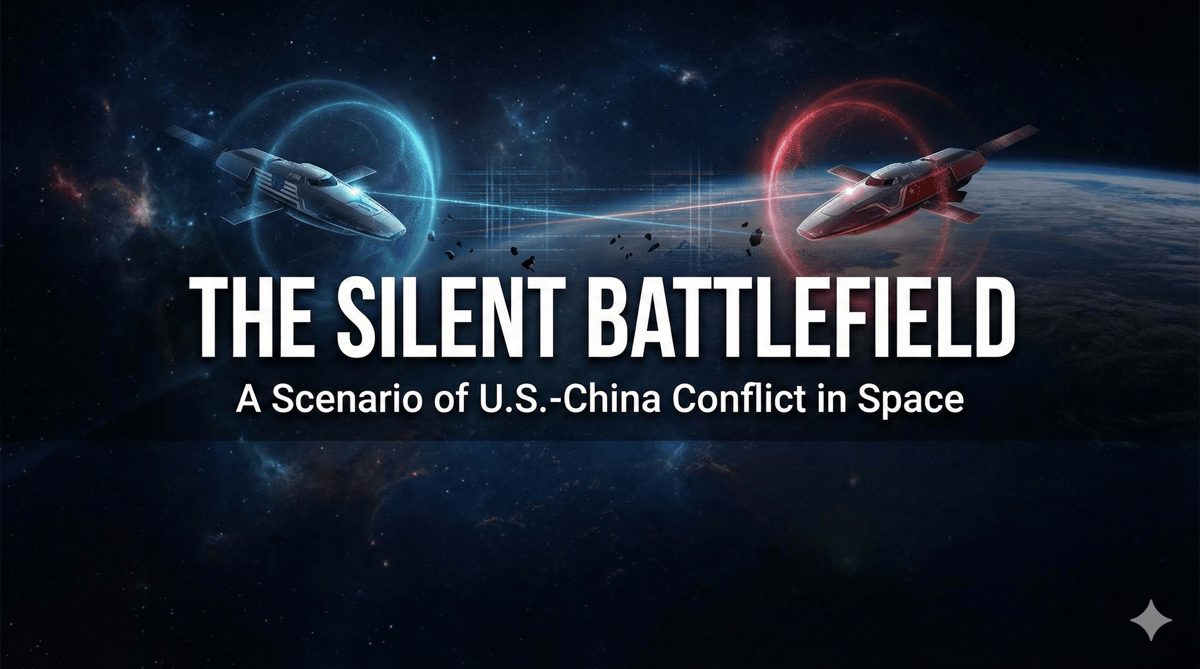
The Silent Battlefield: A Scenario of U.S.-China Conflict in Space
•January 4, 2026
0
Companies Mentioned


Why It Matters
A full‑scale US‑China space conflict would devastate global finance, logistics and security, forcing a rapid reassessment of space policy and deterrence frameworks.
Key Takeaways
- •US seeks space superiority; China pursues active defense
- •Initial attacks use jamming, spoofing, cyber intrusions
- •Kinetic ASAT strikes generate debris, trigger Kessler syndrome
- •Satellite loss cripples finance, logistics, power grids
- •Conflict shows space superiority is self‑defeating
Pulse Analysis
The strategic clash between the United States and China is rooted in divergent space doctrines. Washington’s Space Force treats orbit as a war‑fighting arena, prioritizing the ability to operate freely and deny adversaries the same freedom. Beijing, meanwhile, views America’s reliance on satellite infrastructure as a vulnerability and has built a robust anti‑satellite arsenal under its "active defense" concept. This doctrinal friction sets the stage for a high‑stakes competition over positioning, navigation, communications and intelligence services that power everything from banking to autonomous vehicles.
When tensions flare, the first moves are unlikely to be overt missile launches. Both powers employ non‑kinetic tools—GPS jamming, signal spoofing, and sophisticated cyber attacks on ground stations—to degrade each other's satellite capabilities while staying below the threshold of declared war. Proximity operations by inspection satellites add a layer of intimidation, creating a volatile environment where miscalculation can quickly trigger kinetic responses. Once a political flashpoint provides cover, direct‑ascent ASAT weapons and interceptor missiles are deployed, producing debris clouds that seed a cascading Kessler effect.
The fallout extends far beyond the militaries involved. A debris‑filled orbital environment would cripple commercial constellations, disrupt global navigation, and halt high‑frequency trading, precipitating financial panic and supply‑chain breakdowns. Policymakers therefore face an urgent need to codify clearer norms for space conduct, invest in debris‑removal technologies, and develop resilient, terrestrial backups for critical services. Recognizing that “space superiority” can become a self‑defeating pursuit is essential to prevent an unwinnable conflict that would plunge both nations—and the world—into a new dark age.
The Silent Battlefield: A Scenario of U.S.-China Conflict in Space
0
Comments
Want to join the conversation?
Loading comments...