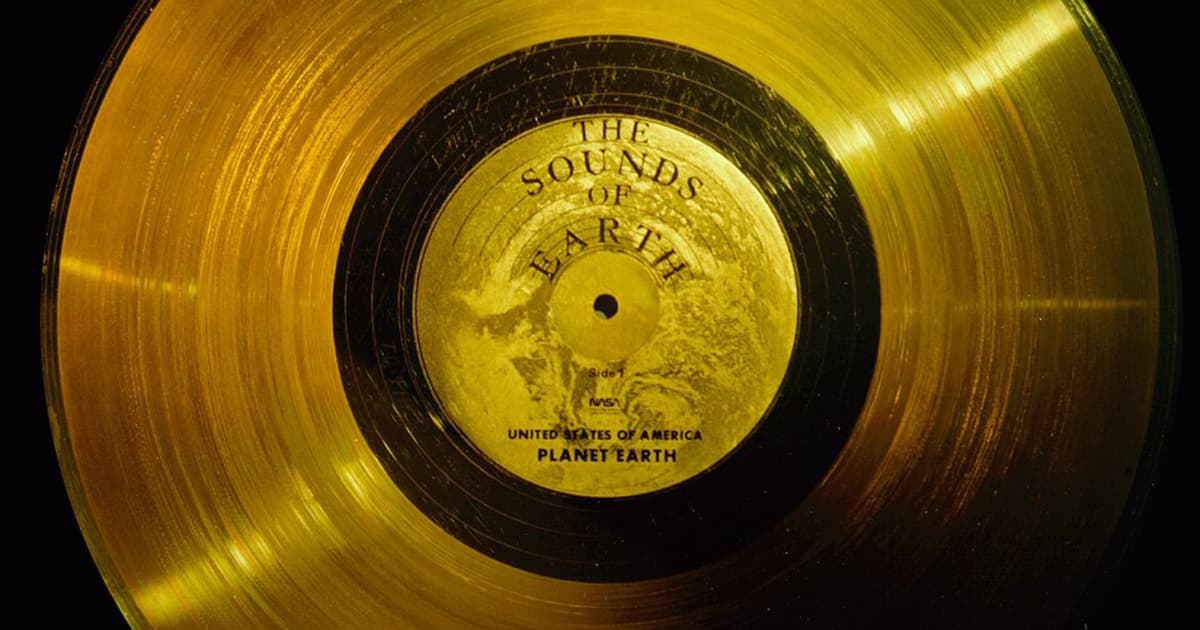
The Voyager Golden Record Carries Greetings in 55 Languages — a Deliberate Attempt to Send a Small Sample of Human Voices Into Deep Space Long After the Spacecraft Fell Silent.
Why It Matters
The Golden Record preserves a curated snapshot of human linguistic heritage beyond the lifespan of the spacecraft, underscoring how cultural messaging can outlive the technology that delivers it. Its existence shapes public perception of space exploration as a humanistic endeavor, not just a scientific one.
Key Takeaways
- •Voyager 1 shut down Low-energy Charged Particles instrument to conserve power
- •Golden Record carries 55 spoken greetings spanning 6,000‑year‑old Akkadian to modern Wu
- •Record designed for geological time, outlasting Voyager’s power supply by millennia
- •Sagan’s committee aimed to showcase linguistic diversity, not population size
- •Future alien detection odds are vanishingly small, but the gesture endures
Pulse Analysis
The Voyager program, launched in 1977, remains the longest‑running interstellar mission, and its recent power‑management decisions highlight the harsh realities of deep‑space engineering. By turning off the Low‑energy Charged Particles experiment, NASA extends the life of Voyager 1’s remaining instruments, buying precious years for scientists to study the heliosphere’s outer reaches. This operational pragmatism contrasts sharply with the Golden Record’s purpose: a deliberately timeless cultural artifact meant to survive far beyond the spacecraft’s functional lifespan.
The Golden Record’s 55 greetings were selected by a committee chaired by Carl Sagan, prioritizing linguistic breadth over demographic representation. Languages range from the extinct Akkadian, spoken six millennia ago, to contemporary Wu, a Chinese dialect, illustrating a curated narrative of human speech rather than a statistical census. This approach reflects a philosophical choice—to present humanity’s diversity as a mosaic of voices, each given equal weight, rather than a market‑share analysis of language speakers.
Although the probability of an extraterrestrial civilization encountering and decoding the phonograph‑style disc is astronomically low, the record’s symbolic value endures. It serves as a reminder that space exploration carries cultural as well as scientific ambitions, projecting a hopeful self‑portrait of Earth into the cosmos. As Voyager’s transmitters fade, the golden disc will continue to orbit the galaxy, outlasting the very technology that launched it and offering future generations a tangible link to the optimism of the 1970s.
The Voyager Golden Record carries greetings in 55 languages — a deliberate attempt to send a small sample of human voices into deep space long after the spacecraft fell silent.
Comments
Want to join the conversation?
Loading comments...