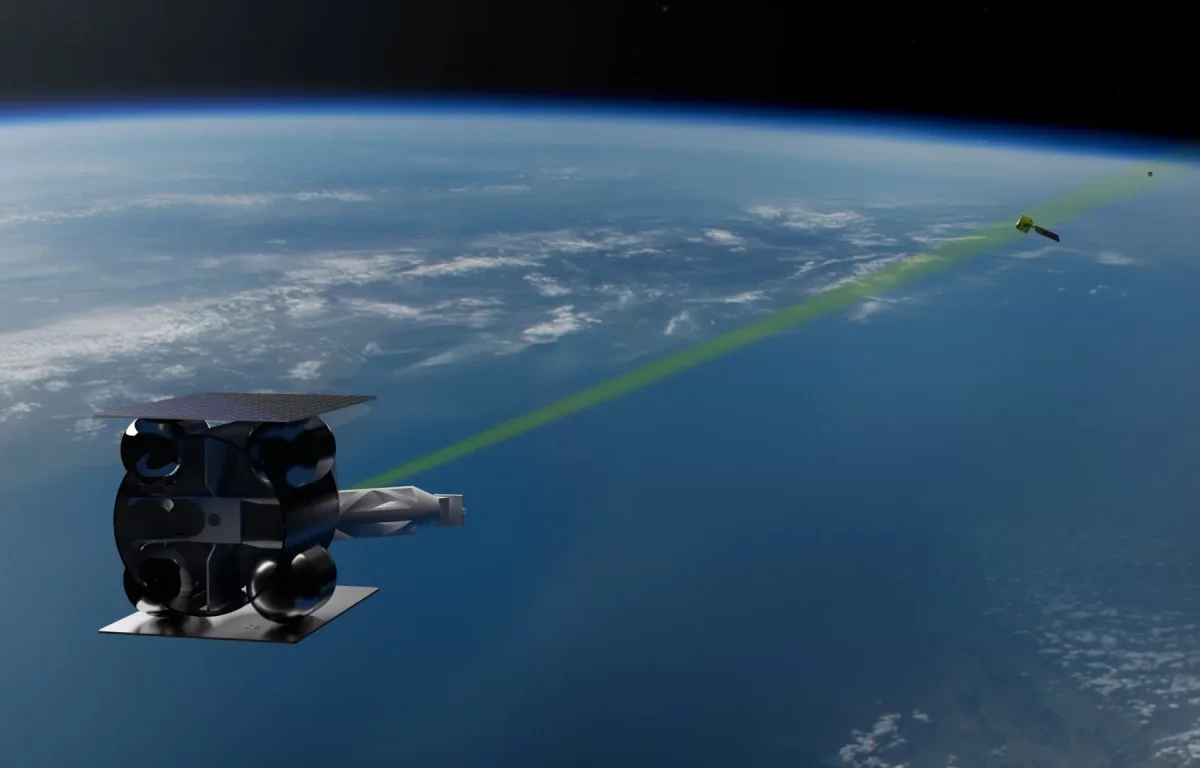
ThinkOrbital Preps for First On-Orbit X-Ray Scans
Why It Matters
On‑orbit X‑ray imaging could give the U.S. military unprecedented insight into adversary spacecraft, enhancing situational awareness and deterrence. Commercially, it may become a valuable tool for insurers and operators to diagnose failures without costly disassembly.
Key Takeaways
- •ThinkX will perform on‑orbit X‑ray scans up to 10 km distance
- •First receiver launches July via Argo Space’s water‑propelled spacecraft
- •U.S. Space Force funds demonstration; contract value undisclosed
- •Potential uses include military inspection, insurance, and anomaly resolution
Pulse Analysis
The emergence of on‑orbit X‑ray imaging marks a shift from traditional ground‑based inspection to a truly space‑native diagnostic capability. ThinkOrbital’s discovery stemmed from its electron‑beam welding research, where stray X‑rays revealed internal structures in vacuum chambers. By packaging a source and a receiver into two maneuverable satellites, the company is turning a laboratory curiosity into a practical tool that can peer through the hull of another spacecraft without physical contact, a feat previously limited to close‑range laboratory setups.
Technical hurdles dominate the path to operational use. Maintaining precise alignment between two satellites separated by up to a kilometre, delivering a narrow‑pencil X‑ray beam that retains sufficient energy, and fitting high‑power components into a compact satellite bus all require bespoke engineering. ThinkOrbital’s solution leverages proprietary beam‑forming technology and plans to validate it through a two‑stage launch: a water‑propelled receiver in July on Argo Space’s inaugural vehicle, followed by the source in January. The U.S. Space Force’s Tactical Funding Increase contract underscores the strategic priority of this capability, even though the exact budget remains confidential.
If successful, the implications extend far beyond military reconnaissance. Defense analysts envision real‑time assessment of foreign satellites, enabling rapid threat identification and response. Meanwhile, commercial insurers could use X‑ray scans to verify payload integrity after launch anomalies, reducing claim disputes and expediting repairs. The technology also promises to streamline on‑orbit servicing by revealing hidden defects before costly extravehicular activities. As ThinkOrbital eyes a 10‑km demonstration, the industry watches for a new paradigm in space situational awareness and asset management.
ThinkOrbital preps for first on-orbit X-ray scans
Comments
Want to join the conversation?
Loading comments...