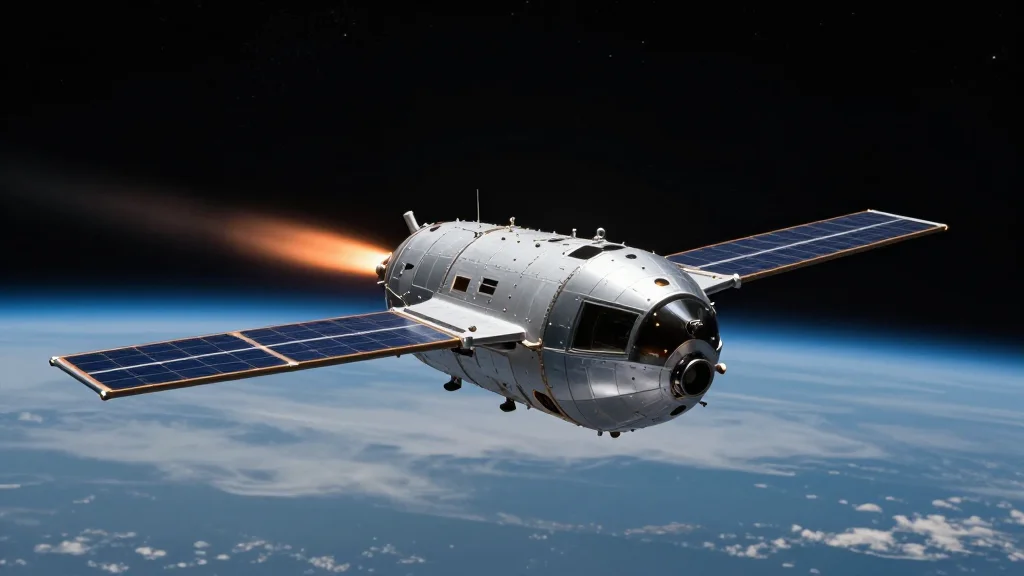
Thirty Years Later, Mars 96 Has Not Been Found
Why It Matters
Mars 96’s failure highlighted the risks of complex, joint space ventures and underscored the need for robust launch‑stage reliability, while its unresolved debris raises ongoing safety and accountability questions for planetary missions.
Key Takeaways
- •Mars 96 was the largest interplanetary spacecraft at launch
- •Mission involved twelve nations, including US payload contributions
- •Upper‑stage ignition failure prevented escape from Earth orbit
- •Debris re‑entry zone uncertain; no official recovery effort
- •Penetrators and plutonium heaters may still rest in remote Andes
Pulse Analysis
The Mars 96 episode offers a cautionary tale about the technical fragility of ambitious interplanetary missions. While the spacecraft embodied post‑Cold‑War optimism—bringing together scientists from the United States, Europe, and Russia—its reliance on a single upper‑stage burn proved to be a single point of failure. Modern launch providers now mitigate such risks through redundant propulsion systems and extensive pre‑flight testing, lessons that trace directly back to incidents like Mars 96.
Beyond engineering, the mission’s ambiguous re‑entry sparked diplomatic coordination between the United States, Australia, and Chile, illustrating how space debris can become a geopolitical concern. The presence of eighteen plutonium‑238 radioisotope heater units added a layer of radiological safety scrutiny, echoing earlier incidents such as Cosmos‑954. Today, international guidelines from the United Nations and the Inter‑Agency Space Debris Coordination Committee stress transparent tracking and end‑of‑life planning, standards that were loosely defined when Mars 96 vanished.
Finally, the scientific payload’s legacy endures despite the loss. Instruments originally slated for Mars 96 were repurposed for successful missions like Mars Express and Mars Pathfinder, demonstrating how collaborative research can survive even failed hardware. The story also fuels speculation that durable components—particularly the hardened penetrators—may still lie hidden in the Andes, a silent reminder that space hardware can outlive its intended mission and continue to influence future exploration strategies.
Thirty years later, Mars 96 has not been found
Comments
Want to join the conversation?
Loading comments...