To Understand Exoplanet Habitability, We Need A Better Understanding Of Stellar Flaring
•January 5, 2026
0
Why It Matters
Stellar flaring directly determines whether planets around the most common stars can retain atmospheres and support life, shaping the target list for upcoming habitability missions.
Key Takeaways
- •M dwarfs comprise ~70% of Milky Way stars
- •Over 50% of temperate exoplanets orbit M‑stars
- •Frequent flares can strip atmospheres and destroy ozone
- •UV from flares may drive prebiotic chemistry
- •Proposed 4‑m, 30k‑fiber telescope could map flare activity
Pulse Analysis
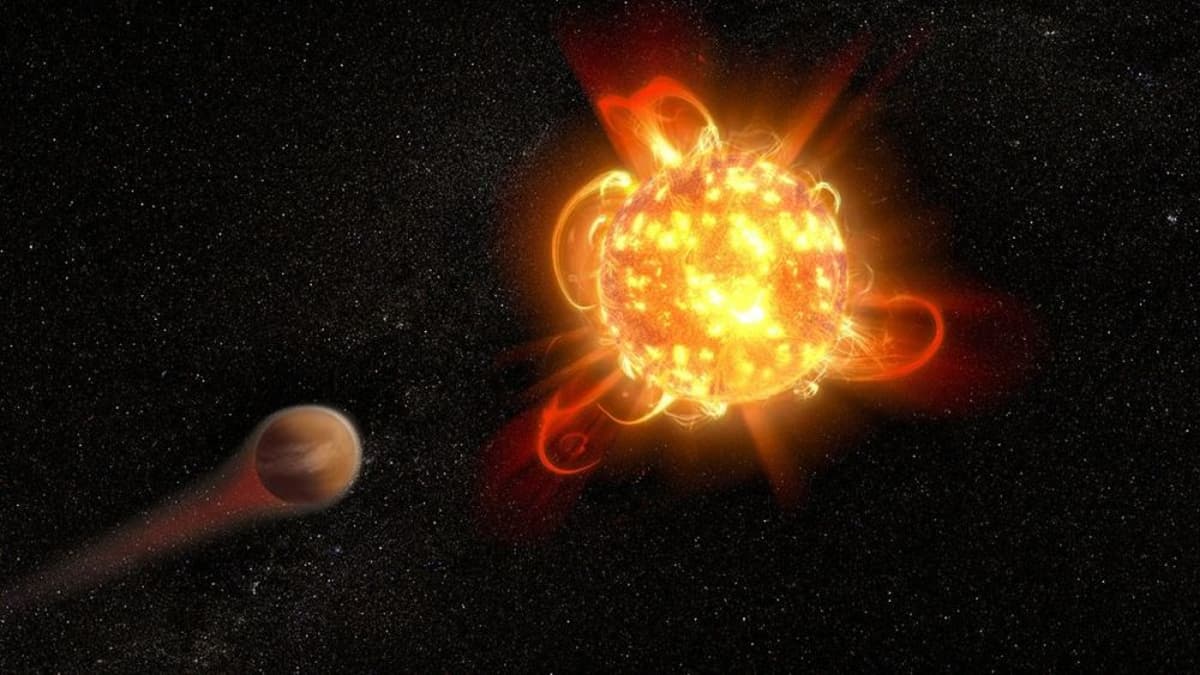
The search for life beyond the Solar System has increasingly focused on red dwarfs, which make up roughly 70 % of the Galaxy’s stellar population and host a disproportionate share of Earth‑sized planets in their habitable zones. Their small size forces planets into tight orbits, exposing them to powerful magnetic storms, superflares, and coronal mass ejections that can strip away atmospheres and deplete protective ozone layers. While the Sun’s activity is relatively mild, many M‑type stars unleash flares ten times more energetic, creating a hostile environment that complicates simple habitability assessments.
Current observations of stellar flares beyond the Sun are sparse, limiting our ability to model atmospheric loss or pre‑biotic chemistry on exoplanets. The ESO white paper proposes a dedicated wide‑field survey instrument—larger than 4 m, equipped with a 1–3° field of view and roughly 30 000 fiber channels—to conduct continuous, high‑cadence monitoring of thousands of late‑type stars. By capturing simultaneous spectra during flare events, astronomers can quantify flare energy distributions, frequency, and ultraviolet output across stellar ages. This massive multiplexing capability would accelerate statistical studies, turning anecdotal flare reports into a robust, quantitative framework.
Such a systematic flare catalog will directly inform the design and target selection of next‑generation missions like ESA’s PLATO and NASA’s HabEx, ensuring that planets flagged as potentially habitable are not dismissed later due to unrecognized stellar aggression. Moreover, interdisciplinary collaboration with biologists studying extremophiles could translate flare‑driven UV fluxes into realistic scenarios for the emergence of life. By bridging the gap between stellar astrophysics and astrobiology, the proposed telescope promises to reshape our understanding of where life‑friendly worlds may truly exist in the Milky Way.
To Understand Exoplanet Habitability, We Need A Better Understanding Of Stellar Flaring
0
Comments
Want to join the conversation?
Loading comments...