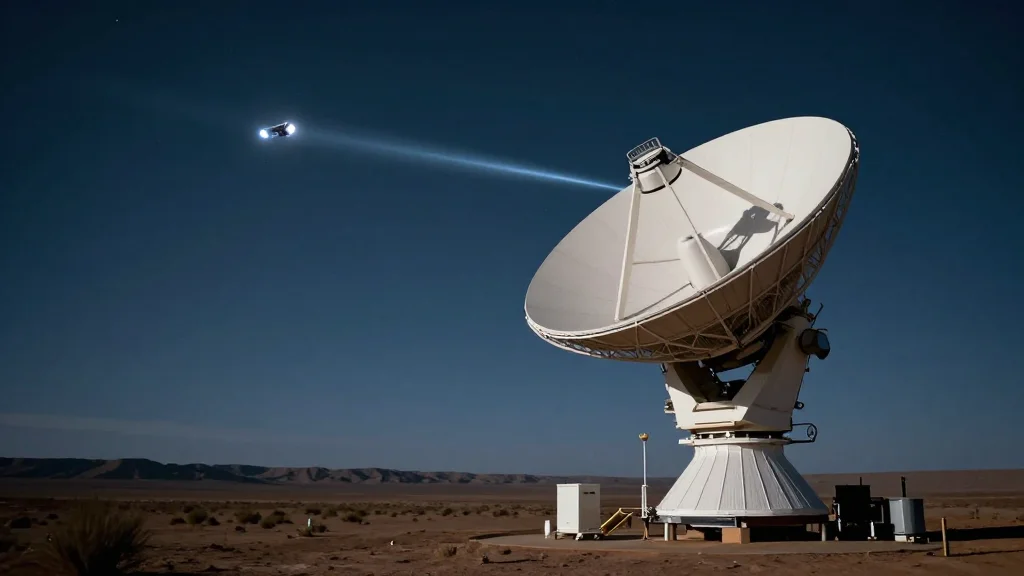
Tracking Artemis II’s 10-Day Journey: Global Volunteers
Companies Mentioned

NASA
Why It Matters
By integrating commercial and community assets into a crewed mission, NASA accelerates a market‑driven tracking infrastructure essential for sustained lunar and Mars exploration.
Key Takeaways
- •NASA SCaN selects 34 global tracking volunteers.
- •Participants include commercial firms, universities, amateur radio operators.
- •Volunteers will passively monitor Artemis II radio transmissions.
- •Initiative supports NASA’s commercial‑first, public‑private ecosystem vision.
- •Enhances tracking resilience for future deep‑space missions.
Pulse Analysis
Artemis II marks NASA’s first crewed flight beyond low‑Earth orbit since Apollo, circling the Moon for ten days before returning home. While the mission’s primary focus is crew safety and spacecraft performance, a parallel objective is to test the communication backbone that will underpin future lunar gateways and Mars voyages. By leveraging a network of ground‑based receivers worldwide, NASA can gather real‑time telemetry, assess signal integrity, and refine navigation algorithms without relying solely on its own Deep Space Network.
The SCaN program’s decision to open tracking to commercial providers, universities, and amateur radio hobbyists reflects a deliberate shift toward a commercial‑first model. Kevin Coggins, deputy associate administrator for SCaN, emphasizes that this collaboration builds a resilient ecosystem capable of scaling as mission complexity grows. Participants will deploy a variety of antennas and software‑defined radios, feeding data back to NASA’s mission control. This crowdsourced approach not only diversifies data sources but also creates market opportunities for firms developing low‑cost, high‑performance space communication hardware.
Looking ahead, the Artemis II tracking experiment serves as a prototype for a distributed, market‑driven infrastructure that could support the Artemis III landing, the Lunar Gateway, and eventual crewed Mars missions. A robust, publicly accessible tracking network reduces single‑point failures and lowers operational costs, encouraging private investment in space‑grade communication services. For industry stakeholders, the program signals a clear invitation to demonstrate capabilities on a high‑visibility platform, accelerating technology maturation and fostering a competitive ecosystem that will shape the next era of deep‑space exploration.
Tracking Artemis II’s 10-day Journey: Global Volunteers
Comments
Want to join the conversation?
Loading comments...