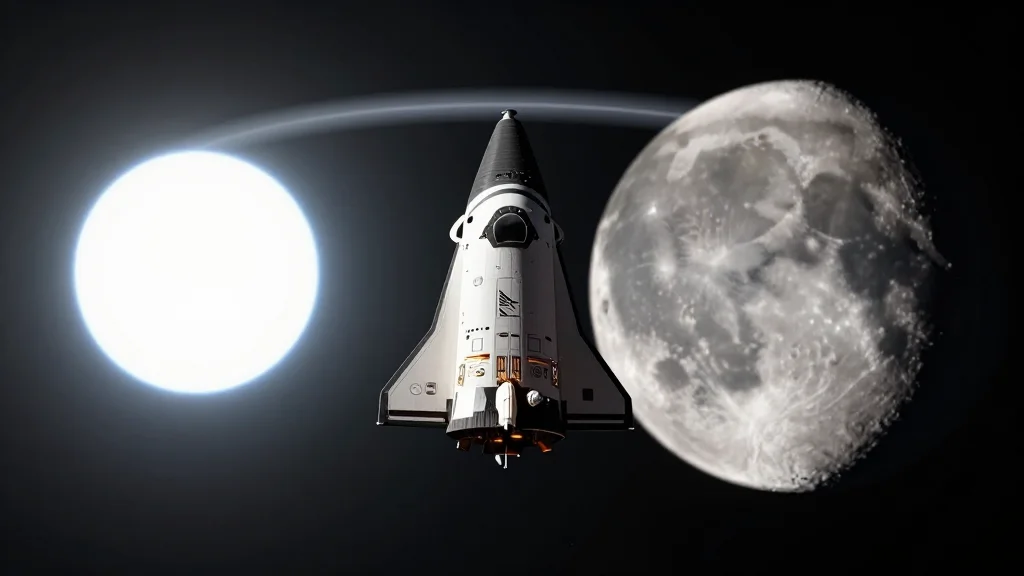
Trump Hails Artemis II Lunar Flyby as New Human Distance Record

Companies Mentioned

Why It Matters
Artemis II’s record‑breaking distance demonstrates that the United States can once again send humans beyond low‑Earth orbit, a capability that has been dormant for over half a century. The mission validates the SLS‑Orion architecture, which underpins NASA’s roadmap for a sustainable lunar gateway and eventual crewed missions to Mars. By achieving a new distance record, the flight also sends a geopolitical signal to rivals such as China and Russia, who are rapidly expanding their own lunar programs. The public endorsement from the president adds a political dimension that could influence upcoming budget cycles. If lawmakers view Artemis II as a tangible success, they may be more inclined to fund the costly SLS and Orion developments, ensuring that the United States retains a leadership role in deep‑space exploration while fostering commercial opportunities for private firms that supply components and services.
Key Takeaways
- •President Donald Trump praised Artemis II crew after a seven‑hour lunar flyby.
- •Mission set a new record for the farthest distance humans have travelled from Earth, surpassing Apollo 13.
- •Crew experienced a communication blackout on the Moon’s far side, mirroring Apollo challenges.
- •Artemis II provides critical data for the planned Artemis III lunar landing in 2026.
- •Success bolsters U.S. strategic position amid growing competition from commercial and international space actors.
Pulse Analysis
Artemis II marks a pivotal inflection point for U.S. deep‑space policy. The flight’s technical success reaffirms the viability of the SLS‑Orion stack, a system that has faced criticism for its high per‑launch cost and lengthy development timeline. By delivering a concrete achievement—breaking the human distance record—the program now has a stronger narrative to justify continued investment. This is especially important as Congress weighs competing priorities and as private launch providers demonstrate lower‑cost alternatives for orbital missions.
The political spotlight added by President Trump amplifies the mission’s visibility beyond the scientific community. While the president’s remarks are largely ceremonial, they serve to align the Artemis program with national pride and geopolitical messaging. In an era where China’s Chang’e and Tianwen missions are gaining momentum, a high‑profile endorsement can translate into bipartisan support, potentially unlocking the next tranche of funding required for Artemis III and the lunar gateway.
Looking forward, the real test will be how NASA integrates Artemis II’s lessons into a cost‑effective, sustainable architecture. The agency must balance the prestige of a government‑run deep‑space capability with the efficiency of commercial partnerships. If it can leverage the data from the recent flyby to streamline future missions, Artemis II could be remembered not just as a record‑setter but as the catalyst that reshaped the economics of human exploration beyond Earth.
Trump Hails Artemis II Lunar Flyby as New Human Distance Record
Comments
Want to join the conversation?
Loading comments...