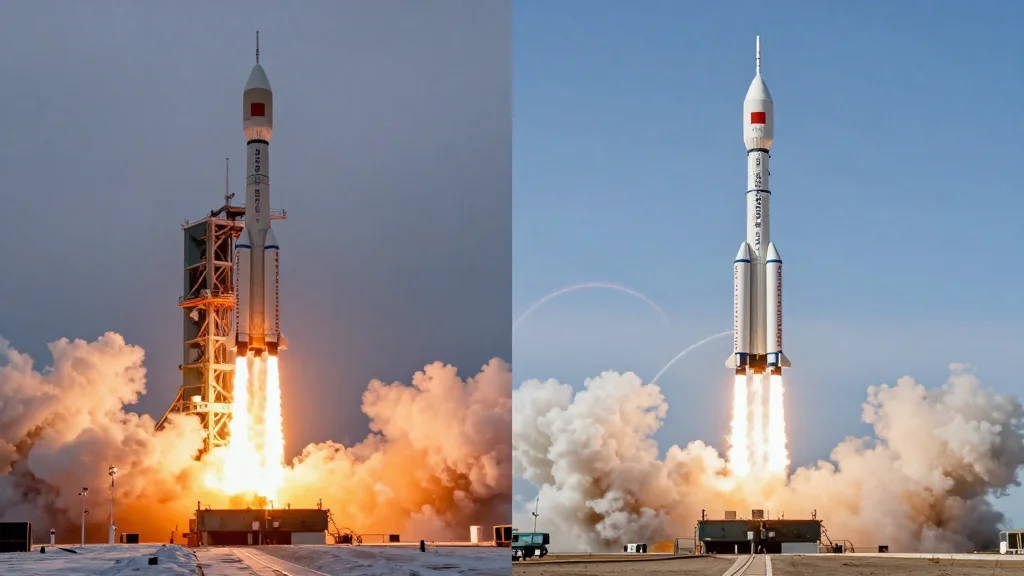
Two Launches Since Yesterday, by Russia and China
Companies Mentioned
Why It Matters
The launches signal heightened strategic competition in space, blending defense priorities with environmental monitoring, while SpaceX’s dominance reshapes the commercial launch market.
Key Takeaways
- •Russia launched classified military payload on Soyuz‑2 from Plesetsk.
- •China placed greenhouse‑gas detection satellite via Long March 4C from Jiuquan.
- •Rocket stages fell in Arctic ocean and within China, respectively.
- •SpaceX leads 2026 launch tally with 46 missions, outpacing China.
- •Launches highlight strategic competition among major space powers.
Pulse Analysis
On April 17, Russia’s Soyuz‑2 rocket lifted off from the Plesetsk Cosmodrome carrying a classified military payload described only as “multiple spacecraft.” The vehicle’s four strap‑on boosters and core stage followed a polar trajectory over the Arctic, ultimately splashing down harmlessly in the ocean. While the exact nature of the payload remains undisclosed, the launch underscores Moscow’s continued reliance on proven launch vehicles to replenish its orbital assets and test new defense‑related technologies. The launch also demonstrated the Soyuz‑2’s capability to deliver multiple payloads in a single mission, a feature valued for cost‑efficiency.
China’s Long March 4C lifted from the Jiuquan Satellite Launch Center carrying a satellite touted as a high‑precision greenhouse‑gas detector. The mission marks Beijing’s push to expand its remote‑sensing constellation for climate monitoring, even as the launch used toxic hypergolic propellants whose spent stages fell within Chinese territory. State media offered scant details beyond the satellite’s environmental remit, reflecting the dual‑use nature of such payloads that can serve both scientific observation and verification of compliance with international emissions agreements. Analysts view the satellite as part of Beijing’s broader effort to monetize climate data for both domestic policy and international partnerships.
The latest launches come as the 2026 global launch cadence remains dominated by SpaceX, which logged 46 missions this year—more than the combined total of its rivals. China trails with 21 flights and Russia with five, while newcomers such as Rocket Lab hold modest shares. This disparity highlights the growing commercial advantage of reusable launch systems and the strategic imperative for state actors to secure reliable access to orbit. As the launch race intensifies, both military and environmental payloads will likely drive further investment in launch infrastructure and satellite technology. Observers expect that private‑sector innovations will pressure traditional launch providers to adopt reusability and lower prices.
Two launches since yesterday, by Russia and China
Comments
Want to join the conversation?
Loading comments...