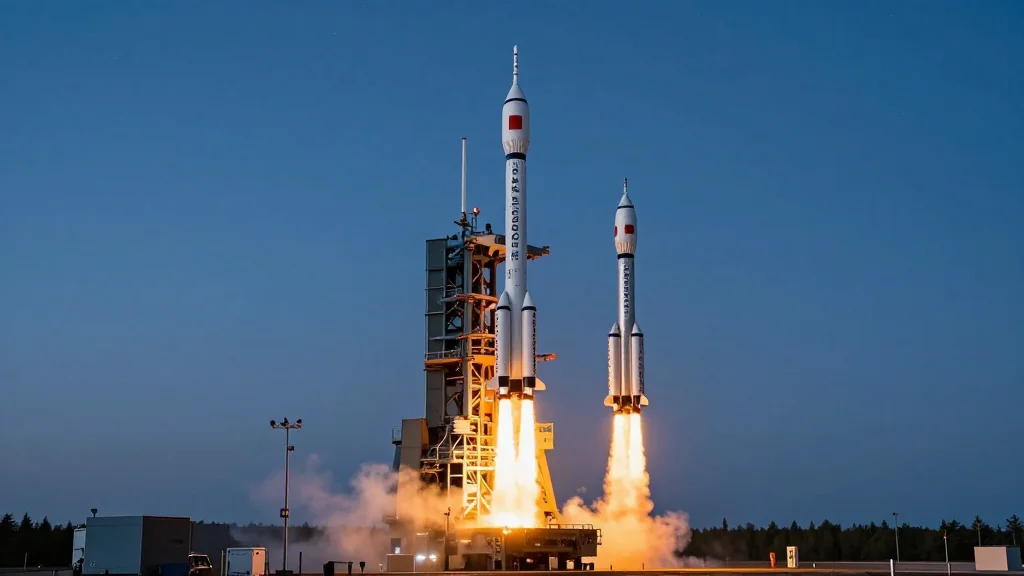
Two Launches Today, by China and Russia
Companies Mentioned
Why It Matters
The dual launches illustrate deepening Sino‑Pakistani space ties and Russia’s continued reliance on ISS logistics, while SpaceX’s dominance reshapes the global launch market and competitive dynamics.
Key Takeaways
- •China launched Pakistan's EO satellite via Long March 6
- •Russia's Soyuz-2 sent Progress cargo to ISS, docking in days
- •SpaceX leads 2026 launch tally with 49 missions, surpassing rivals
- •China's hypergolic rocket stages raise domestic environmental concerns
- •Launch race underscores intensifying competition among commercial and national players
Pulse Analysis
China’s deployment of Pakistan’s PRSC‑EO3 satellite underscores a growing strategic partnership that extends beyond trade into high‑technology cooperation. The Long March 6, a relatively low‑cost, solid‑propellant vehicle, delivered the 1.5‑tonne Earth‑observation platform into a sun‑synchronous orbit, enhancing Pakistan’s remote‑sensing capabilities for agriculture and disaster monitoring. While the mission showcases Beijing’s expanding commercial launch services, the unreported crash of the rocket’s hypergolic lower stages raises questions about environmental oversight and the transparency of China’s space program.
Russia’s Soyuz‑2 launch of a Progress cargo vessel continues a decades‑long tradition of supporting the International Space Station’s crew and scientific agenda. The freighter, carrying food, equipment, and scientific experiments, is slated to dock within two days, ensuring uninterrupted operations aboard the orbiting laboratory. Despite geopolitical pressures and a shrinking domestic launch market, Russia leverages Baikonur’s proven infrastructure to maintain a foothold in low‑Earth‑orbit logistics, a niche that remains vital for international cooperation and revenue.
The 2026 launch race data reveal SpaceX’s overwhelming lead, with 49 missions eclipsing the combined output of China and Russia. This dominance reflects the company’s reusable‑rocket model, aggressive pricing, and diversified customer base ranging from satellite constellations to government contracts. Competitors are compelled to innovate—China is scaling its solid‑fuel fleet, while Russia relies on legacy systems. The competitive pressure accelerates technology adoption, drives down launch costs, and reshapes the strategic calculus for nations and commercial players alike.
Two launches today, by China and Russia
Comments
Want to join the conversation?
Loading comments...