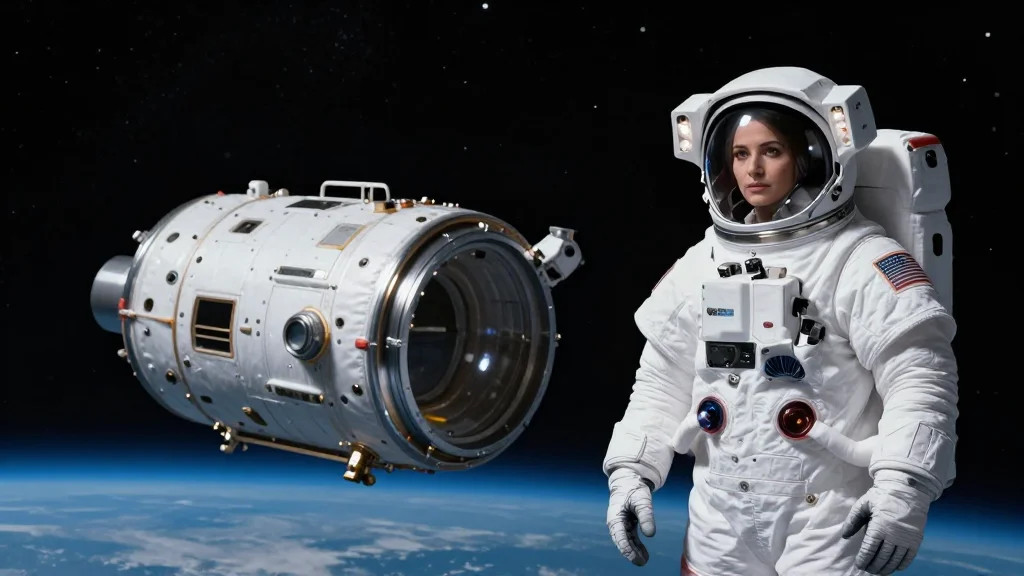
Two Space Station Startups Strengthen Their Positions
Companies Mentioned

Why It Matters
The announcements signal that private space‑station developers are securing high‑profile talent and academic partnerships to prove commercial demand, a key factor in winning NASA’s upcoming partnership contracts and attracting further investment.
Key Takeaways
- •Vast adds astronaut Sunita Williams to its advisory board.
- •Haven-1 demo scheduled for 2027 with multiple two‑week missions.
- •Voyager partners with Yonsei University for research and future Starlab access.
- •Starlab consortium raised $383 million plus $217.5 million NASA funding.
- •Vast has secured over $1 billion in private capital.
Pulse Analysis
The commercial space‑station market is entering a decisive phase as NASA shifts from sole operator to partnership model. Companies like Vast and Voyager are leveraging high‑visibility collaborations to demonstrate that private habitats can support both scientific research and commercial activities. By appointing a veteran astronaut such as Sunita Williams, Vast not only gains operational expertise but also a marketing asset that reassures potential customers and regulators of mission safety. The Haven‑1 demonstrator, slated for a 2027 launch, will serve as a proof‑of‑concept for longer‑duration stays and for the larger Haven‑2 platform that follows.
Voyager’s agreement with Yonsei University adds an academic dimension to the Starlab project, showing that the station will host legitimate research programs beyond short‑term tourism. The partnership gives Yonsei a pathway to conduct microgravity experiments in Ohio now and on Starlab later, reinforcing the narrative that a viable market exists for private orbital labs. This helps address NASA Administrator Jared Isaacman’s concerns about demand, positioning Voyager’s consortium—backed by Airbus, Northrop Grumman, and ESA partners—as a credible contender for future NASA funding streams.
Funding dynamics further differentiate the contenders. Vast has raised more than $1 billion in private capital, while Starlab’s consortium has secured $383 million from public markets and $217.5 million from NASA. These deep pockets enable rapid development, hardware procurement, and the ability to attract additional customers such as national space agencies and commercial payload providers. As the industry coalesces around a handful of viable stations, the firms that can demonstrate both technical readiness and a pipeline of paying users are likely to capture the next wave of NASA contracts and shape the commercial low‑Earth‑orbit ecosystem for the decade ahead.
Two space station startups strengthen their positions
Comments
Want to join the conversation?
Loading comments...