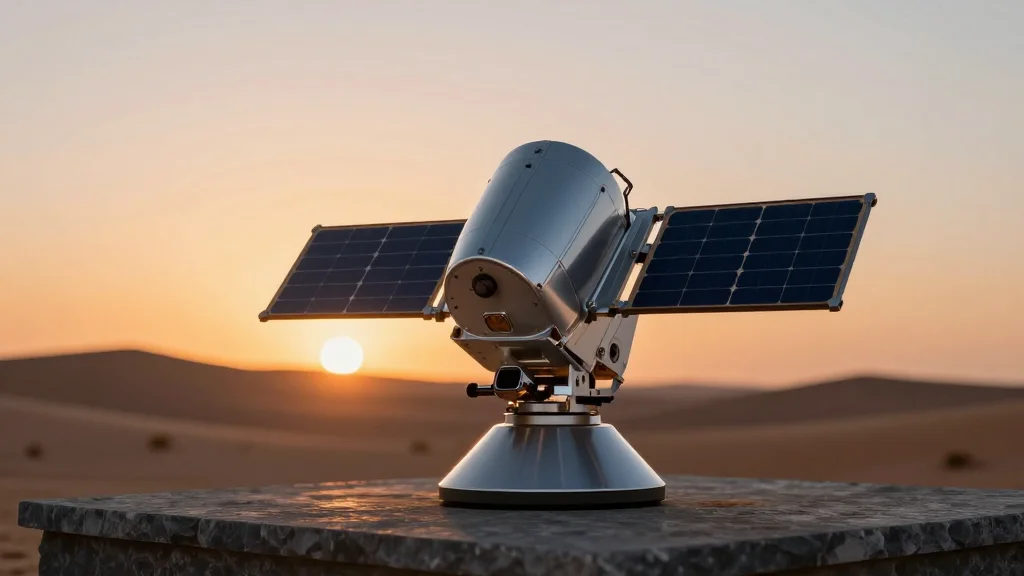
UAE Unveils 2031 Space Strategy to Double Economy and Join Top‑10 Space Nations

Companies Mentioned

NASA

ESA
Why It Matters
The UAE’s 2031 Space Strategy signals a shift from a government‑driven program to a market‑oriented ecosystem, potentially attracting multinational satellite manufacturers and data‑service firms to the Gulf. By aiming for a top‑10 ranking, the Emirates challenges established space powers and could accelerate the diversification of its oil‑dependent economy, creating high‑skill jobs and fostering indigenous technology development. Regionally, the strategy may spur competition among neighboring states, prompting faster adoption of satellite‑based services such as precision agriculture, maritime monitoring and climate research. The emphasis on resilient, investment‑attractive infrastructure also offers a template for other emerging space nations seeking to integrate into the global supply chain while maintaining sovereign capabilities.
Key Takeaways
- •UAE launches National Space Strategy 2031 targeting double space‑economy revenue by 2031
- •Goal to rank among the top 10 global space economies by the end of the decade
- •Current portfolio includes 30 operational satellites and over 170 space‑related entities
- •Mars Probe mission extended to 2028, delivering >10 TB of data and 35 peer‑reviewed studies
- •New initiatives: Sharjah Sat‑2, Sharjah Space and Astronomy Complex, Arab Youth Space Hackathon
Pulse Analysis
The UAE’s strategic pivot reflects a broader trend where resource‑rich nations are leveraging space as a catalyst for economic diversification. By coupling ambitious scientific missions with a clear commercial roadmap, the Emirates is positioning itself as both a data provider and a launch services hub. This dual approach mitigates the risk of overreliance on a single revenue stream and aligns with global demand for high‑resolution Earth observation and resilient materials for deep‑space applications.
Historically, the Gulf’s space ambitions have been state‑led, exemplified by the 2019 Hope Mars mission. The 2031 strategy marks a maturation, moving toward a private‑sector‑driven model that mirrors the evolution of the U.S. and European space industries in the 1990s. If the UAE can successfully attract foreign capital and nurture domestic startups, it could create a self‑sustaining ecosystem that not only fuels national GDP growth but also influences standards and best practices across the emerging commercial space market.
However, the roadmap faces challenges: securing a steady pipeline of launch opportunities, navigating technology transfer restrictions, and competing with established players for talent. The upcoming Arab Youth Space Hackathon and the Sharjah Space Complex are early indicators of a talent pipeline, but scaling that to meet the ambitious 2031 targets will require sustained policy support and clear regulatory frameworks. The next half‑year will be critical as the UAE finalizes incentive schemes and signs partnership deals that could either accelerate its climb into the top‑10 or expose gaps in execution.
UAE Unveils 2031 Space Strategy to Double Economy and Join Top‑10 Space Nations
Comments
Want to join the conversation?
Loading comments...