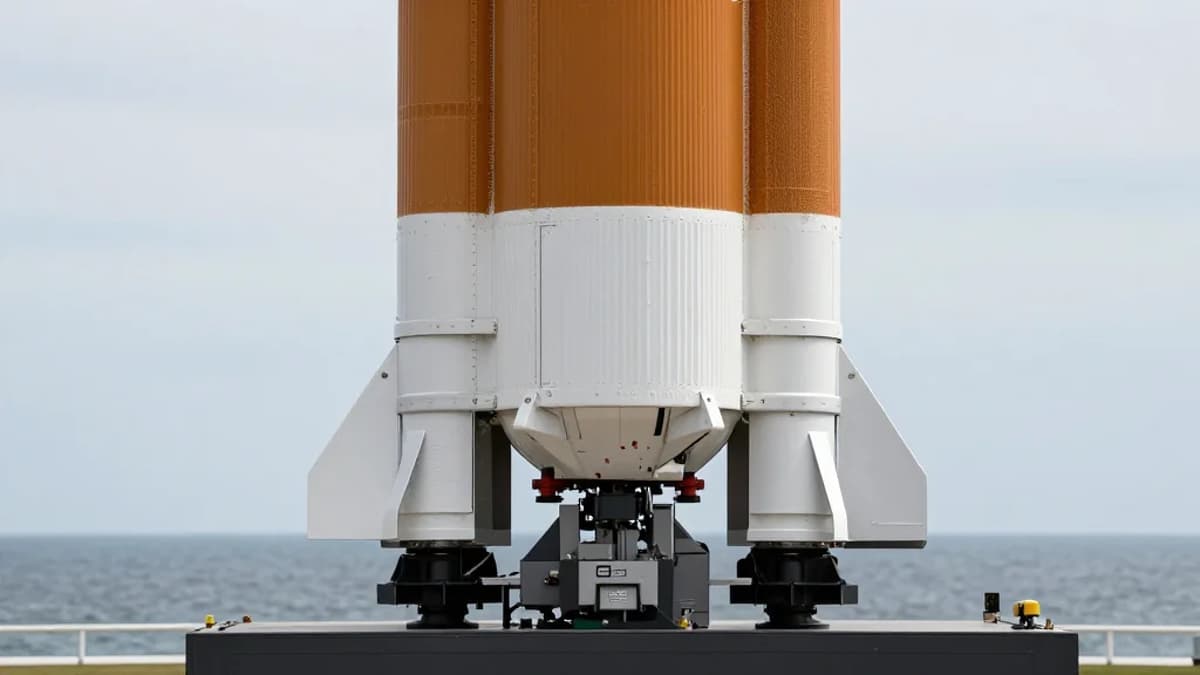
ULA Offloads First Vulcan Rocket at Vandenberg at It Preps Its Next Cape Launch
•February 6, 2026
0
Companies Mentioned


Why It Matters
The West Coast deployment expands ULA’s launch cadence and supports the Space Development Agency’s tracking layer, while the USSF‑87 payload enhances geosynchronous situational awareness for U.S. defense.
Key Takeaways
- •First Vulcan launch from West Coast at Vandenberg
- •R/S RocketShip barge delivered booster and upper stage
- •USSF-87 mission carries GSSAP and ESPA secondary payloads
- •Launch window set no earlier than Feb. 12, 2026
- •Vandenberg pad conversion finished after Atlas V retirement
Pulse Analysis
ULA’s successful off‑load of the Vulcan booster at Vandenberg signals a strategic shift for the company, restoring its historic West Coast launch capability that has been dormant since the last Atlas V flight in 2022. The R/S RocketShip barge, after a cross‑country voyage from Decatur, Alabama, through Port Canaveral, demonstrates ULA’s logistical flexibility and its investment in infrastructure upgrades, including harbor dredging and a new Mobile Service Tower at Space Launch Complex 3. This move not only diversifies launch sites but also positions Vulcan to serve a broader range of customers, from commercial satellite operators to defense contracts.
Concurrently, ULA is finalizing preparations for the USSF‑87 mission at Cape Canaveral, a high‑priority national‑security launch that will deploy Northrop Grumman’s Geosynchronous Space Situational Awareness Program (GSSAP) spacecraft alongside a propulsed ESPA secondary payload. The mission’s payload suite is designed to improve detection, attribution, and mitigation of threats in the geosynchronous belt, reinforcing the United States’ space‑domain awareness. By integrating both primary and secondary payloads on a single Vulcan vehicle, ULA showcases the rocket’s payload‑flexibility and cost‑efficiency, attributes critical for the Space Development Agency’s Tranche 1 Tracking Layer B objectives.
The broader industry impact is significant. Restoring West Coast launch capacity allows ULA to compete more directly with SpaceX’s Falcon 9 and Starship operations on the Pacific coast, offering customers reduced flight‑path constraints and faster access to polar and sun‑synchronous orbits. Moreover, the successful pad conversion at Vandenberg, despite earlier supply‑chain hurdles, underscores ULA’s resilience and its commitment to a dual‑launch‑site strategy that can accommodate rising demand for both commercial and defense missions in the next decade.
ULA offloads first Vulcan rocket at Vandenberg at it preps its next Cape launch
0
Comments
Want to join the conversation?
Loading comments...