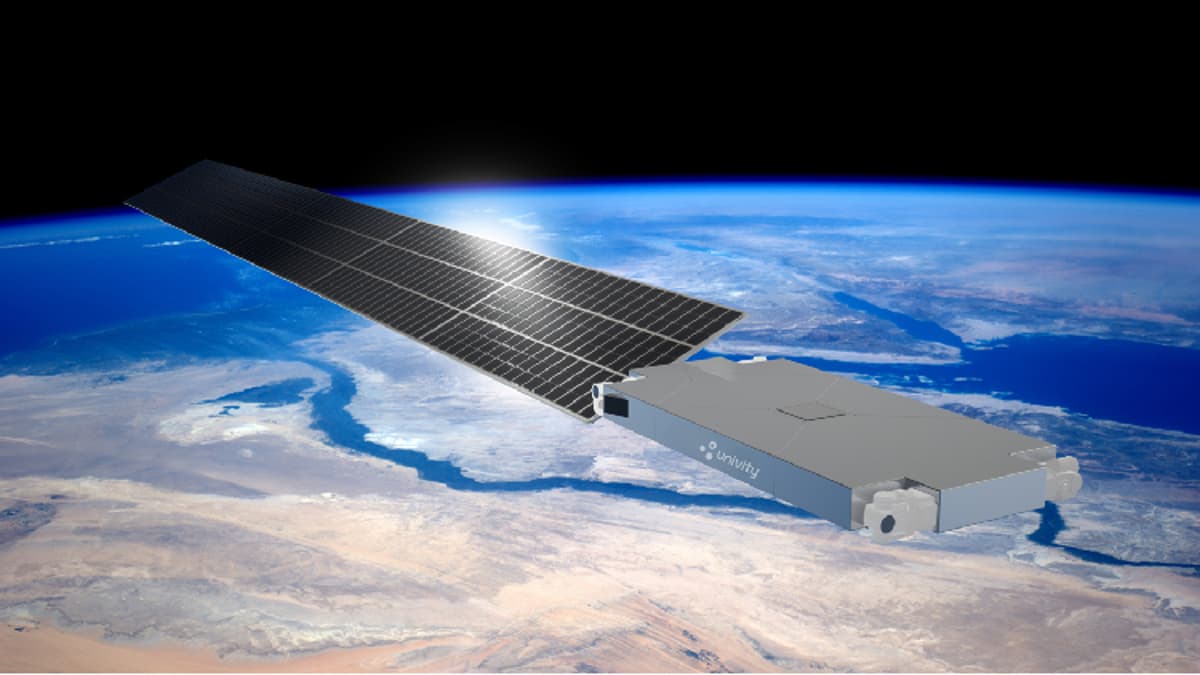
Univity Adds Direct-to-Device Service in VLEO Constellation
•February 6, 2026
0
Companies Mentioned

Univity
Why It Matters
D2D service brings satellite broadband directly to smartphones and connected vehicles, expanding market reach and reducing dependence on terrestrial networks. The move underscores accelerating demand for low‑latency, high‑bandwidth connectivity that could shape future 6G ecosystems.
Key Takeaways
- •Direct-to-device service adds cellular‑compatible antenna
- •Satellite power increased for smaller device antennas
- •1,500‑sat VLEO constellation slated 2028‑2031
- •Batches of 60 sats require at least 25 launches
- •In‑house subsystem development enables rapid market pivots
Pulse Analysis
Univity’s shift to direct‑to‑device connectivity reflects a broader industry trend toward integrating satellite links with everyday consumer hardware. Very‑low‑Earth‑orbit constellations, operating below 375 km, can deliver lower latency than traditional medium‑orbit systems, making them attractive for mobile broadband, autonomous vehicles, and IoT applications. By targeting smartphones and connected cars, Univity taps into a massive, untapped user base, positioning itself alongside emerging terrestrial 5G/6G networks and offering redundancy in areas where ground infrastructure is sparse or vulnerable.
The technical redesign required to reach handheld devices is non‑trivial. Smaller antennas on phones demand higher transmit power, prompting Univity to boost satellite output and incorporate an additional antenna tuned to cellular frequencies. Maintaining a seven‑year orbital lifespan in VLEO also challenges engineers, as increased atmospheric drag accelerates orbital decay. While the company withheld specific mitigation strategies, its thin, 30‑cm form factor suggests innovative materials and propulsion solutions that could set new standards for durability in high‑drag environments.
From a business perspective, Univity’s aggressive launch cadence—60 satellites per flight across at least 25 missions—signals confidence in market demand and a willingness to fund development through capacity presales. By retaining subsystem design in‑house, the startup can swiftly adapt to emerging standards such as 6G, ensuring its architecture remains future‑proof. This vertical integration not only reduces reliance on external suppliers but also offers investors a clearer path to scalability, making Univity a notable contender in the rapidly evolving satellite communications landscape.
Univity Adds Direct-to-Device Service in VLEO Constellation
0
Comments
Want to join the conversation?
Loading comments...