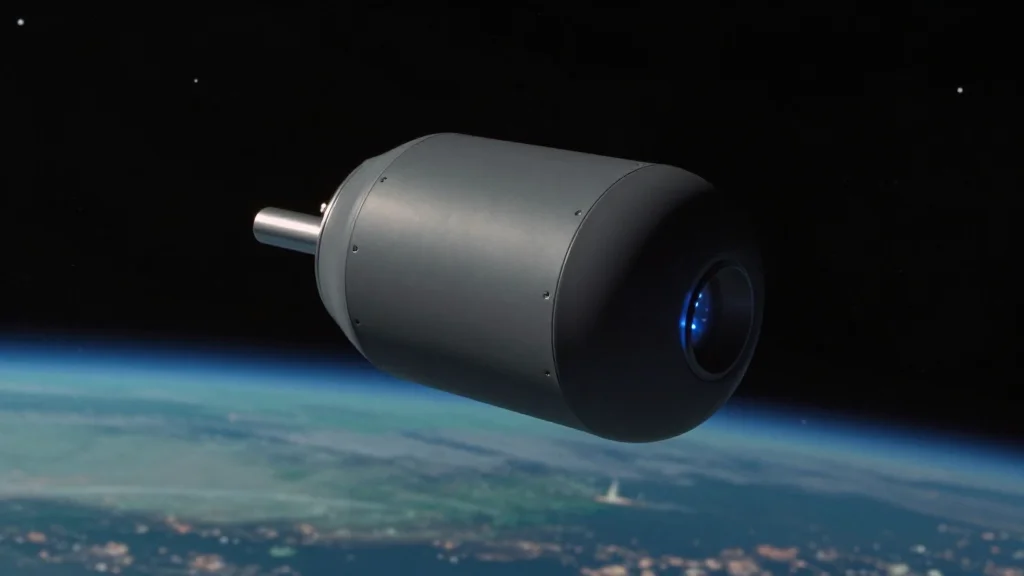
US NRL Launches Three Experimental Payloads on STPSat-7 Mission
Why It Matters
The experiment bolsters U.S. space situational awareness and military navigation resilience, while validating commercial sensor components for future defense satellites.
Key Takeaways
- •LARADO targets sub‑centimeter orbital debris undetectable from ground
- •GOSAS provides high‑resolution ionospheric data for military GNSS reliability
- •GARI‑1C space‑qualifies compact gamma‑ray detectors for threat detection
- •STPSat‑7 demonstrates CubeSat‑compatible payloads on a Minotaur IV launch
Pulse Analysis
The Naval Research Laboratory’s three‑payload payload suite on STPSat‑7 marks a strategic step in the U.S. defense community’s push toward more autonomous, data‑rich space assets. By leveraging a Minotaur IV launch from Vandenberg, the Department of War’s Space Test Program delivered LARADO, GOSAS and GARI‑1C into low‑Earth orbit, demonstrating that low‑cost, CubeSat‑compatible instruments can be integrated into larger government missions without sacrificing performance. This approach aligns with broader DoD initiatives to reduce launch costs while expanding the sensor footprint in orbit.
Each instrument addresses a distinct capability gap. LARADO’s laser‑sheet sensor is designed to detect sub‑centimeter debris that evades ground‑based radar, providing the Navy with real‑time situational awareness of collision risks. GOSAS builds on the GROUP‑C experiment, delivering high‑resolution ionospheric measurements that improve GPS reliability for naval and ground forces operating in contested environments. Meanwhile, GARI‑1C tests commercially sourced gadolinium‑based scintillators, aiming to space‑qualify compact gamma‑ray detectors that could identify nuclear events or other weapons of mass destruction from orbit.
Beyond the immediate technical outcomes, the mission signals a shift toward rapid prototyping and commercial‑off‑the‑shelf (COTS) integration within defense space programs. Successful qualification of these payloads could accelerate the fielding of next‑generation space‑based threat sensors, reduce acquisition cycles, and enhance the United States’ ability to monitor both debris and hostile activities in the increasingly congested near‑Earth environment. As the Navy and other services look to expand their space presence, STPSat‑7 serves as a proof point that innovative, low‑mass payloads can deliver high‑value intelligence without the overhead of traditional satellite platforms.
US NRL launches three experimental payloads on STPSat-7 mission
Comments
Want to join the conversation?
Loading comments...