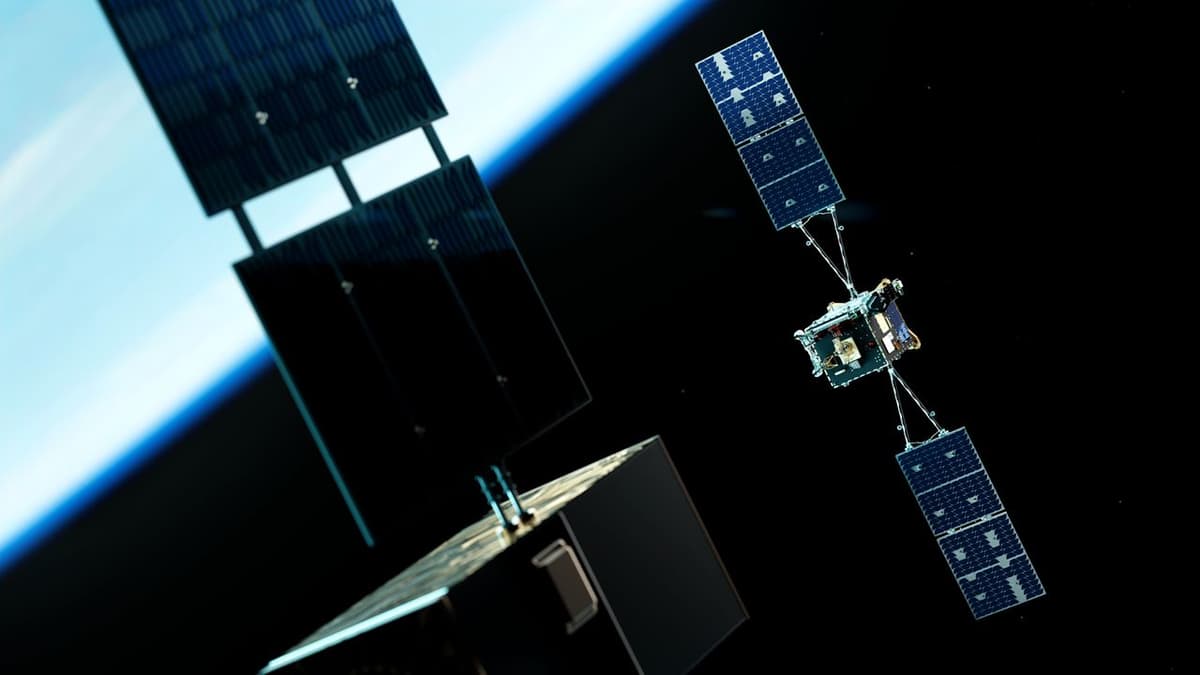
US Space Force Awards 1st-of-Its-Kind $52 Million Contract to Deorbit Its Satellites
•January 21, 2026
0
Companies Mentioned
Why It Matters
The contract validates a commercial market for large‑scale satellite disposal, addressing space‑debris risks while enabling resilient military constellations. It also signals growing reliance on private servicing firms for national security assets.
Key Takeaways
- •Starfish wins $52.5M Space Force deorbit contract
- •Otter satellite will provide deorbit‑as‑a‑service
- •PWSA constellation will host hundreds of military satellites
- •Otter Pup missions demonstrate docking and proximity capabilities
Pulse Analysis
The rapid expansion of low‑Earth‑orbit constellations has intensified concerns over orbital debris, prompting governments and operators to seek reliable end‑of‑life solutions. Traditional approaches rely on passive decay or costly on‑orbit maneuvers, but a dedicated deorbit service can systematically clear defunct assets, preserving valuable orbital slots and reducing collision risk. For the U.S. Space Force, adopting a commercial deorbit capability aligns with a broader shift toward modular, resilient satellite architectures that favor quantity and redundancy over a few high‑cost platforms.
Starfish Space’s Otter platform leverages a proven software stack and autonomous proximity‑operations heritage demonstrated by its Otter Pup demonstrators. By achieving sub‑kilometer rendezvous accuracy and planning the first commercial LEO docking, the company showcases the technical maturity required for safe, repeatable disposal missions. The $52.5 million award not only funds the inaugural operational flight but also establishes a revenue stream that could fund further iterations, lowering the cost per deorbit event and encouraging other constellation operators to adopt a "deorbit‑as‑a‑service" model.
Industry analysts view this contract as a catalyst for a nascent market segment that blends satellite servicing, orbital logistics, and debris mitigation. As regulatory frameworks tighten and insurers demand active debris removal, commercial providers like Starfish are positioned to capture a share of the multi‑billion‑dollar servicing ecosystem. The partnership also underscores the strategic value of public‑private collaboration in national security space, suggesting future contracts may extend beyond disposal to include on‑orbit refueling, upgrades, or rapid replacement of mission‑critical assets. Confidence in the sector’s growth is reflected in rising venture capital flows and the emergence of competing tug and servicer concepts worldwide.
US Space Force awards 1st-of-its-kind $52 million contract to deorbit its satellites
0
Comments
Want to join the conversation?
Loading comments...