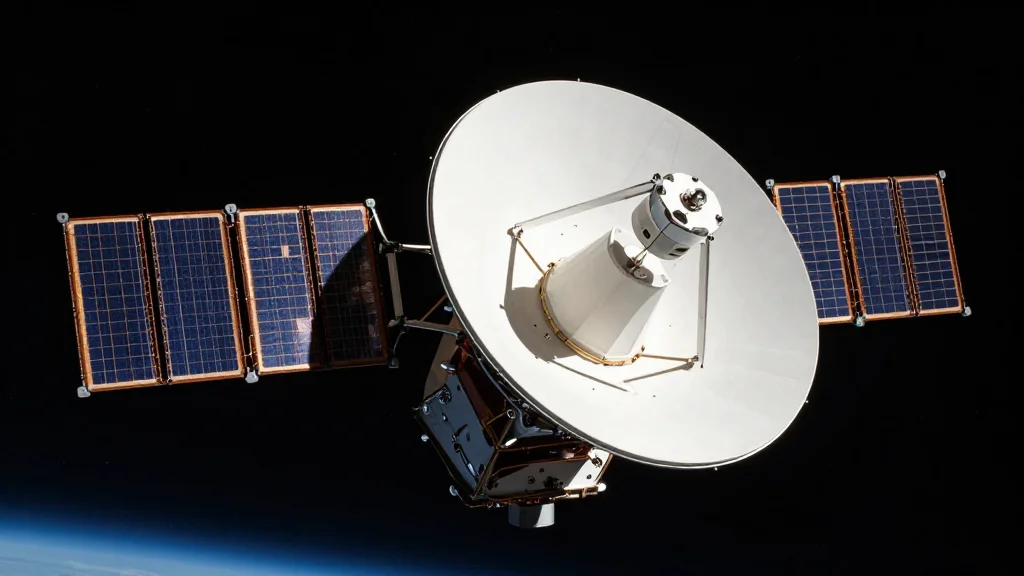
U.S. Space Force Awards Northrop Grumman $398 Million Contract for Jam‑resistant SATCOM Prototype

Companies Mentioned
Why It Matters
Resilient satellite communications are a cornerstone of modern joint operations, especially as adversaries develop more sophisticated electronic warfare tools. The Enhanced PTS‑P contract demonstrates the U.S. military’s commitment to staying ahead of those threats by integrating anti‑jamming hardware with on‑orbit processing, which can preserve data integrity and reduce latency for tactical users. Beyond the immediate defense benefit, the program could shape the commercial market for secure satellite services. If the prototype proves successful, allied nations and private operators may seek similar capabilities, driving demand for hardened payloads and creating a new revenue stream for aerospace firms that can deliver them.
Key Takeaways
- •U.S. Space Force awarded Northrop Grumman a $398 million contract for an Enhanced PTS‑P satellite.
- •Prototype will feature advanced anti‑jamming antennas and space‑based data processing.
- •Launch is scheduled for no earlier than fiscal year 2030, using the GEOStar‑3 bus.
- •The contract expands a 2020 baseline PTS‑P program that already produced one satellite.
- •Success could lead to export variants and stimulate the market for hardened SATCOM services.
Pulse Analysis
The Space Force’s decision to fund a $398 million prototype reflects a strategic shift toward incremental capability upgrades rather than waiting for large‑scale constellation replacements. By focusing on anti‑jamming and on‑orbit processing, the service is addressing two critical vulnerabilities: susceptibility to electronic attack and the latency inherent in ground‑based relay architectures. This approach mirrors trends in the broader defense sector, where modular, upgradable systems are favored for cost‑effectiveness and rapid fielding.
Northrop Grumman’s selection leverages its existing GEOStar‑3 platform, a proven bus that offers flexibility in launch options and payload integration. The company’s prior experience with the baseline PTS‑P gives it a head start, reducing development risk. Competitors such as Lockheed Martin are pursuing similar capabilities, but Northrop’s early foothold may translate into a competitive advantage, especially if the prototype demonstrates superior performance in contested environments.
Looking ahead, the contract could catalyze a new wave of commercial interest in jam‑resistant technologies. As allied nations modernize their forces, they will likely demand interoperable, secure communications that can operate alongside U.S. assets. The prototype’s success could therefore open export opportunities, creating a feedback loop that fuels further investment in resilient satellite architectures. In a theater where electronic warfare is increasingly decisive, the Enhanced PTS‑P may become a benchmark for future tactical SATCOM designs.
U.S. Space Force awards Northrop Grumman $398 million contract for jam‑resistant SATCOM prototype
Comments
Want to join the conversation?
Loading comments...