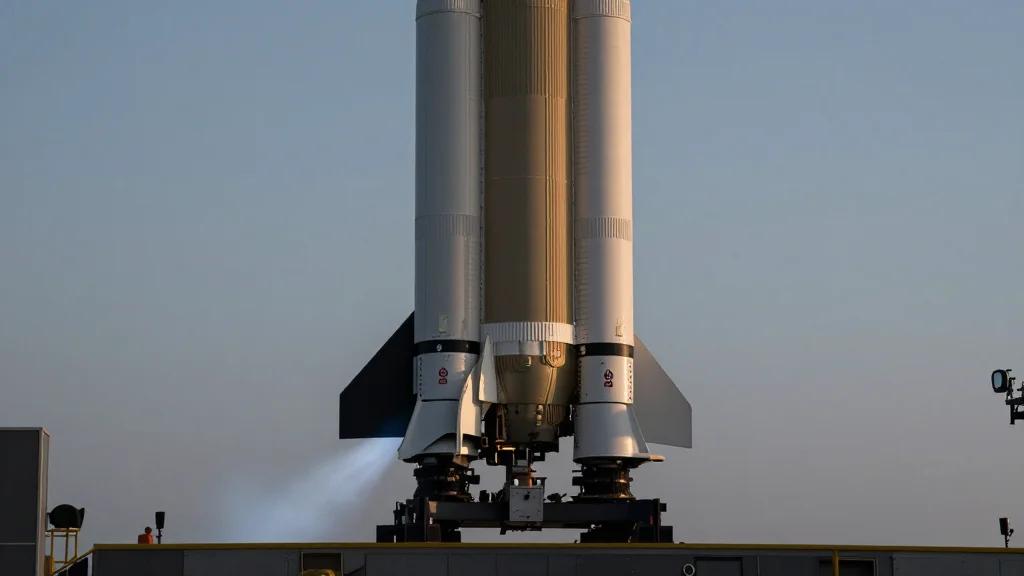
U.S. Space Force Eyes ULA Vulcan for Lower‑Risk National‑Security Launches

Companies Mentioned
Why It Matters
The Space Force’s consideration of the Vulcan for lower‑risk missions could reshape the national‑security launch ecosystem. By re‑introducing a domestic, expendable launch option, the service reduces its dependence on a single commercial provider and safeguards critical supply chains. The move also pressures ULA to accelerate certification of a booster‑free configuration, which could lower launch costs for lighter payloads and open new market segments. For the broader SpaceTech industry, the decision signals that even grounded vehicles can find niche roles if they can be repurposed to meet specific risk and performance criteria. This flexibility may encourage other launch firms to develop modular architectures that can be tailored to a range of mission profiles, fostering innovation and competition.
Key Takeaways
- •Col. Eric Zarybnisky announced the Space Force is weighing Vulcan for lower‑risk missions at the Space Symposium.
- •The Vulcan remains grounded after a February 12 anomaly that caused a thrust‑vector deviation.
- •Lt. Gen. Philip Garrant said the core stage could launch without solid boosters, supporting upcoming SDA missions.
- •A booster‑free Vulcan could diversify U.S. national‑security launch options and reduce single‑source risk.
- •A formal assessment is slated for later 2026, with flight decisions expected in early 2027.
Pulse Analysis
The Space Force’s tentative embrace of a stripped‑down Vulcan reflects a broader strategic calculus: balancing cost, risk, and industrial policy. While SpaceX’s reusable fleet dominates the launch market with aggressive pricing, the U.S. defense establishment still values a domestic, expendable alternative that can be fielded on short notice. By targeting lower‑mass, low‑orbit payloads, the service can test the core stage’s reliability without the added variables of solid boosters, effectively creating a low‑risk testbed.
Historically, the ULA partnership has been a cornerstone of U.S. launch capability, but recent budget pressures and the rise of commercial providers have forced a reevaluation. If the Vulcan can demonstrate a clean flight without boosters, it may regain credibility and secure a niche market for missions that do not justify the expense of a full‑scale launch vehicle. This could also spur a wave of modular launch designs across the industry, where providers offer a “core‑only” configuration for small‑satellite constellations and defense payloads.
Looking ahead, the Space Force’s decision will hinge on the outcome of the ongoing anomaly investigation and the ability of ULA to certify a booster‑free profile within a reasonable timeframe. Success could reinvigorate the domestic launch ecosystem, preserve jobs, and provide the Department of Defense with a more resilient launch architecture. Failure, however, may accelerate the shift toward commercial reusable systems and further marginalize expendable rockets in the national‑security arena.
U.S. Space Force Eyes ULA Vulcan for Lower‑Risk National‑Security Launches
Comments
Want to join the conversation?
Loading comments...