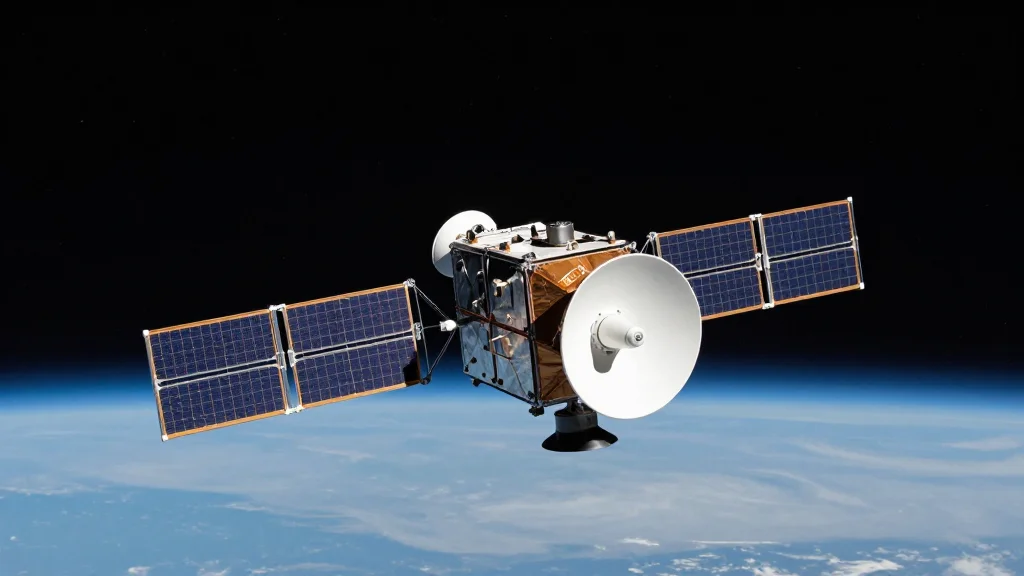
U.S. Space Force Launches GPS III‑8, Completing Next‑Gen Constellation

Companies Mentioned
Why It Matters
Completing the GPS III series solidifies the United States’ dominance in global navigation services, a cornerstone of modern defense and commerce. The added resiliency and precision directly enhance the effectiveness of U.S. and allied forces, while the civilian benefits—more accurate smartphone maps, faster emergency response, and tighter financial‑market timestamps—drive economic productivity across billions of devices. The launch also showcases a new acquisition paradigm: rapid, modular satellite development paired with commercial launch providers. This model reduces schedule risk, cuts costs, and enables faster fielding of cutting‑edge capabilities, setting a template for future space‑based programs such as missile‑warning constellations and low‑Earth‑orbit broadband networks.
Key Takeaways
- •GPS III‑8 (SV‑10) launched on April 21, 2026, completing the 32‑satellite GPS III constellation
- •Satellite carries M‑code, optical cross‑link demo, and advanced atomic clock
- •Lockheed Martin VP Fang Qian called the launch an "important milestone" for GPS
- •Col. Brian L. Chatman cited a record‑breaking 109 Space Force launches in 2025
- •The mission demonstrates rapid acquisition, with manifest adjusted in under seven weeks
Pulse Analysis
The GPS III‑8 launch is more than a checklist item; it signals a strategic shift in how the U.S. fields space capabilities. By marrying Lockheed Martin’s modular satellite architecture with SpaceX’s reusable launch cadence, the Space Force has proven that high‑value, defense‑grade assets can be delivered on a commercial‑grade timeline. This hybrid approach reduces the traditional 18‑ to 24‑month development‑to‑launch window to under a year, a competitive edge as peer nations accelerate their own GNSS programs.
From a market perspective, the optical cross‑link demonstration on SV‑10 is a harbinger of a more interconnected satellite ecosystem. Future GPS IIIF satellites will be able to share timing and navigation data directly, mitigating single‑point failures and enhancing resistance to jamming or spoofing attacks. Commercial players—especially those building autonomous vehicle platforms or high‑frequency trading infrastructure—stand to benefit from the tighter timing tolerances and more robust signal integrity that these upgrades promise.
Looking forward, the real test will be how quickly the Space Force can translate these technology demos into operational capability. The planned GPS IIIF rollout, with its Regional Military Protection feature, aims to deliver a 60‑fold increase in anti‑jam performance. If the acquisition model that delivered GPS III‑8 can be replicated at scale, the United States could field a constellation that not only outpaces rivals like Russia’s GLONASS and China’s BeiDou but also sets a new benchmark for civilian navigation services worldwide. The stakes are high: navigation underpins everything from precision strike weapons to global supply chains, and maintaining superiority in this domain will be a decisive factor in future geopolitical contests.
U.S. Space Force Launches GPS III‑8, Completing Next‑Gen Constellation
Comments
Want to join the conversation?
Loading comments...