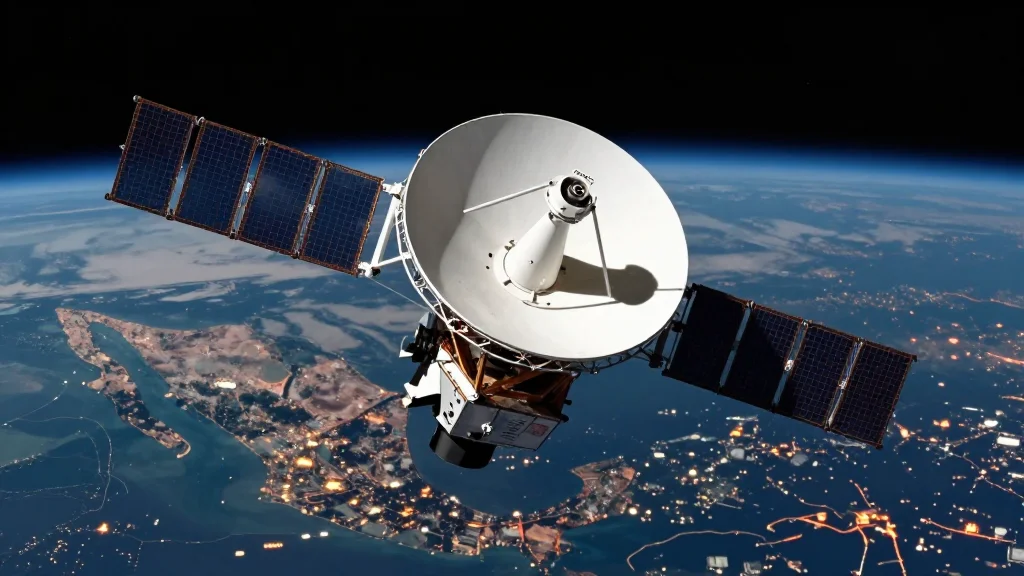
US–Indian Space Mission Maps Extreme Subsidence in Mexico City
Why It Matters
Accurate, frequent subsidence data equips Mexican authorities and engineers with the insight needed to prioritize repairs and adjust groundwater policies, potentially averting costly infrastructure failures. The success of NISAR also proves the value of US‑Indian space collaboration for climate‑resilient urban planning worldwide.
Key Takeaways
- •NISAR detected up to >2 cm/month subsidence in parts of Mexico City.
- •Subsidence driven by groundwater extraction and heavy urban load.
- •L‑band radar works day/night, through clouds, enabling continuous monitoring.
- •Findings align with historic measurements, confirming NISAR’s accuracy.
- •Data will help planners mitigate road, building and water‑line damage.
Pulse Analysis
Mexico City’s sinking problem is not new, but the precision of NISAR’s measurements changes the conversation. For more than a century the metropolis has been built on a compacted lakebed, and unchecked groundwater pumping has accelerated the compression of soft sediments. Traditional ground surveys and optical satellites struggled with cloud cover and intermittent revisits, leaving planners with fragmented data. NISAR’s ability to deliver centimeter‑scale deformation maps every few weeks provides a continuous narrative of how the city’s foundation is shifting, a critical input for risk assessments and budgeting.
The technical edge of NISAR lies in its L‑band synthetic‑aperture radar, which penetrates vegetation and soil to sense subtle surface motions. Operating at a wavelength that is less affected by atmospheric moisture, the sensor can acquire data day and night, regardless of weather, and revisit the same spot multiple times per month. This cadence produces a time series that distinguishes genuine subsidence from noise, as demonstrated by the clear dark‑blue zones in the latest Mexico City map. The mission’s early results also validate its calibration against decades of ground‑based observations, reinforcing confidence in its global applicability.
Beyond Mexico City, NISAR’s continuous monitoring promises to reshape how governments address land‑level change. Urban planners can integrate real‑time deformation data into GIS platforms, enabling proactive reinforcement of vulnerable infrastructure such as metro tunnels and water pipelines. Policymakers may use the evidence to tighten groundwater extraction regulations, balancing water security with ground stability. As more regions—coastal deltas, river basins, and permafrost zones—receive comparable coverage, the satellite constellation could become a cornerstone of climate‑adaptation strategies worldwide.
US–Indian space mission maps extreme subsidence in Mexico City
Comments
Want to join the conversation?
Loading comments...