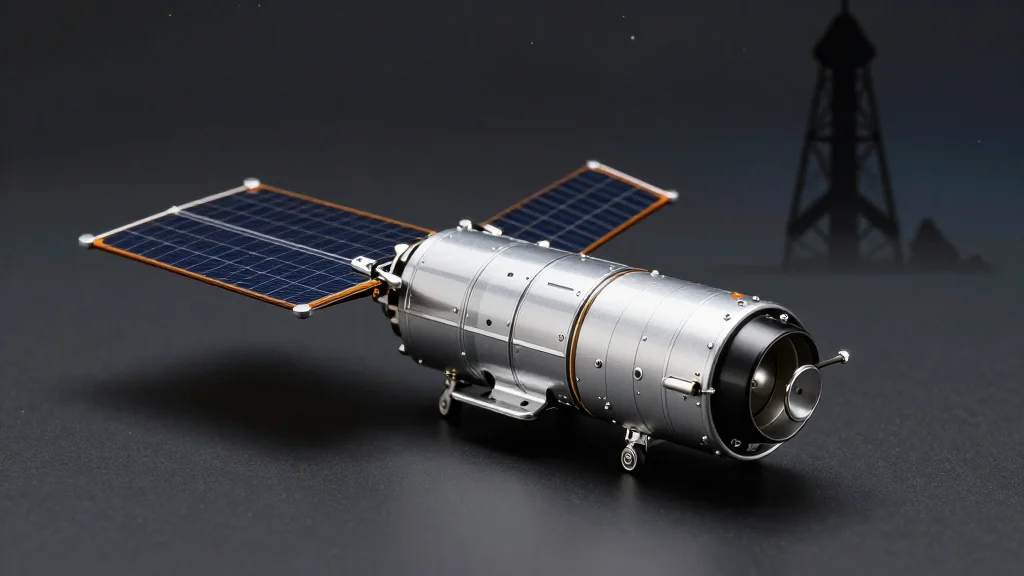
Vast Launches 15 kW Satellite Bus, Secures First Order for Four High‑Power Satellites

Companies Mentioned
Why It Matters
Vast’s move into high‑power satellite buses illustrates a broader shift among space‑station builders toward diversified product lines, reducing reliance on a single revenue source. By repurposing proven subsystems from the Haven Demo, Vast can accelerate time‑to‑market and offer customers a turnkey solution that blends communications, sensing and edge‑compute capabilities. This could pressure rivals to bundle similar functionalities, intensifying competition in the growing LEO and emerging lunar markets. The early order for four satellites, with a potential expansion to 200, demonstrates that customers value the combination of high power and flexible payload capacity. If Vast meets its 2027 launch target, it will prove that large‑scale manufacturing can be applied to small‑satellite production, potentially lowering costs and expanding access for both commercial and defense users.
Key Takeaways
- •Vast unveiled a 15 kW satellite bus capable of carrying >350 kg payloads
- •Confidential customer signed for four units, with an option for up to 200 more
- •First launch of ten satellites planned for late 2027, targeting LEO initially
- •Company invested >$1 billion in manufacturing facilities to support high‑volume production
- •Recent financing includes $300 million Series A equity and $200 million debt
Pulse Analysis
Vast’s entry into the high‑power satellite bus market is a strategic diversification that leverages its existing engineering pedigree while addressing a clear market gap. The 15 kW power envelope places the bus above most current small‑sat platforms, enabling payloads that were previously restricted to larger, more expensive satellites. This power advantage aligns with the industry’s push toward on‑orbit data processing and AI, where computational loads demand substantial energy.
Historically, space‑station developers have struggled to monetize hardware beyond crewed habitats. By translating Haven‑Demo subsystems into a commercial bus, Vast sidesteps that pitfall and creates a revenue stream that can sustain its manufacturing ecosystem. The $1 billion plant investment suggests the company is betting on economies of scale, a model that could drive down per‑unit costs if demand materializes. Competitors such as Airbus and OneWeb are already offering modular buses, but few combine the same power level with a proven flight heritage.
Looking ahead, the success of Vast’s first launch will be a litmus test for its production cadence and quality control. If the company can deliver a reliable, high‑power platform at competitive pricing, it may attract not only commercial broadband operators but also defense agencies seeking resilient, high‑throughput assets. Conversely, any delays or performance shortfalls could reinforce skepticism about the scalability of space‑station‑derived hardware. The next 12‑18 months will therefore be pivotal in determining whether Vast becomes a major player in the satellite bus arena or remains a niche provider.
Vast Launches 15 kW Satellite Bus, Secures First Order for Four High‑Power Satellites
Comments
Want to join the conversation?
Loading comments...