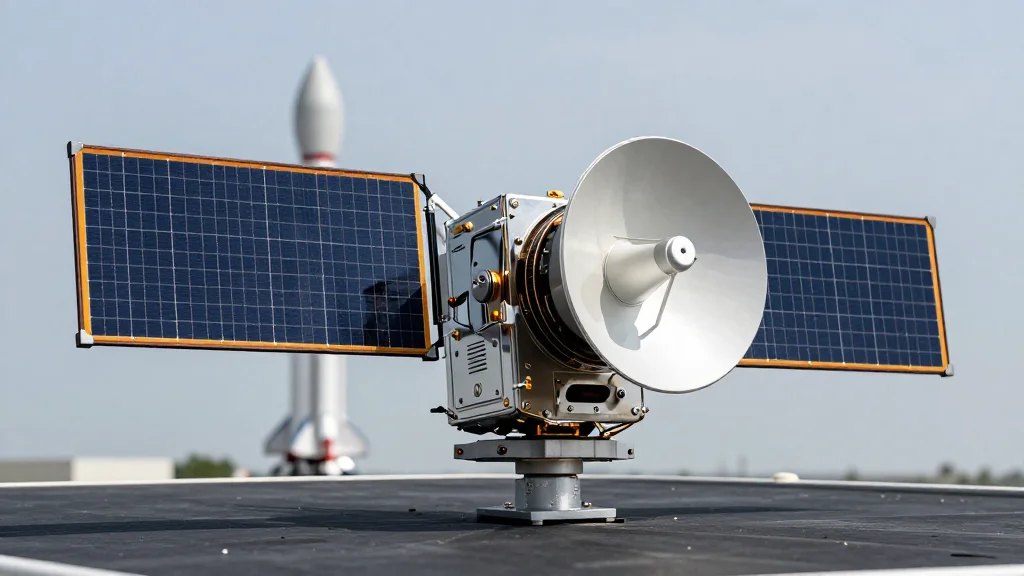
Vast Unveils 15 kW Satellite Bus Leveraging Haven‑1 Heritage

Companies Mentioned
Why It Matters
Vast’s move blurs the line between space‑station developers and satellite manufacturers, suggesting a future where a single provider can deliver both habitats and the communications backbone that supports them. By repurposing proven station‑derived technology for high‑power satellites, Vast could lower entry barriers for new constellations, accelerate deployment timelines, and increase overall system reliability—factors critical to the scaling of LEO services. The announcement also highlights a broader industry trend: companies are seeking to monetize heritage hardware across multiple markets to diversify revenue streams. If Vast can translate its station expertise into competitive satellite buses, it may force traditional aerospace firms to rethink their product strategies and accelerate the adoption of modular, vertically integrated production lines.
Key Takeaways
- •Vast launches 15 kW high‑power satellite bus line called Vast Satellite
- •First customer orders four units with an option for up to 200 more
- •Bus leverages avionics, power and software heritage from Haven‑1 and the 2025 Haven Demo mission
- •Optional NVIDIA Space‑1 Vera Rubin module targets orbital AI and data‑center workloads
- •Launch of ten buses targeted for late 2027 to demonstrate production and performance
Pulse Analysis
Vast’s entry into the high‑power satellite bus market represents a strategic pivot that could reshape the competitive dynamics of LEO infrastructure. Historically, satellite bus manufacturers have operated in a siloed ecosystem, relying on legacy aerospace supply chains and long development cycles. Vast’s vertically integrated approach, anchored by in‑house subsystems validated on a commercial space‑station, promises a faster, potentially cheaper path to market. This could pressure incumbents like Airbus and Boeing to accelerate their own modular production initiatives or seek partnerships that provide comparable heritage.
The inclusion of an NVIDIA‑powered compute module is particularly noteworthy. As constellations evolve from simple relay platforms to on‑orbit processing nodes, the demand for edge AI capabilities will rise sharply. By bundling this capability into its bus architecture, Vast positions itself at the intersection of satellite communications and space‑based computing—a convergence that could attract defense contracts and commercial data‑center operators alike.
However, the venture carries risks. Scaling from a handful of bespoke stations to high‑volume satellite production tests Vast’s manufacturing scalability and supply‑chain resilience. The success of the 2027 launch will be a critical proof point; any delays or performance shortfalls could erode confidence among prospective customers. Moreover, the confidential nature of the initial order leaves market size and pricing opaque, making it difficult to gauge the true commercial impact.
If Vast can deliver on its promises, the company may catalyze a new business model where space‑station expertise fuels a broader ecosystem of LEO services, from habitats to high‑throughput satellites and orbital data centers. This integrated vision could accelerate the timeline for sustained human presence in low Earth orbit and lay groundwork for deeper space exploration.
Vast Unveils 15 kW Satellite Bus Leveraging Haven‑1 Heritage
Comments
Want to join the conversation?
Loading comments...