Verizon Details ‘Satellite-Everywhere’ for Disaster Response, Expands Satellite Fleet
Why It Matters
By adding a versatile satellite layer, Verizon strengthens network resilience, ensuring critical communications stay online when terrestrial infrastructure is damaged. This strategy positions the telco as a leader in emergency connectivity, a growing market amid climate‑related disasters.
Key Takeaways
- •Verizon's satellite fleet reaches 2,600 assets in 2026.
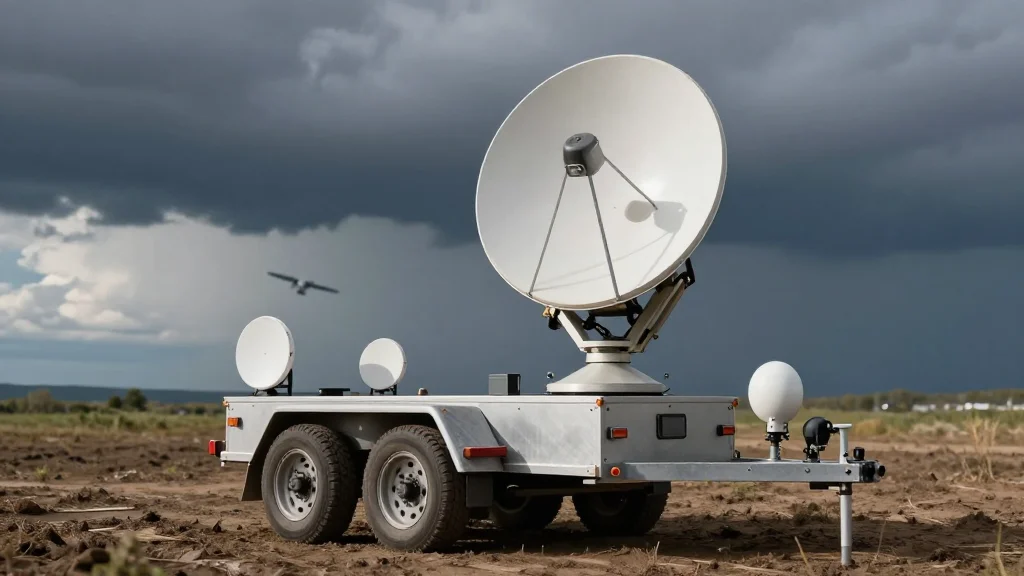
- •Multi‑orbit off‑road trailer toggles GEO and LEO links.
- •Trailer provides mobile 5G hotspot for deep‑woods disaster response.
- •Verizon testing permanent satellite backhaul at hurricane‑prone Southeast towers.
- •Redundant satellite layer enhances resilience beyond fiber in emergencies.
Pulse Analysis
Verizon’s latest push into satellite‑based disaster response reflects a broader industry shift toward diversified backhaul solutions. While fiber remains the gold standard for capacity and latency, extreme weather events increasingly expose its vulnerability. By integrating a fleet of 2,600 satellite assets—including a rugged trailer that can hop between geostationary and low‑earth orbit constellations—Verizon adds a flexible, rapid‑deployment option that can restore connectivity within minutes, a critical advantage for first‑responders and isolated communities.
The multi‑orbit off‑road trailer is more than a mobile antenna; it functions as a self‑contained 5G hotspot, complete with backup power and a fly‑away terminal from AvL Technologies. This capability enables the carrier to set up temporary cell sites in remote forests, flood‑stricken coastlines, or any terrain where traditional infrastructure is compromised. Such mobility not only supports emergency services but also opens new revenue streams in temporary event coverage and remote‑work solutions, where on‑demand high‑speed connectivity is prized.
Testing permanent satellite backhaul at high‑power towers in Georgia, Florida, and the Carolinas underscores Verizon’s commitment to a layered resilience model. By pairing satellite links with battery and generator backups, the company can keep critical traffic flowing even when power grids and fiber are down. This approach could set a new benchmark for telecom operators, prompting competitors to accelerate their own satellite integrations as climate‑driven disruptions become more frequent and costly.
Verizon Details ‘Satellite-Everywhere’ for Disaster Response, Expands Satellite Fleet
Comments
Want to join the conversation?
Loading comments...