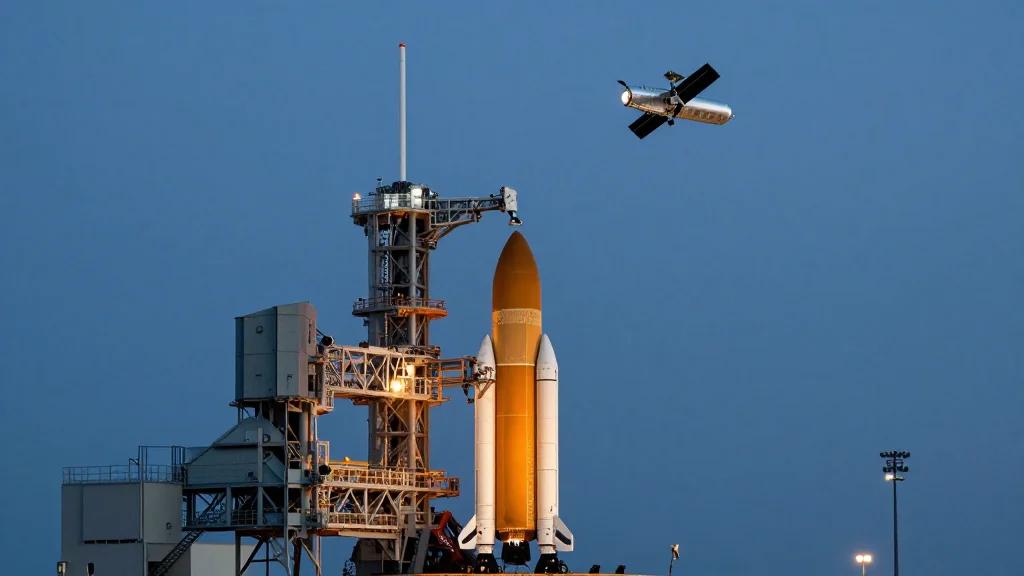
Viasat Sets April 27 Launch for ViaSat-3 F3 Satellite, Completing Global Constellation

Companies Mentioned
Why It Matters
The ViaSat‑3 F3 launch finalizes Viasat’s ambitious three‑satellite high‑throughput constellation, dramatically expanding broadband capacity in the fast‑growing Asia‑Pacific region. By delivering a terabit‑scale network with flexible, secure bandwidth, Viasat can better serve enterprise, mobility, and defense customers who demand both high data rates and sovereign‑grade resilience. The mission also highlights the strategic importance of heavy‑lift launch services in the evolving satellite market. SpaceX’s Falcon Heavy enables larger, more capable satellites to reach orbit with reduced propellant mass, lowering overall system cost and accelerating deployment timelines. As satellite operators race to build global coverage, the ability to launch high‑capacity platforms efficiently will be a decisive factor in market share and competitive positioning.
Key Takeaways
- •ViaSat-3 F3 launch scheduled for April 27, 2026, on SpaceX Falcon Heavy
- •85‑minute launch window opens at 10:21 a.m. EDT from LC‑39A
- •Satellite will provide APAC coverage and add ~1 Tbps to Viasat’s network
- •Service expected to begin by late summer 2026 after in‑orbit testing
- •Completes ViaSat‑3 constellation, enhancing Viasat’s sovereign communications offering
Pulse Analysis
Viasat’s decision to close its ViaSat‑3 constellation with the F3 launch reflects a calculated bet on geostationary high‑throughput satellites (HTS) as a counterpoint to the low‑Earth‑orbit (LEO) surge led by SpaceX’s Starlink and OneWeb. While LEO constellations excel in latency, HTS platforms like ViaSat‑3 deliver unmatched coverage per satellite and can be equipped with flexible, multi‑band payloads that serve both broadband and secure government traffic. By completing the trio, Viasat can now offer a unified, global network that leverages economies of scale, potentially lowering the cost per megabit for enterprise customers and making its services more attractive to carriers seeking to augment terrestrial backhaul.
The partnership with SpaceX also signals a pragmatic shift in launch economics. Falcon Heavy’s ability to place a 15‑ton class satellite directly into a high‑energy transfer orbit reduces the need for large onboard chemical propellant, freeing mass for additional transponders and power systems. This efficiency translates into higher payload capacity and lower launch cost per gigabit of bandwidth—a critical metric as satellite operators compete on price and performance. Moreover, Viasat’s focus on a “common lower mass multi‑orbit, multi‑band satellite architecture” suggests future flexibility to integrate LEO or medium‑Earth‑orbit (MEO) elements, blending the strengths of both orbital regimes.
From a market perspective, the APAC region represents a lucrative growth frontier, with rising demand for connectivity in remote islands, maritime routes, and emerging economies. Viasat’s entry with a dedicated HTS satellite positions it to capture a slice of this demand, especially among governments and enterprises that prioritize secure, sovereign‑controlled communications over the more open LEO offerings. As the satellite broadband sector matures, the ability to deliver high‑capacity, resilient services on a global scale will likely become a key differentiator, and Viasat’s completed constellation puts it in a strong position to compete.
Viasat Sets April 27 Launch for ViaSat-3 F3 Satellite, Completing Global Constellation
Comments
Want to join the conversation?
Loading comments...