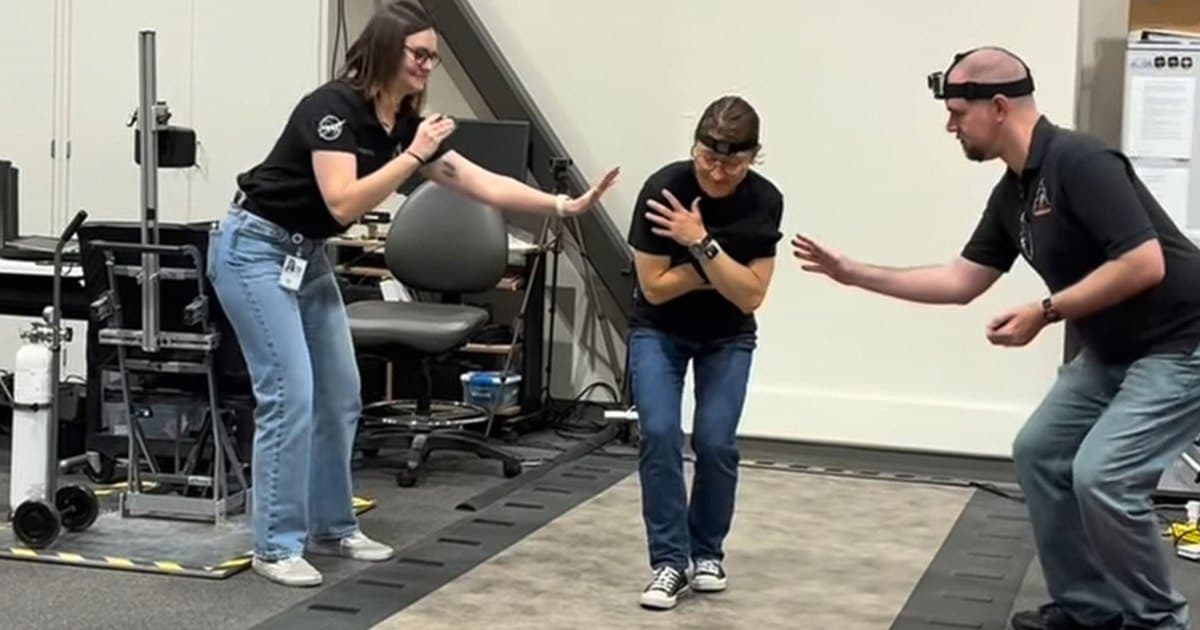
Video Shows NASA Astronaut Struggling to Walk After Journey Around the Moon

Why It Matters
Understanding and mitigating post‑flight vestibular loss is critical for astronaut safety on longer missions and offers new insights for treating balance disorders on Earth.
Key Takeaways
- •Christina Koch's tandem walk video shows post‑flight balance loss
- •Vestibular system stalls in microgravity, eyes become primary orientation cue
- •Similar symptoms reported by ESA’s Andreas Mogensen and NASA’s Jasmin Moghbeli
- •Findings inform treatment of vertigo, concussion, and neuro‑vestibular disorders on Earth
- •No proven in‑flight countermeasure yet; recovery relies on time and rehab
Pulse Analysis
The Artemis 2 mission marked NASA’s first crewed flight to orbit the Moon since Apollo, carrying veteran astronaut Christina Koch and three teammates on a ten‑day lunar flyby. While the spacecraft’s trajectory showcased spectacular Earth‑rise and lunar‑surface views, the crew spent the entire flight in microgravity, a condition that rapidly deconditions the musculoskeletal and neuro‑vestibular systems. Decades of research have shown that weightlessness suppresses the inner‑ear vestibular organs, forcing the brain to rely on visual cues. This adaptation is essential for maneuvering in space but creates a steep re‑adjustment curve once gravity returns.
Within a week of splashdown, Koch posted an Instagram reel of herself attempting a tandem walk with her eyes closed, visibly wobbling and over‑stepping. The clip illustrates the classic ‘post‑flight vestibular syndrome’ where the brain’s balance map, recalibrated for weightlessness, conflicts with Earth’s pull. Similar reports have emerged from ESA astronaut Andreas Mogensen and NASA’s Jasmin Moghbeli, who described two days of unsteady gait and neck fatigue. Scientists view these real‑time demonstrations as valuable data for developing therapies for vertigo, concussion and other neuro‑vestibular disorders on the ground.
Despite rigorous in‑flight exercise regimes, NASA has yet to field an effective countermeasure that restores equilibrium immediately after landing. Current protocols rely on passive recovery and targeted rehabilitation, which can take weeks for full restoration. As commercial operators plan longer stays on lunar gateways and eventual Mars missions, the need for rapid vestibular re‑conditioning grows urgent. Ongoing studies are testing artificial‑gravity centrifuges, vestibular‑training devices, and pharmacologic agents to shorten the adaptation period. Success in this arena would not only safeguard astronaut health but also translate into improved balance therapies for the aging population and athletes worldwide.
Video Shows NASA Astronaut Struggling to Walk After Journey Around the Moon
Comments
Want to join the conversation?
Loading comments...