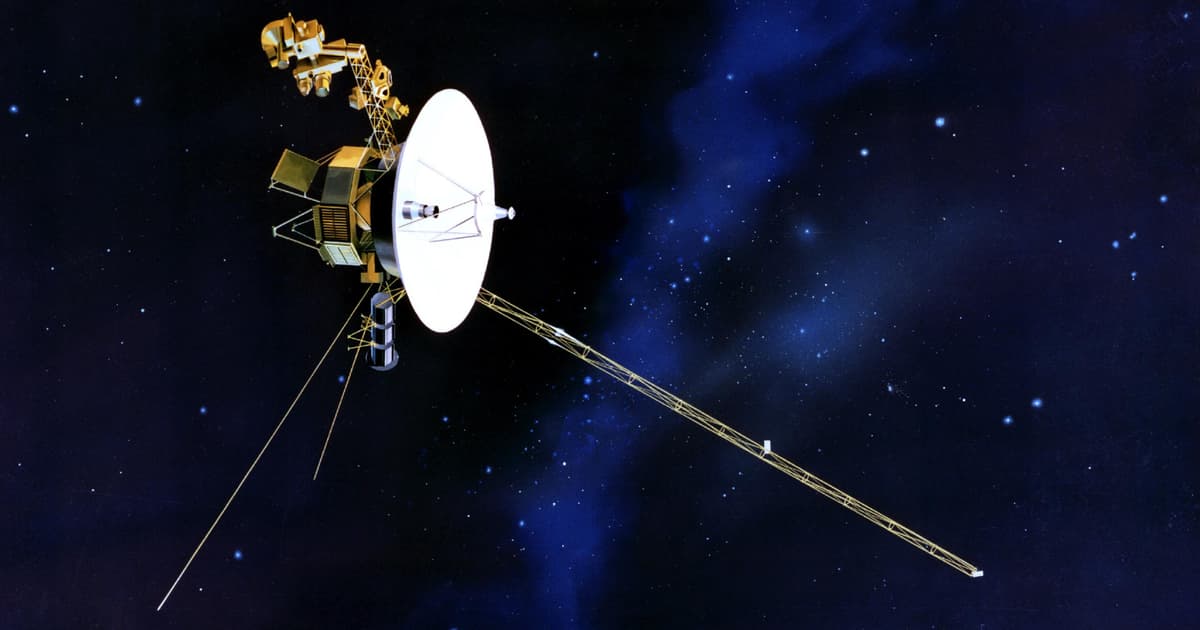
Voyager 1, the First Human-Made Craft to Enter Interstellar Space, Carries a Golden Record of Earth’s Music and Greetings — a Message Launched Into the Dark, Even Though It Will Not Pass Near Another Star for About 40,000 Years.
Why It Matters
The mission illustrates humanity’s attempt to craft a cultural time capsule for any future intelligences, while the dwindling power underscores the finite window for receiving data from the farthest human probe. Its longevity and symbolic value keep Voyager relevant in discussions of interstellar messaging and deep‑space engineering.
Key Takeaways
- •Voyager 1 carries a gold‑plated record with 90 minutes of music.
- •Record selected by Carl Sagan’s committee in 1977, includes 55 languages.
- •Spacecraft will pass within 1.6 ly of Gliese 445 in ~40,000 years.
- •Power from plutonium RTG loses ~4 W per year; most instruments shut down.
- •Record expected to survive a billion years, outlasting both probe and Earth.
Pulse Analysis
The Voyager program, launched in 1977, was designed primarily as a planetary reconnaissance mission, yet it also carried a bold cultural statement: a 12‑inch gold‑plated copper disc dubbed the Golden Record. Curated by a small team led by astronomer Carl Sagan, the record packs more than a hundred images, natural Earth sounds, spoken greetings in 55 languages and ninety minutes of music ranging from Bach to Navajo chants. By embedding this self‑portrait on the only human artifact to cross the heliopause, NASA created a tangible snapshot of 20th‑century civilization aimed at any intelligent listeners beyond the Solar System.
More than four decades later Voyager 1 remains a functional communications platform, but its plutonium‑powered radioisotope generator is inexorably waning, shedding roughly four watts each year. To stretch the remaining power, engineers at JPL have sequentially powered down eight of the ten original science instruments, leaving only a handful of sensors and the transmitter active. The round‑trip signal now takes about 23 hours, and the spacecraft’s health is monitored in real time as each shutdown buys roughly another year of contact. This careful stewardship highlights the challenges of operating deep‑space hardware far beyond its design life.
Voyager 1’s trajectory will bring it within 1.6 light‑years of the star Gliese 445 in about 40 kiloyears, a distance still far outside any plausible detection range for the Golden Record. The odds of an extraterrestrial civilization encountering the disc are effectively zero, a fact Sagan emphasized when he described the launch as a statement about humanity rather than a practical outreach effort. Nonetheless, the record’s engineered durability—projected to survive a billion years—offers a benchmark for future interstellar messaging initiatives, reminding designers that cultural artifacts can outlast the vessels that carry them.
Voyager 1, the first human-made craft to enter interstellar space, carries a golden record of Earth’s music and greetings — a message launched into the dark, even though it will not pass near another star for about 40,000 years.
Comments
Want to join the conversation?
Loading comments...