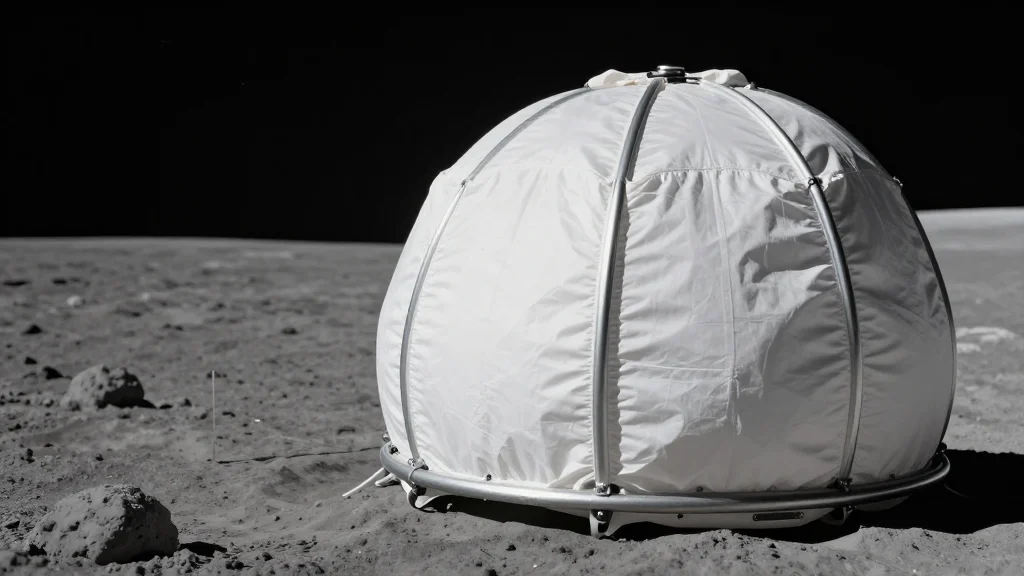
Voyager Technologies and Max Space Team up to Develop Inflatable Planetary Structures
Companies Mentioned

Why It Matters
The alliance accelerates commercial-ready inflatable habitats, reducing risk for NASA’s Artemis and SpaceX’s Mars ambitions while opening new revenue streams for both startups.
Key Takeaways
- •Voyager and Max Space partner on inflatable habitats
- •Starlab uses Starship; Thunderbird launches on Falcon 9
- •Joint designs target NASA and SpaceX lunar, Mars missions
- •Ground validation and in-space demos planned for this decade
- •Partnership aims for commercial scalability and risk reduction
Pulse Analysis
Inflatable habitat technology has moved from experimental modules on the ISS to a viable commercial product line, driven by the need for lightweight, high‑volume living spaces on other worlds. By leveraging the structural efficiency of fabric‑based pressure vessels, developers can launch larger habitats with existing launch vehicles, cutting costs and simplifying logistics. This trend aligns with broader industry shifts toward modular, rapidly deployable infrastructure that can support scientific research, tourism, and resource extraction on the Moon and Mars.
The Voyager‑Max Space partnership merges two complementary approaches: Voyager’s Starlab, a massive single‑module station designed for a single Starship launch, and Max Space’s Thunderbird, an inflatable module optimized for Falcon 9 payload constraints. Their combined expertise will address key engineering challenges such as thermal control, radiation shielding, and autonomous assembly on planetary surfaces. A phased development plan—starting with ground‑based validation, followed by orbital test flights, and culminating in surface demonstrations—mirrors NASA’s Artemis timeline, positioning the joint venture as a ready‑made supplier for upcoming lunar outpost contracts.
For investors and industry observers, this collaboration signals a maturation of the private space‑habitat market. By targeting both NASA’s exploration goals and SpaceX’s long‑term Mars architecture, the partners diversify revenue streams and mitigate reliance on a single customer. Moreover, the emphasis on interoperability and commercial scalability could set new standards for future habitat contracts, encouraging other startups to adopt similar collaborative models. As the race to establish a sustained human presence off‑Earth intensifies, inflatable habitats are poised to become a cornerstone of the emerging off‑world economy.
Voyager Technologies and Max Space team up to develop inflatable planetary structures
Comments
Want to join the conversation?
Loading comments...