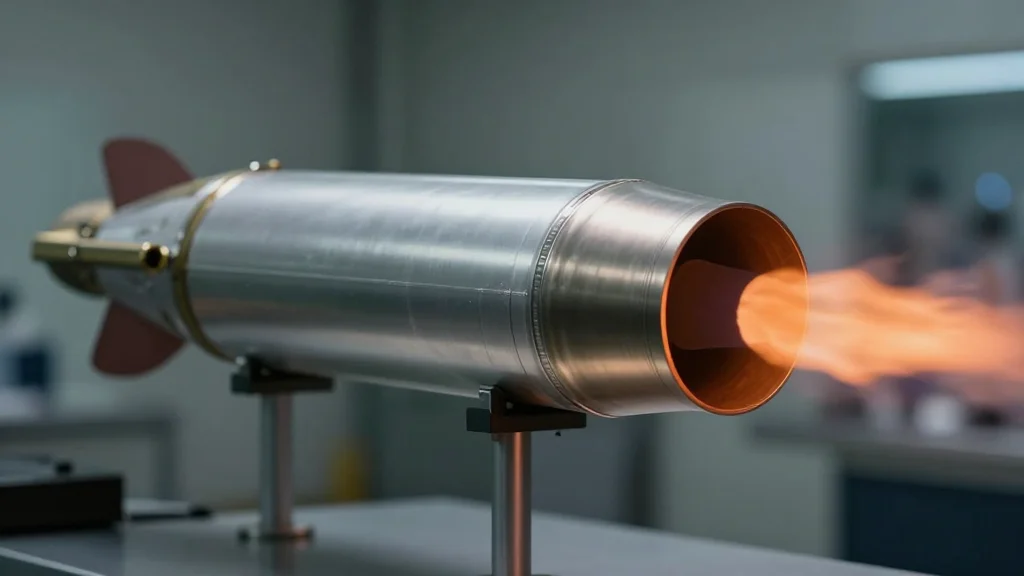
Voyager Wins $16.5 Million DARPA Contract to Give Solid-Fueled Rockets Variable Thrust
Companies Mentioned
Why It Matters
Variable thrust in solid rockets would give the U.S. military unprecedented control over missile performance, reducing costs and increasing strategic flexibility. The breakthrough also opens pathways for commercial applications that demand precise thrust modulation.
Key Takeaways
- •DARPA awarded Voyager $16.5 M for variable‑thrust solid rockets
- •20‑month program targets proof‑of‑concept hot‑fire demonstrations
- •Technology includes real‑time structural health monitoring and control
- •Scalable design aims for rapid adoption across U.S. missile manufacturers
- •Success could enable flexible weapon procurement and larger stockpiles
Pulse Analysis
Solid‑fuel rockets have long been the workhorse of military missiles because of their simplicity and high thrust, but their single‑burst nature limits maneuverability and mission flexibility. Defense agencies have therefore pursued ways to modulate thrust without sacrificing the reliability that solid propellants provide. DARPA’s new contract with Voyager Technologies reflects a strategic shift toward more sophisticated propulsion control, recognizing that variable thrust could improve trajectory shaping, reduce collateral damage, and extend the operational envelope of existing missile families.
Voyager’s approach blends advanced computational modeling, precision manufacturing, and embedded health‑monitoring sensors to create a controllable solid‑propellant motor. By embedding actuators and real‑time diagnostics within the grain structure, the company aims to vary thrust on demand while continuously assessing structural integrity. The 20‑month timeline includes hot‑fire demonstrations that will validate the concept and establish a scalable production line, ensuring that the technology can be transferred quickly to multiple defense contractors.
If the program meets its milestones, the impact on the defense supply chain could be profound. Variable‑thrust solid rockets would allow the Department of Defense to fine‑tune missile performance for diverse targets, potentially reducing the number of distinct missile types needed and simplifying logistics. Moreover, the underlying control and monitoring technologies could spill over into commercial space launch services, where precise thrust modulation is increasingly valuable for payload insertion and reusable vehicle operations. Voyager’s success would thus signal a new era of adaptable propulsion across both military and civilian aerospace sectors.
Voyager wins $16.5 million DARPA contract to give solid-fueled rockets variable thrust
Comments
Want to join the conversation?
Loading comments...