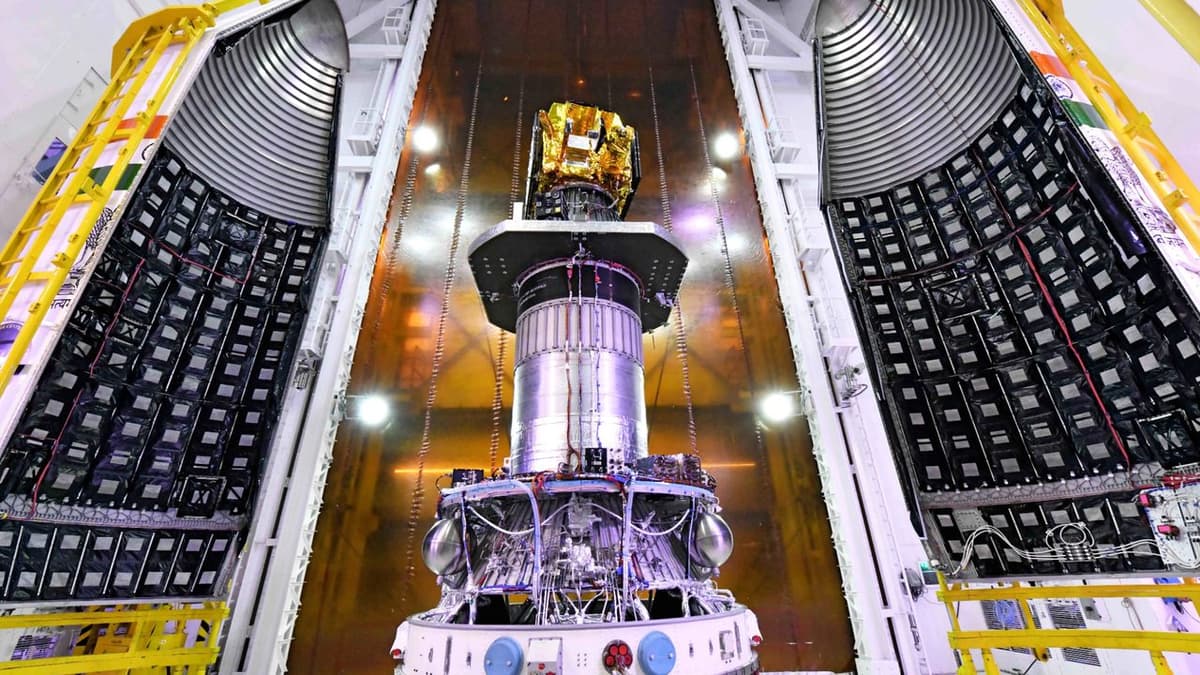
Watch India Launch Advanced Military Satellite on Rocket's 1st Flight Since May 2025 Failure
•January 11, 2026
0
Companies Mentioned

Why It Matters
Restoring PSLV’s flight record bolsters ISRO’s commercial credibility while the EOS‑N1 satellite enhances India’s military surveillance and strategic autonomy.
Key Takeaways
- •PSLV's first launch since May 2025 failure
- •EOS‑N1 hyperspectral satellite targets military intelligence
- •Mission carries 15 international and commercial payloads
- •NewSpace India Limited leads ninth commercial PSLV flight
- •Re‑entry capsule KID will splash down in Pacific
Pulse Analysis
The PSLV’s return to flight is a pivotal moment for the Indian Space Research Organisation. After three out of 63 launches ended in failure, the May 2025 loss of EOS‑09 raised concerns about the vehicle’s reliability and its impact on ISRO’s burgeoning commercial launch market. By successfully lofting a mixed‑use payload, ISRO aims to reaffirm the PSLV’s reputation as a workhorse for both government and private customers, preserving its competitive edge against emerging global launch providers.
At the heart of tonight’s mission is EOS‑N1, also known as Anvesha, a compact hyperspectral imaging satellite designed for military reconnaissance. Unlike traditional optical payloads, hyperspectral sensors capture data across hundreds of wavelengths, enabling detailed material identification and change detection on the ground. This capability promises to sharpen India’s intelligence picture, feeding real‑time data to defense planners and supporting a broader strategy of building an indigenous constellation of spy satellites that can operate independently of foreign assets.
Beyond the primary military payload, the launch showcases a growing ecosystem of international collaboration and NewSpace innovation. A Thai‑U.K. Earth‑observation satellite, a Brazilian vessel‑assistance platform, an Indian in‑orbit refueling demonstration, and Spain’s KID re‑entry capsule illustrate the PSLV’s versatility as a launch platform for diverse missions. The inclusion of commercial and experimental payloads underscores NewSpace India Limited’s role in attracting global customers, while the re‑entry test advances debris‑mitigation and recovery technologies that could open new markets for reusable space hardware.
Watch India launch advanced military satellite on rocket's 1st flight since May 2025 failure
0
Comments
Want to join the conversation?
Loading comments...