Spacetech News and Headlines
  • All Technology
  • AI
  • Autonomy
  • B2B Growth
  • Big Data
  • BioTech
  • ClimateTech
  • Consumer Tech
  • Crypto
  • Cybersecurity
  • DevOps
  • Digital Marketing
  • Ecommerce
  • EdTech
  • Enterprise
  • FinTech
  • GovTech
  • Hardware
  • HealthTech
  • HRTech
  • LegalTech
  • Nanotech
  • PropTech
  • Quantum
  • Robotics
  • SaaS
  • SpaceTech
AllNewsDealsSocialBlogsVideosPodcastsDigests
NewsDealsSocialBlogsVideosPodcasts
SpacetechNewsWatch Vulcan Centaur Rocket Launch 'Neighborhood Watch' Satellites for the US Military Early on Feb. 12
Watch Vulcan Centaur Rocket Launch 'Neighborhood Watch' Satellites for the US Military Early on Feb. 12
DefenseSpaceTechAerospace

Watch Vulcan Centaur Rocket Launch 'Neighborhood Watch' Satellites for the US Military Early on Feb. 12

•February 11, 2026
0
Space.com – Military Space
Space.com – Military Space•Feb 11, 2026

Companies Mentioned

United Launch Alliance

United Launch Alliance

Northrop Grumman

Northrop Grumman

NOC

SpaceX

SpaceX

Astrobotic

Astrobotic

Why It Matters

The mission strengthens U.S. space‑situational awareness, reducing collision risk in GEO and enhancing national security. It also diversifies the launch market, giving the Space Force an alternative to SpaceX for critical missions.

Key Takeaways

  • •Vulcan Centaur lifts off Feb 12 from Cape Canaveral
  • •Carries two GSSAP “neighborhood watch” satellites for GEO monitoring
  • •Fourth flight, VC4S variant supporting up to six SRBs
  • •Boosts US Space Force’s surveillance and collision‑avoidance in GEO
  • •Raises certified national‑security launch providers to two, alongside SpaceX

Pulse Analysis

United Launch Alliance’s Vulcan Centaur is emerging as the United States’ newest heavy‑lift workhorse, designed to replace the legacy Atlas V. After a successful debut in early 2024 and subsequent certification for national‑security launches, the VC4S configuration—featuring up to six solid rocket boosters—offers the thrust needed for high‑energy missions to geostationary orbit. The Feb 12 launch marks the rocket’s fourth flight and demonstrates ULA’s commitment to reliability, a critical factor for defense customers wary of single‑provider dependence.

The primary payload, two GSSAP satellites, extends the Space Force’s Space Surveillance Network into the geostationary belt, a region increasingly congested with commercial and governmental assets. By continuously tracking objects at 35,786 km, the GSSAP constellation provides real‑time positional data that underpins collision‑avoidance algorithms and early‑warning alerts. This capability not only safeguards U.S. and allied satellites but also contributes to broader space‑traffic management efforts, a growing priority as low‑Earth and GEO traffic intensifies.

From a market perspective, Vulcan’s certification adds a strategic competitor to SpaceX’s Falcon 9 and Falcon Heavy for classified payloads. The diversification reduces launch bottlenecks and strengthens the United States’ launch infrastructure resilience. With more than two dozen national‑security missions already slated, Vulcan is poised to become a backbone of America’s defense space architecture, supporting future sensor upgrades, on‑orbit servicing experiments, and potentially deep‑space defense initiatives.

Watch Vulcan Centaur rocket launch 'neighborhood watch' satellites for the US military early on Feb. 12

By Mike Wall · published 4 hours ago

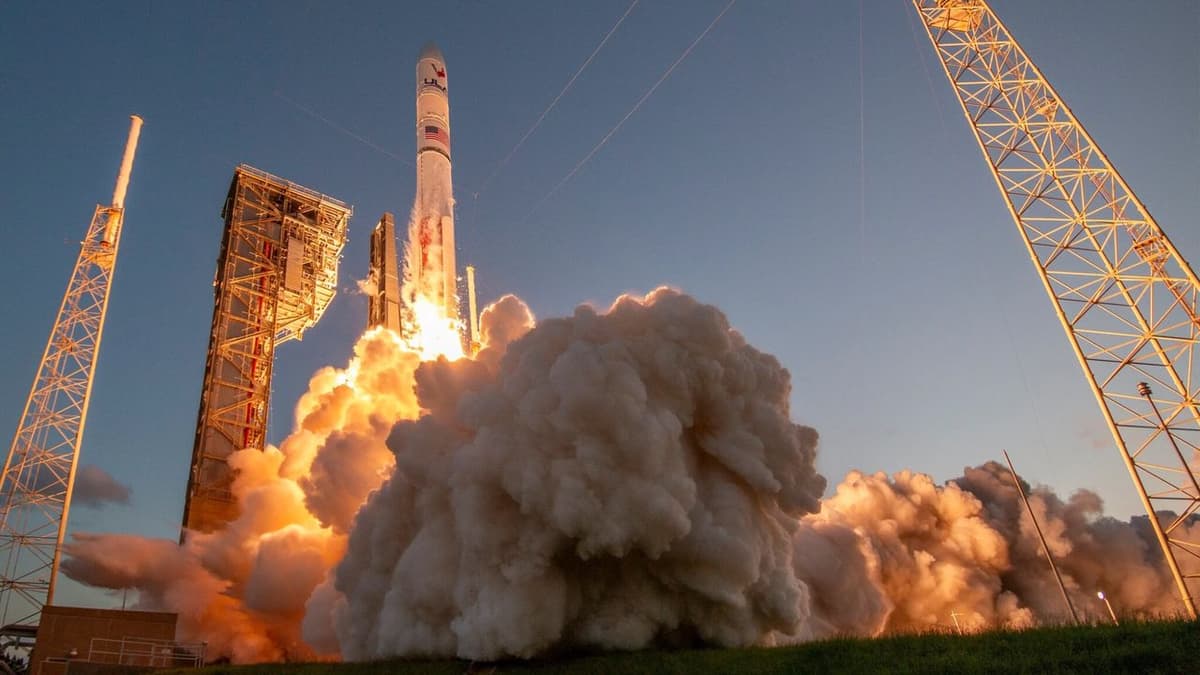
A Vulcan Centaur rocket will launch a pair of space‑surveillance satellites for the U.S. military early Thursday morning (Feb. 12), and you can watch the action live.

The Vulcan Centaur is scheduled to lift off Thursday from Cape Canaveral Space Force Station in Florida during a two‑hour window that opens at 3:30 a.m. EST (08:30 GMT), kicking off the USSF‑87 mission for the U.S. Space Force (USSF). Coverage begins about 20 minutes before launch and can be viewed on Space.com or directly via United Launch Alliance’s YouTube stream.

ULA’s second Vulcan Centaur rocket lifts off from Florida’s Cape Canaveral Space Force Station on Oct. 4, 2024. (Image credit: ULA)

USSF‑87’s primary payloads are two satellites for the Geosynchronous Space Situational Awareness Program (GSSAP), a U.S. reconnaissance system. Six GSSAP spacecraft have reached orbit to date—two each on launches in July 2014, August 2016 and January 2022. Built by Northrop Grumman, these satellites operate high above Earth, monitoring activities in geostationary orbit (GEO).

GEO lies 22,236 miles (35,785 km) above Earth. At that altitude, orbital speed matches the planet’s rotation, allowing satellites to “hover” over a fixed region. This makes GEO a popular location for weather, reconnaissance and communications satellites.

“The GSSAP spacecraft operate as a high‑performance, dedicated Space Surveillance Network sensor,” Space Force officials said in an emailed statement about the USSF‑87 mission on Monday (Feb. 10). “They provide ‘neighborhood watch’ services in the geostationary Earth arena, improving flight safety for all spacefaring nations operating in that orbit.”

Better information about the position and activities of satellites “within the increasingly crowded GEO drastically speeds USSF space operators’ ability to warn others if another object is anticipated to approach too closely or creates a hazardous situation,” the statement added. “Data from the GSSAP will uniquely contribute to timely and accurate orbital predictions, enhancing our knowledge of the GEO environment and further enabling spaceflight safety, including satellite collision avoidance.”

In addition to the GSSAP payloads, USSF‑87 will carry research and development experiments that will aid the precision of orbital maneuvers and improve the resilience of U.S. assets in GEO.

USSF‑87 will be the fourth mission for the 202‑foot‑tall (61‑meter) Vulcan Centaur, ULA’s replacement for its workhorse Atlas V rocket.

Vulcan debuted in January 2024, sending Astrobotic’s Peregrine lunar lander aloft. Although the launch succeeded, Peregrine suffered an anomaly shortly after deployment and later crashed back to Earth. The vehicle flew again in October 2024 and August 2025; the latter launch was its first national‑security mission, delivering an experimental navigation satellite to GEO for the Space Force.

The August 2025 mission used the most powerful version of the Vulcan Centaur to date—a configuration with four solid rocket boosters (SRBs) attached to the core stage. USSF‑87 will use the same variant, known as the VC4S, which can accommodate up to six SRBs.

After overcoming the earlier anomaly, ULA declared the flight a success and the U.S. Space Force certified Vulcan Centaur for national‑security launches. This certification brings the number of launch providers cleared for military and spy satellites to two, the other being SpaceX.

Vulcan Centaur has already been tapped for more than two dozen national‑security missions on behalf of the U.S. Space Force. The rocket can launch from both Cape Canaveral and Vandenberg Space Force Base in California.


Mike Wall

Senior Space Writer

Michael Wall is a Senior Space Writer with Space.com and joined the team in 2010. He primarily covers exoplanets, spaceflight and military space, but also writes about space art. His book about the search for alien life, Out There, was published on Nov. 13, 2018. Before becoming a science writer, Michael worked as a herpetologist and wildlife biologist. He holds a Ph.D. in evolutionary biology from the University of Sydney, a bachelor’s degree from the University of Arizona, and a graduate certificate in science writing from the University of California, Santa Cruz.

Read Original Article
0

Comments

Want to join the conversation?

Loading comments...