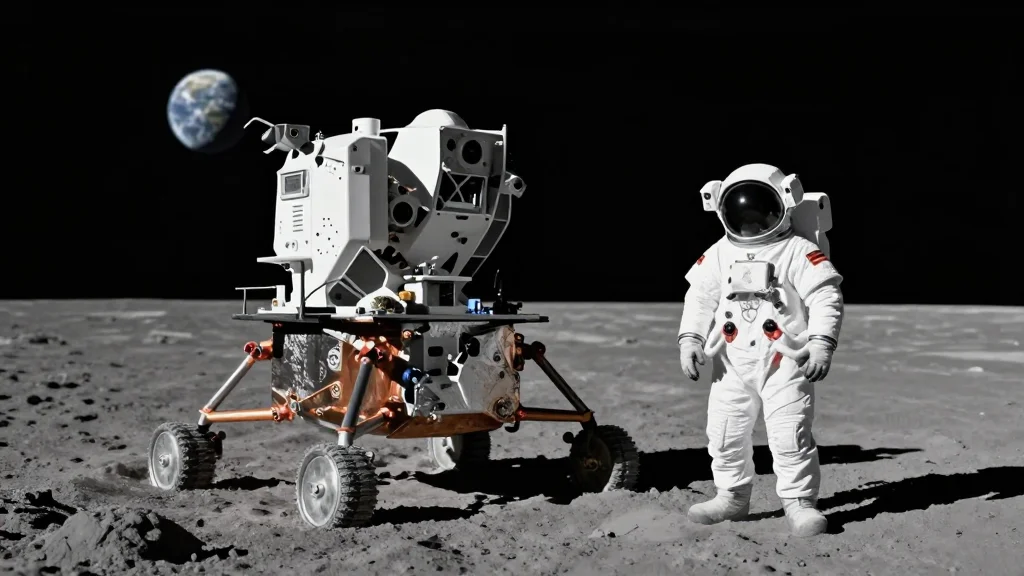
“We Will Spare No Effort”– China Blueprints Integration Plan for Human Moon Landing by 2030
Why It Matters
The initiative fast‑tracks China’s bid for a crewed Moon landing, reshaping international competition and spurring advanced technology investment.
Key Takeaways
- •Integrated program unites Chang'e probes and manned missions
- •Goal: first Chinese crewed Moon landing by 2030
- •Coordination spans missions, resources, and personnel
- •Announcement coincides with NASA's Moon base roadmap
Pulse Analysis
China’s decision to fuse its Chang'e robotic series with the Shenzhou crewed program marks a strategic shift toward a more cohesive lunar agenda. Over the past two decades, the Chang'e missions have demonstrated precise orbital insertion, soft‑landing, and sample‑return capabilities, while the China Manned Space Agency has mastered long‑duration orbital flights and space‑station construction. By consolidating command structures and budgeting, the new Lunar Exploration Program aims to eliminate duplication, accelerate technology transfer, and create a unified roadmap that culminates in a crewed touchdown by 2030.
The integration promises tangible technical benefits. Shared propulsion research, combined navigation assets, and joint training pipelines can reduce development cycles for critical systems such as lunar ascent modules and surface habitats. Moreover, pooling resources enables China to leverage its existing Long March launch fleet for both robotic precursors and crewed missions, potentially cutting launch costs by an estimated 15‑20 percent. Compared with NASA’s Artemis schedule, which targets a sustainable presence by the mid‑2020s, China’s 2030 timeline reflects a more aggressive push to achieve a first crewed landing before the United States establishes a permanent base, intensifying the geopolitical space race.
Beyond national prestige, the program could reshape the commercial lunar market. A coordinated Chinese presence may attract domestic and international partners seeking payload opportunities, lunar resource extraction contracts, and technology licensing. This could stimulate a new wave of private investment in lunar landers, rovers, and in‑situ resource utilization, echoing the commercial boom seen in low‑Earth orbit. As China’s integrated approach matures, it will likely influence policy discussions in Washington and Beijing, prompting both superpowers to reassess collaboration versus competition in the next frontier of space exploration.
“We Will Spare No Effort”– China Blueprints Integration Plan for Human Moon Landing by 2030
Comments
Want to join the conversation?
Loading comments...