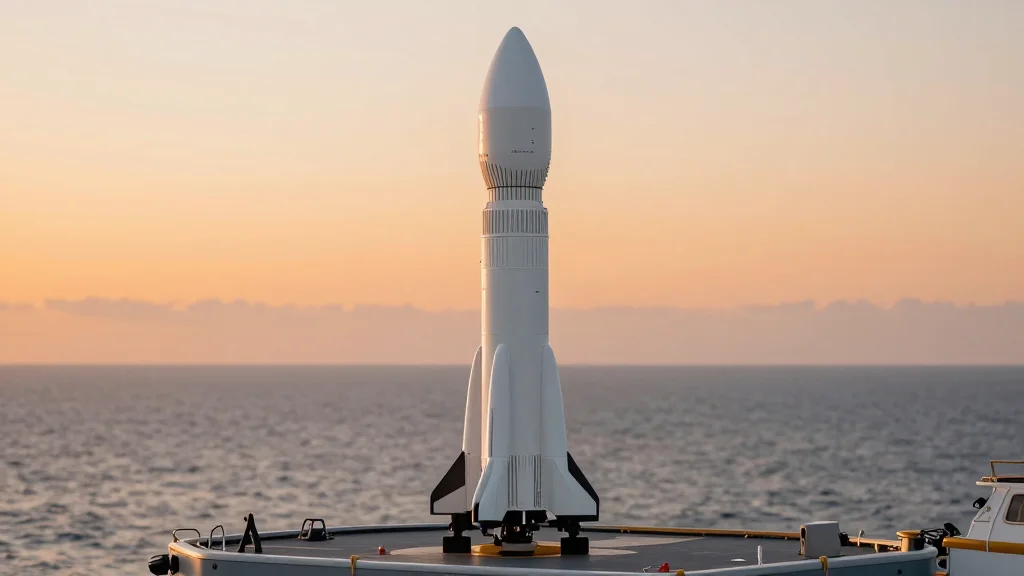
West Coast SpaceX Falcon 9 Mission Launches 25 Starlink Satellites
Why It Matters
The launch underscores SpaceX’s unmatched rocket reuse rate while expanding its next‑generation broadband constellation, tightening its lead in global satellite internet services.
Key Takeaways
- •Falcon 9 launched 25 Starlink V2 Mini satellites from Vandenberg.
- •Mission marked SpaceX’s 46th Falcon 9 launch in 2026.
- •First-stage booster B1082 completed its 21st flight, a reuse record.
- •Booster landed on “Of Course I Still Love You” after eight minutes.
- •Satellites deployed into 258×246 km orbit with 97° inclination.
Pulse Analysis
SpaceX’s West Coast launch cadence continues to accelerate, with the Vandenberg facility becoming a hub for high‑inclination missions that serve polar and mid‑latitude markets. Reusing booster B1082 for a 21st flight showcases the company’s cost‑efficiency model, reducing launch expenses and turnaround times. This operational tempo not only fuels SpaceX’s revenue stream but also pressures competitors to adopt similar refurbishment strategies to stay viable in a market increasingly driven by launch frequency.
The 25 Starlink V2 Mini satellites represent the next evolutionary step in SpaceX’s broadband network. Designed for lower‑cost production and higher throughput, the V2 Mini units operate in a low Earth orbit that balances latency and coverage, targeting underserved regions across the globe. By inserting them into a 258 × 246 km orbit with a 97‑degree inclination, SpaceX enhances its ability to deliver high‑speed internet to remote and high‑latitude locations, reinforcing its value proposition to both consumers and enterprise customers seeking reliable connectivity.
Industry analysts view this launch as a bellwether for the satellite‑internet sector. The combination of rapid reusability, aggressive deployment schedules, and expanding constellation capacity pressures rivals such as OneWeb and Amazon’s Project Kuiper to accelerate their own build‑outs. Regulatory bodies are also scrutinizing orbital congestion and spectrum allocation, making SpaceX’s efficient launch cadence a strategic advantage. As the constellation grows, the company’s market share in global broadband is poised to expand, influencing everything from rural education initiatives to maritime communications.
West Coast SpaceX Falcon 9 mission launches 25 Starlink satellites
Comments
Want to join the conversation?
Loading comments...