What Are 'Dark' Stars? Scientists Think They Could Explain 3 Big Mysteries in the Universe
•January 15, 2026
0
Companies Mentioned

Elsevier
Why It Matters
If validated, dark stars provide a unified explanation for early‑universe anomalies, reshaping models of cosmic structure formation and dark‑matter physics.
Key Takeaways
- •Dark stars powered by dark‑matter annihilation, not fusion
- •They could seed early supermassive black holes
- •May appear as compact “blue‑monster” galaxies
- •Remnants might explain “little red dots” observations
- •JWST data provides indirect hints supporting hypothesis
Pulse Analysis
The concept of dark stars emerged from theoretical work suggesting that dense pockets of dark‑matter could fuel stellar‑like objects through particle annihilation. Unlike conventional stars that rely on nuclear fusion, these objects would shine intensely while converting dark‑matter mass into energy, allowing them to grow far larger before collapsing. This framework offers a novel pathway for the rapid emergence of massive black‑hole seeds, sidestepping the time‑consuming accretion processes required in standard models.
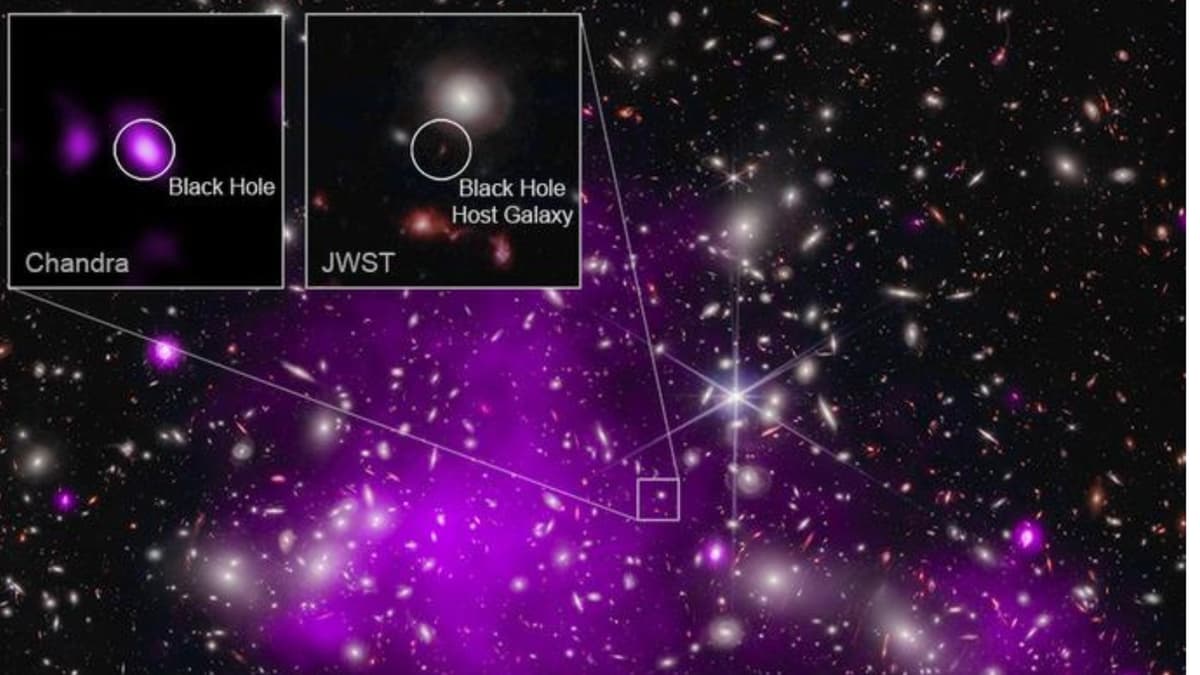
James Webb Space Telescope observations have uncovered three seemingly unrelated early‑universe phenomena: an overabundance of supermassive black holes, ultra‑compact "blue‑monster" galaxies, and the enigmatic "little red dots" that vanish after two billion years. Dark‑star theory links them by proposing that the luminous phase of a dark star mimics a compact galaxy, while its eventual collapse leaves behind a massive black hole surrounded by residual stellar material that dims ultraviolet output and blocks X‑rays. This unified explanation aligns with the spectral and morphological signatures recorded by JWST, offering a coherent narrative where a single class of objects accounts for multiple anomalies.
Despite its appeal, dark star theory remains speculative, with no direct detection to date. Ongoing surveys and deeper JWST spectroscopic campaigns aim to identify characteristic annihilation signatures or remnants consistent with the model. Confirmation would have profound implications for cosmology, potentially revealing dark‑matter properties and revising timelines for galaxy and black‑hole formation. Researchers therefore prioritize high‑resolution imaging and multi‑wavelength studies to either substantiate or refute this bold hypothesis.
What are 'dark' stars? Scientists think they could explain 3 big mysteries in the universe
0
Comments
Want to join the conversation?
Loading comments...