What Is Space-Track, and Why Is It Important?
•March 10, 2026
0
Why It Matters
Space‑Track provides the only free, authoritative baseline of ~47,000 tracked objects, underpinning collision avoidance and launch safety for the growing commercial sector. Its continuity ensures operational stability while the industry transitions to a more open, civil‑focused safety architecture.
Key Takeaways
- •Provides TLE and OMM orbital data via API.
- •Supports conjunction assessment and launch safety workflows.
- •Tied to U.S. Space Force tracking infrastructure.
- •Transitioning services to the civil‑run TraCSS system.
- •Access requires approved user accounts, not anonymous.
Pulse Analysis
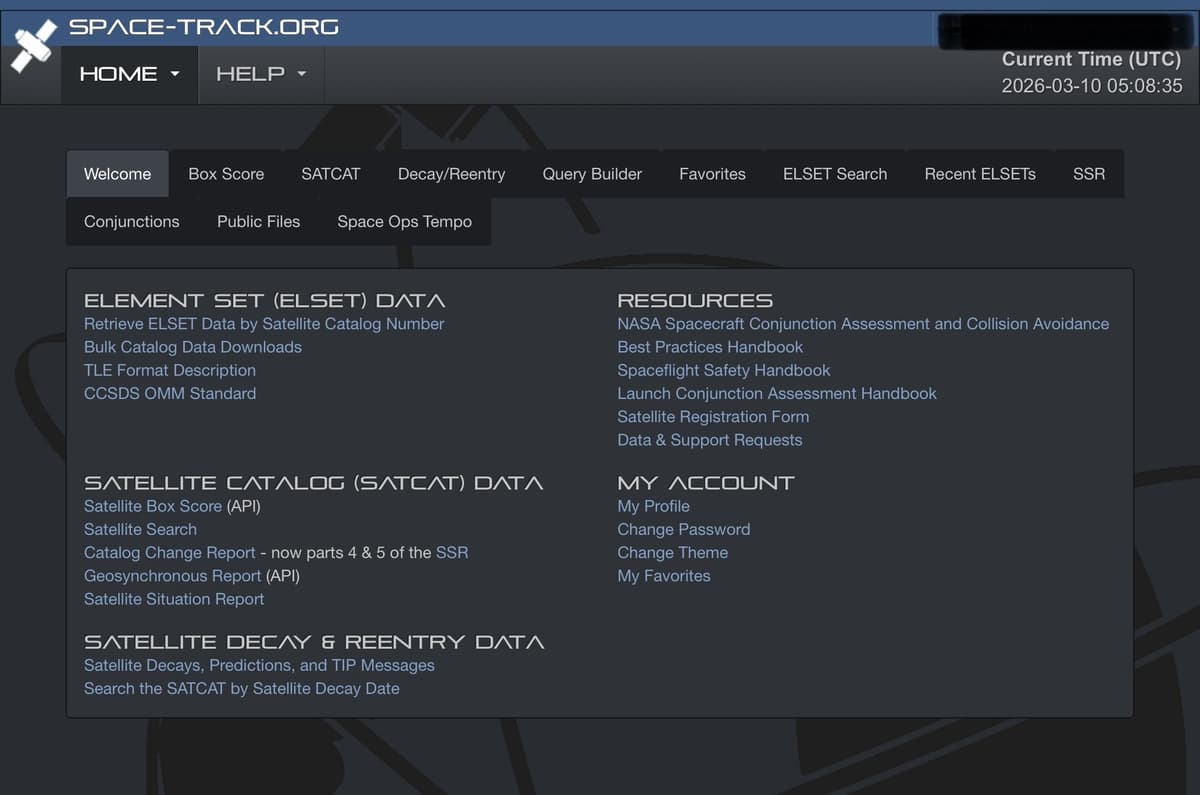
The value of Space‑Track lies in its role as infrastructure rather than a public‑facing showcase. By exposing the same data that powers classified military systems—satellite identifiers, orbital elements, and decay forecasts—it gives commercial operators a reliable baseline for maneuver planning and debris monitoring. The platform’s API, delivering JSON, XML, and CSV formats, allows developers to embed real‑time data into dashboards, automated collision‑avoidance scripts, and research pipelines, turning raw catalog information into actionable safety insights.
As low‑Earth‑orbit becomes increasingly congested, the need for a shared situational awareness layer has grown from a niche requirement to a market imperative. Space‑Track’s conjunction support, historically linked to U.S. Space Command, offers operators early warnings of close approaches, reducing the risk of costly collisions. This service has been a cornerstone for launch providers and satellite constellations, enabling them to meet regulatory safety standards without building parallel tracking capabilities. The platform’s controlled‑access model balances openness with the security constraints of a system that still serves national‑defense interests.
The ongoing migration to the Traffic Coordination System for Space (TraCSS) marks a strategic shift toward a civilian‑led safety ecosystem. While TraCSS will eventually host the primary public safety interface, Space‑Track remains the operational bridge, hosting beta data feeds and preserving user workflows during the transition. This dual‑track approach mitigates disruption for the thousands of users who have built processes around Space‑Track’s APIs and data schemas. In the short term, the portal continues to be indispensable, but its evolution signals a broader industry move toward more transparent, commercially accessible space‑traffic management solutions.
What Is Space-Track, and Why Is It Important?
0
Comments
Want to join the conversation?
Loading comments...