Companies Mentioned
Why It Matters
Understanding the belts is essential for reliable satellite operations and safe crewed missions, as radiation risk drives design, cost, and mission‑planning decisions across the space industry.
Key Takeaways
- •Inner belt traps high‑energy protons; outer belt contains energetic electrons
- •South Atlantic Anomaly brings inner‑belt particles closer to Earth’s surface
- •Van Allen Probes showed belts can reorganize within hours
- •Artemis I data proved spacecraft orientation affects radiation dose
Pulse Analysis
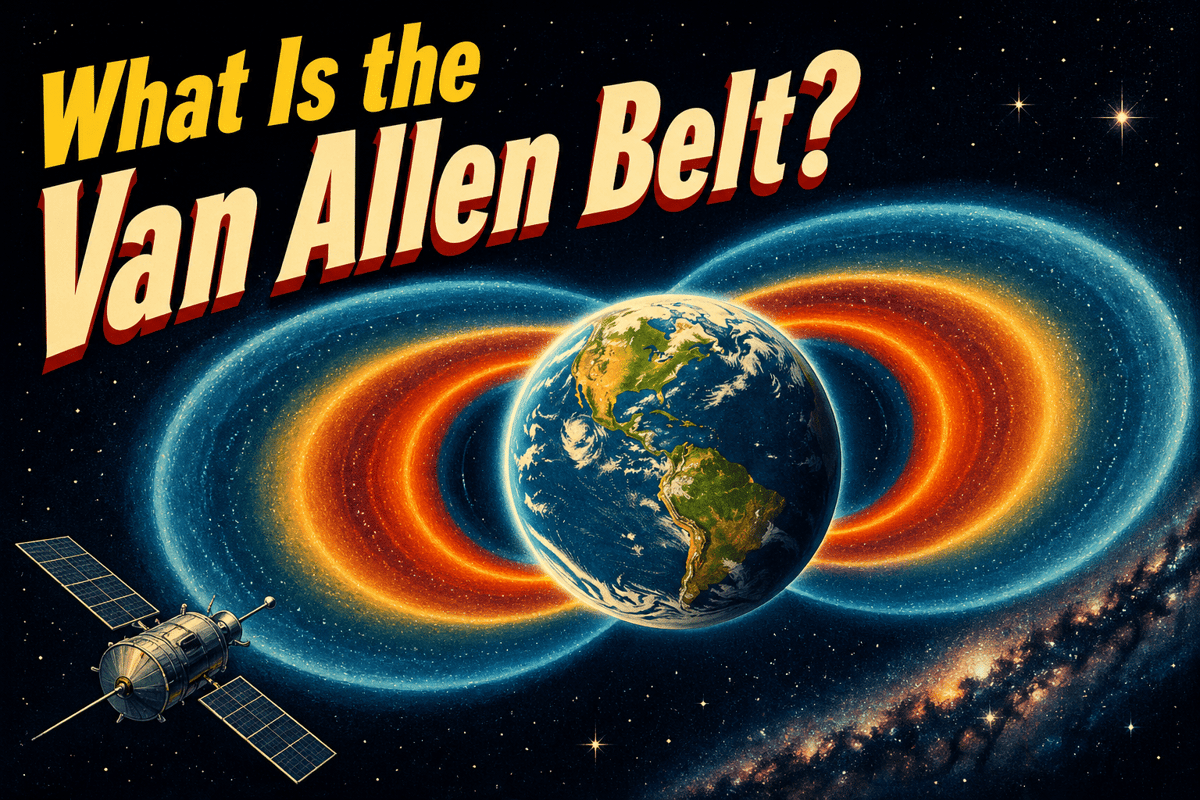
The Van Allen radiation belts are a cornerstone of magnetospheric science, illustrating how Earth’s magnetic field captures charged particles from the solar wind and cosmic rays. Their discovery on Explorer 1 marked the first direct measurement of near‑Earth space, launching a new discipline that links plasma physics, space weather, and planetary magnetism. By mapping the inner proton‑rich zone and the more volatile outer electron belt, researchers have built predictive models that inform everything from auroral forecasts to deep‑space navigation.
For spacecraft engineers, the belts represent a hostile environment that can cause single‑event upsets, cumulative material degradation, and spacecraft charging. Designers mitigate these risks through radiation‑hardened components, strategic shielding, and careful orbit selection—especially for satellites operating in medium‑Earth orbit or highly elliptical trajectories that intersect the outer belt. Artemis I’s Orion capsule demonstrated that even crewed vehicles can reduce dose by orienting sensitive areas away from peak fluxes, underscoring the operational value of real‑time radiation monitoring.
Beyond Earth, comparable radiation zones encircle magnetized planets such as Jupiter and Saturn, offering natural laboratories to test universal plasma processes. Insights gained from Earth’s belts feed into broader space‑weather forecasting, helping operators anticipate solar‑storm‑driven enhancements that can jeopardize communications, navigation, and power‑grid stability. As commercial constellations expand and lunar‑return ambitions grow, robust belt models will be pivotal for cost‑effective design, insurance underwriting, and the safe extension of human presence deeper into the solar system.
What Is the Van Allen Belt?
Comments
Want to join the conversation?
Loading comments...