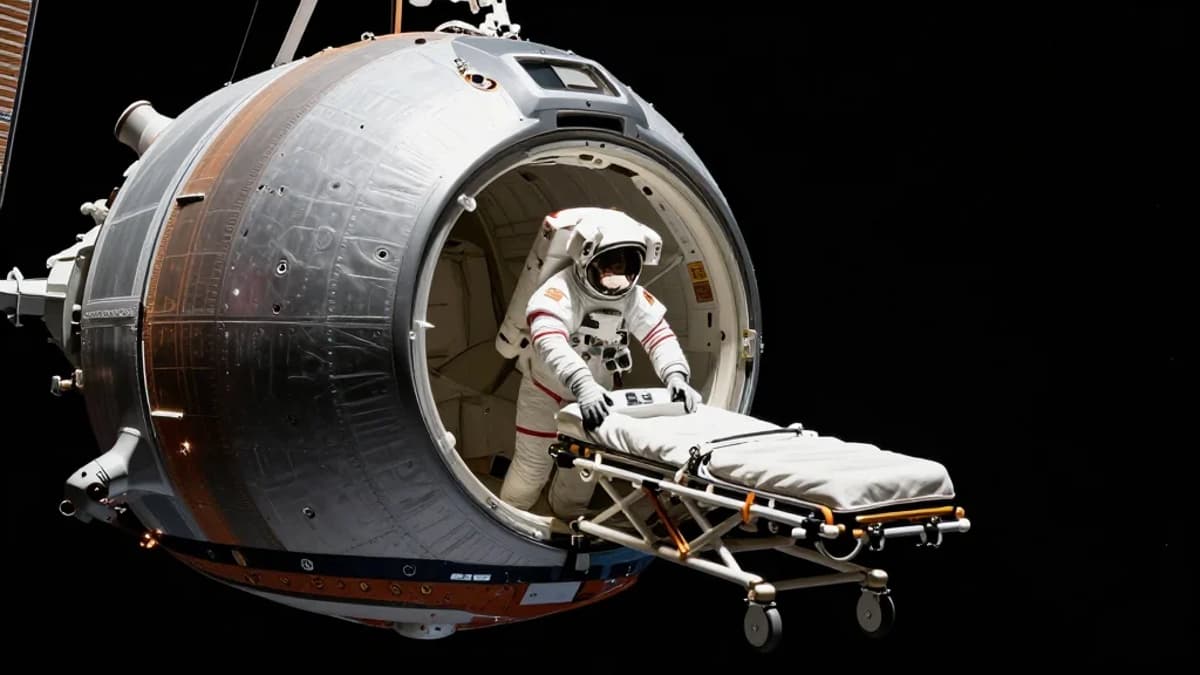
What the First Medical Evacuation From the International Space Station Tells Us About Health Care in Space
•January 19, 2026
0
Companies Mentioned

Why It Matters
The event proves that robust space‑medicine protocols are essential for crew safety and will be a prerequisite for future deep‑space and commercial missions.
Key Takeaways
- •First ISS medical evacuation in 25 years, using SpaceX Dragon.
- •Skin irritation rates 25x higher in microgravity than on Earth.
- •Exercise countermeasures cause most in‑flight injuries on ISS.
- •SANS affects up to 70% of long‑duration astronauts.
- •Future missions need Earth‑independent, AI‑assisted medical operations.
Pulse Analysis
The unprecedented evacuation of a Crew‑11 astronaut marks a watershed moment for orbital health management. While NASA has long relied on pre‑flight screening, onboard medical officers, and real‑time teleconsultations, the decision to return a crew member early signals that even with extensive preventive measures, unforeseen conditions can arise that exceed the capacity of current in‑flight care. This incident also validates the effectiveness of the ISS’s integrated medical infrastructure, which has kept serious incidents rare despite the harsh environment of microgravity.
Spaceflight health challenges remain distinct from terrestrial medicine. Dermatological problems occur at rates 25 times higher than on Earth, driven by the station’s low‑humidity atmosphere and limited hygiene supplies. Fluid redistribution causes chronic congestion, headaches, and sleep disturbances, while the rigorous two‑hour daily exercise regimen—essential for preserving bone density—has become the leading source of injuries, accounting for most musculoskeletal incidents. Additionally, Spaceflight‑Associated Neuro‑ocular Syndrome (SANS) now affects up to 70% of long‑duration crews, threatening visual acuity and mission performance. These data points underscore the delicate balance between countermeasure benefits and their side‑effects.
Looking ahead, the evacuation underscores the urgency of developing Earth‑independent medical operations for lunar and Martian expeditions. Researchers are exploring AI‑driven diagnostic tools, portable imaging, and autonomous drug synthesis to empower crew medical officers when communication delays make Earth support impractical. Partnerships among NASA, ESA, private firms, and academic labs are accelerating prototypes that could sustain health care beyond low‑Earth orbit. As commercial spaceflight expands, the industry will need standardized, scalable health protocols to protect both professional astronauts and private tourists, making space medicine a critical frontier for the next decade.
What the first medical evacuation from the International Space Station tells us about health care in space
0
Comments
Want to join the conversation?
Loading comments...