What's the Point of a Space Station Around the Moon?
•February 21, 2026
0
Companies Mentioned

Why It Matters
Gateway’s fate determines whether the United States retains strategic leverage and collaborative credibility in the emerging lunar economy, influencing future international space partnerships and technology development pathways.
Key Takeaways
- •Gateway costs rising, but hardware already delivered.
- •Multinational partners include ESA, CSA, JAXA, UAE.
- •Cancellation could weaken U.S. influence in lunar cooperation.
- •Gateway serves as testbed for deep‑space tech.
- •Critics argue Artemis can proceed without Gateway.
Pulse Analysis
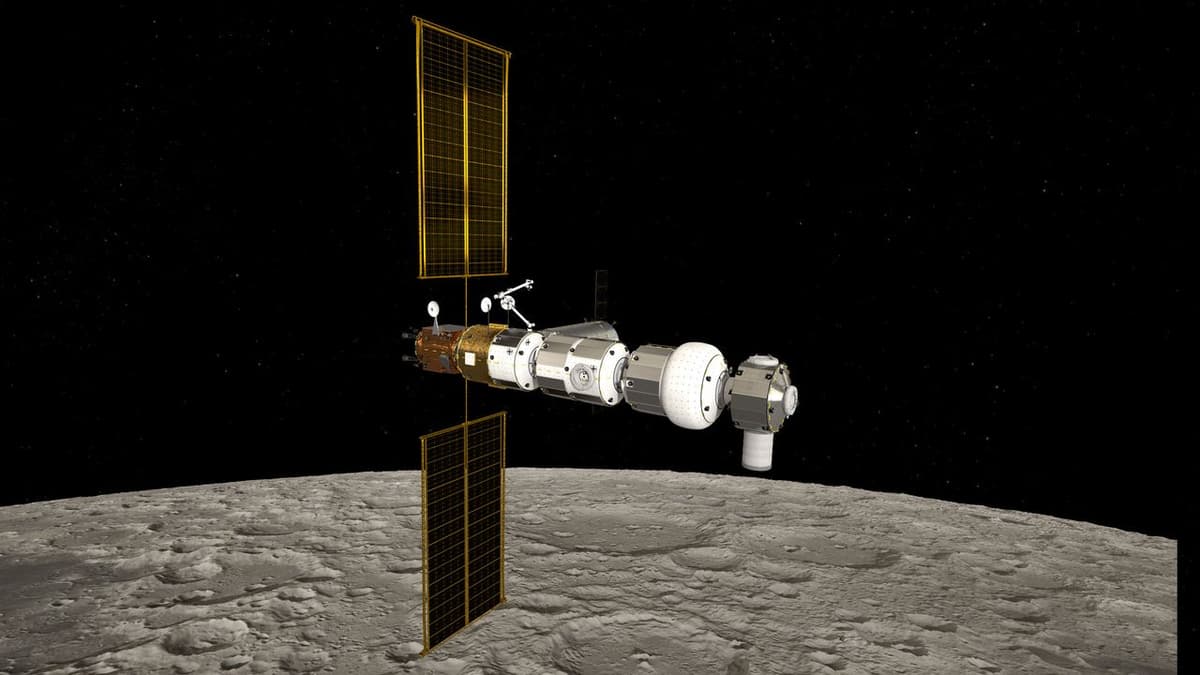
The Artemis program’s ambition to establish a sustainable lunar presence hinges on the Lunar Gateway, a modular outpost orbiting the Moon that will host crew transfers, scientific payloads, and critical life‑support testing. By providing a deep‑space laboratory, the Gateway enables technologies such as high‑efficiency propulsion, autonomous docking, and radiation shielding to mature before they are deployed on Mars missions, creating a stepping‑stone that reduces risk and cost for subsequent exploration phases.
Political scrutiny has intensified as the 2026 NASA budget initially called for the station’s cancellation, citing ballooning expenses and questioning its necessity. Yet the majority of the station’s components—ESA’s International Habitation Module, Canada’s Canadarm3, Japan’s life‑support systems, and the UAE’s airlock—are already fabricated and undergoing integration in the United States. This sunk investment, combined with the desire to share financial burdens across partner nations, makes the decision a balancing act between fiscal prudence and preserving a collaborative foothold in cislunar space.
The broader implications extend beyond hardware. Maintaining the Gateway signals a commitment to multilateral space governance, countering China‑Russia’s International Lunar Research Station and reinforcing U.S. leadership in the emerging lunar economy. Should the project be abandoned, the United States risks eroding trust with allies and forfeiting a platform that could catalyze commercial ventures and scientific breakthroughs. Conversely, a re‑imagined approach—repurposing Gateway modules for surface habitats or integrating them into private lunar infrastructure—could preserve strategic benefits while adapting to budget realities, ensuring the nation remains at the forefront of deep‑space collaboration.
What's the point of a space station around the moon?
0
Comments
Want to join the conversation?
Loading comments...