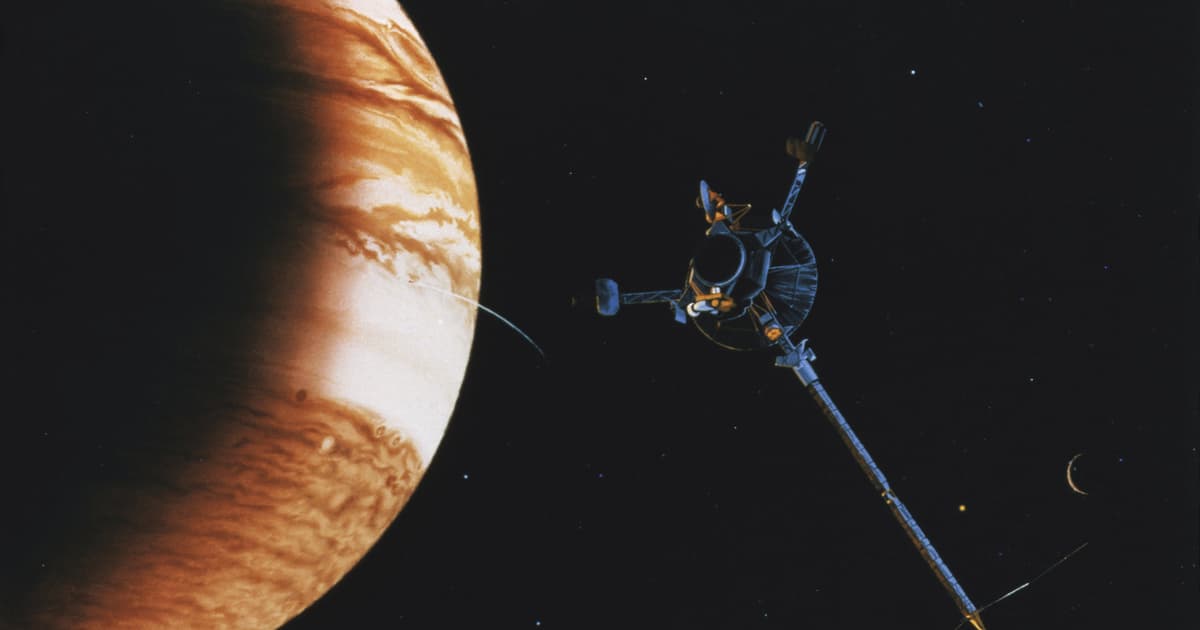
When the Galileo Spacecraft’s Main Antenna Failed to Unfurl on the Way to Jupiter, Engineers Salvaged the Mission by Rewriting Its Software Across Deep Space, Compressing Its Data and Squeezing a Flagship Science Return Through a Low-Gain Antenna Never Meant to Carry It.
Companies Mentioned

NASA
Why It Matters
The rescue demonstrated that system‑wide engineering—software, ground infrastructure, and signal processing—can overcome critical hardware failures, preserving multi‑billion‑dollar space investments and informing future deep‑space mission designs.
Key Takeaways
- •High-gain antenna stuck at 4.8 m, limited to ~10 bps
- •Data compression raised effective rate to usable levels
- •DSN arraying improved signal sensitivity beyond single dish
- •Mission recovered ~70 % of original science goals
Pulse Analysis
When Galileo’s primary antenna failed to deploy, the crisis highlighted a fundamental vulnerability in deep‑space communications: a single point of failure can cripple an entire mission’s science return. The high‑gain dish was designed to transmit up to 134 kbps from Jupiter, but the stuck ribs reduced the link to a mere 10 bps. Engineers quickly realized that fixing the hardware was impossible, so they turned to the software and ground segment, treating the data path as a holistic system rather than a collection of isolated components.
The turnaround hinged on three technical pillars. First, new onboard software compressed images and instrument readings, slashing the bit count without sacrificing essential information. Second, the spacecraft’s tape recorder buffered data, allowing slow, scheduled downlinks during quiet periods. Third, NASA upgraded the Deep Space Network, arraying multiple antennas and enhancing receiver sensitivity, which amplified the faint low‑gain signal. Together, these measures lifted the effective throughput from a trickle to a rate that could support the mission’s core objectives, effectively turning a hardware flaw into a software‑driven success story.
Galileo’s eventual eight‑year tenure around Jupiter delivered high‑resolution observations of the planet’s atmosphere, magnetosphere, and volcanic moon Io, and provided the first strong evidence of a subsurface ocean on Europa. The episode has become a textbook case in mission resilience, influencing later projects such as Juno and the upcoming Europa Clipper, which now embed redundant communication pathways and flexible software architectures from the outset. The lesson is clear: robust, adaptable ground and flight software can safeguard scientific goals even when critical hardware fails.
When the Galileo spacecraft’s main antenna failed to unfurl on the way to Jupiter, engineers salvaged the mission by rewriting its software across deep space, compressing its data and squeezing a flagship science return through a low-gain antenna never meant to carry it.
Comments
Want to join the conversation?
Loading comments...