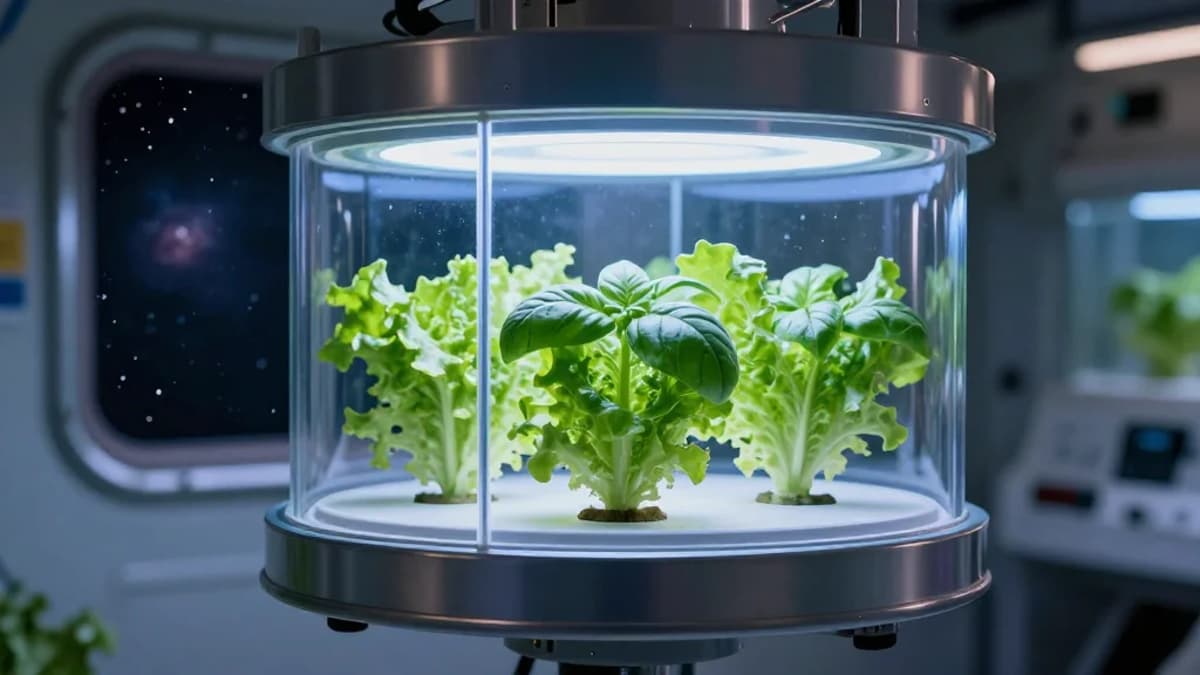
Why Mars Astronauts Need More than Just Space Greenhouses
•February 25, 2026
0
Why It Matters
A holistic, failure‑tolerant food system is essential for crew survival and mission viability on multi‑year Mars voyages, directly impacting human performance and overall program risk.
Key Takeaways
- •Food system requires five integrated components
- •Radiation degrades stored food and microbes
- •Microgravity complicates cooking and fluid handling
- •Digital twins enable modular, failure‑resilient designs
- •NASA’s Deep Space Food Challenge funds integrated solutions
Pulse Analysis
Space agencies have long focused on maximizing crop yields in orbit, but the next frontier—Mars—demands a systems‑level approach. Researchers now view food as a closed‑loop ecosystem where production, waste recycling, post‑harvest handling, preparation, and cultural consumption are interdependent. This perspective mirrors terrestrial sustainable agriculture, yet the stakes are higher: a single breakdown could starve an entire crew. By mapping each element, the paper highlights gaps that traditional greenhouse designs overlook, urging engineers to think beyond plant growth and consider the full nutritional lifecycle.
Radiation exposure, micro‑gravity physics, and psychological well‑being introduce unique hurdles. High‑energy particles can alter food chemistry and mutate microbes, compromising safety over multi‑year storage. In low‑gravity, fluids behave unpredictably, making conventional cooking methods inefficient and potentially hazardous. Moreover, repetitive diets trigger menu fatigue, reducing intake and risking malnutrition. Addressing these issues requires novel packaging, radiation‑hardening techniques, and cooking hardware tailored to altered fluid dynamics, as well as diverse, palatable menus that sustain morale during prolonged isolation.
To mitigate risk, the authors advocate digital twins—virtual replicas that simulate interactions among subsystems, predict failure modes, and test modular replacements before hardware reaches space. Such tools enable rapid iteration and resilience, essential for the high‑cost, low‑margin environment of deep‑space missions. NASA’s Deep Space Food Challenge leverages this concept, offering $750,000 to spur innovative, integrated solutions. The competition’s outcomes could set industry standards, accelerate commercial participation, and ultimately ensure that future Martian explorers have a reliable, nutritious, and psychologically supportive food supply.
Why Mars astronauts need more than just space greenhouses
0
Comments
Want to join the conversation?
Loading comments...