Winning the Red Planet Race: Returning Mars Samples Before China Should Be a Top US Priority, Experts Say
•January 7, 2026
0
Companies Mentioned


Why It Matters
A timely US sample‑return effort safeguards scientific leadership and lowers risk for crewed Mars missions, while also preserving national prestige in the growing US‑China space rivalry.
Key Takeaways
- •MSR cost estimated $11 billion, timeline 2040.
- •China aims to return Mars samples by 2031.
- •US Senate proposes $10 billion Mars race funding.
- •Mars Telecom Orbiter budget set at $700 million.
- •Experts urge rapid US sample return to stay competitive.
Pulse Analysis
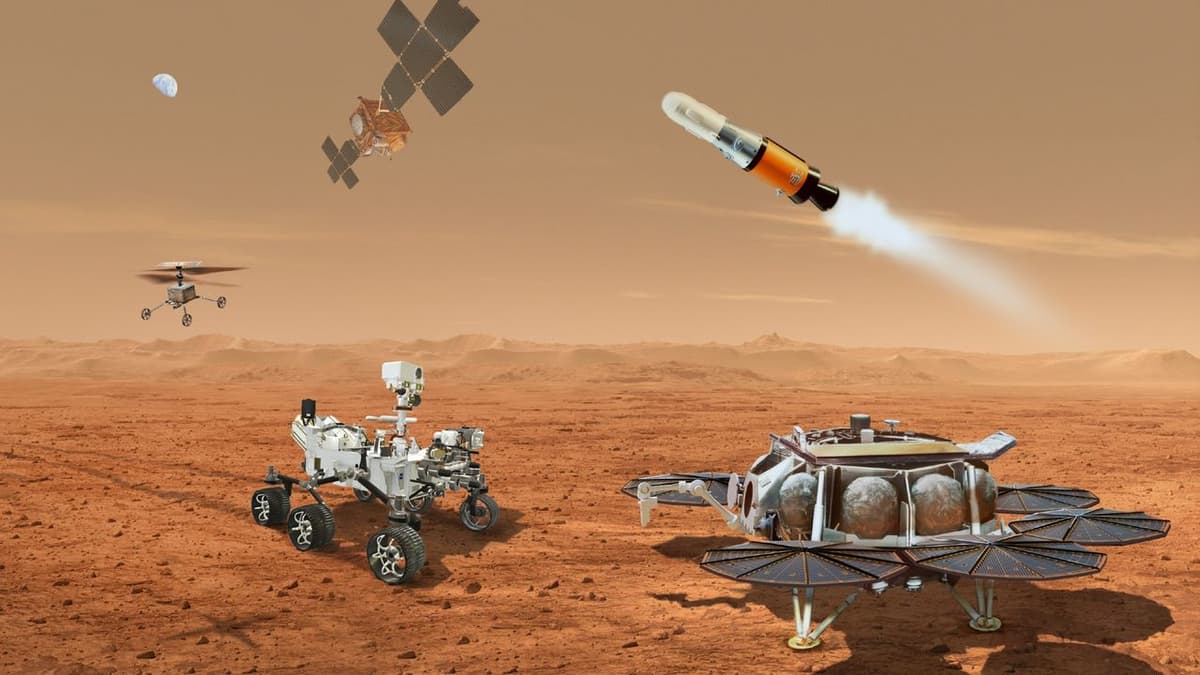
The Mars Sample Return program has become a litmus test for America’s ability to fund and execute complex deep‑space missions. Originally envisioned as a joint NASA‑ESA effort, the project now carries an $11 billion price tag and a 2040 return window, prompting critics in Congress and the White House to question its viability. Recent appropriations legislation reflects a shift toward more aggressive budgeting, earmarking nearly $10 billion for a broader “space race” and allocating $700 million for a dedicated Mars Telecommunications Orbiter that would support both robotic and future crewed missions.
China, meanwhile, is rapidly closing the gap with its Tianwen‑3 campaign, targeting a 2031 sample return of roughly 500 grams. The mission includes a deep‑drill capable of reaching two metres below the surface and a helicopter‑like drone to collect material up to 100 metres from the lander. By focusing on sites with high biosignature potential, China aims to secure headline‑making scientific results that could eclipse the more methodical but slower U.S. approach. The geopolitical stakes are high: the first nation to analyze Martian rocks on Earth will claim a historic scientific and diplomatic advantage.
For NASA, the pressure translates into a strategic imperative to streamline the MSR architecture. Experts such as Stanford’s G. Scott Hubbard and Colorado’s Bruce Jakosky argue that an accelerated robotic return not only delivers critical data on potential past life but also provides a risk‑reduction pathway for human explorers. Integrating sample‑return insights into the design of habitats, life‑support systems, and surface operations could lower astronaut exposure to unknown toxins. As the new administration settles in, the coming months will likely determine whether the United States can re‑energize its Mars program and retain its leadership in planetary science.
Winning the Red Planet race: Returning Mars samples before China should be a top US priority, experts say
0
Comments
Want to join the conversation?
Loading comments...