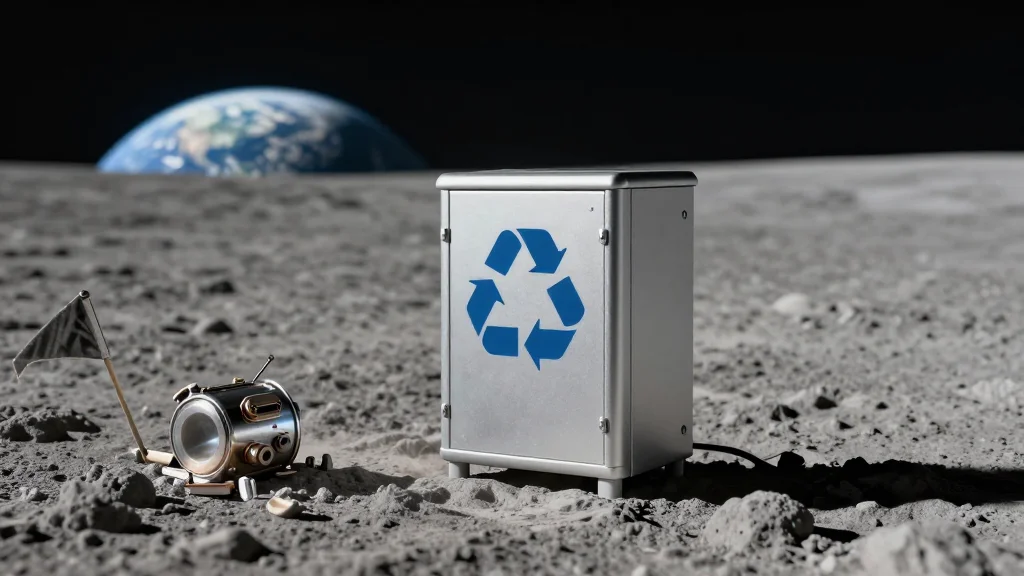
With Renewed Interest in Going to the Moon, How Will Future Trash Be Dealt With?
Why It Matters
Effective lunar waste management will lower mission costs, protect historic sites, and ensure long‑term viability of commercial and scientific operations on the Moon.
Key Takeaways
- •400,000 lb (181 t) of Apollo debris now protected as heritage
- •Artemis Accords emphasize debris mitigation, but surface waste plans remain vague
- •NASA’s LunaRecycle Challenge targets 4,600 lb (2,100 kg) crew waste per year
- •Circular space economy aims to turn trash into water, fuel, habitat parts
Pulse Analysis
The Moon’s surface is a time capsule of humanity’s first steps in space, housing roughly 400,000 lb of equipment, rovers, and even waste bags left by Apollo astronauts. Designated as cultural heritage by the One Small Step to Protect Human Heritage in Space Act, these artifacts are legally protected, limiting any removal or alteration. This preservation stance underscores the tension between honoring historic legacy and addressing the practical challenges of accumulating debris as new missions return to the lunar environment.
International policy frameworks such as the United Nations Committee on the Peaceful Uses of Outer Space, the European Space Agency, and the 55 signatories of the Artemis Accords have placed sustainability at the forefront of future exploration. Their guidelines focus heavily on reducing orbital debris and ensuring end‑of‑mission disposal for spacecraft, yet they stop short of prescribing detailed strategies for managing trash left on the Moon’s surface. The gap leaves agencies like NASA without a clear roadmap for handling the inevitable waste generated by crewed habitats, scientific experiments, and commercial operations.
To bridge this gap, NASA launched the LunaRecycle Challenge, inviting innovators to transform lunar waste into valuable resources such as water, electricity, fertilizer, and construction materials. The initiative estimates a four‑person crew could produce about 4,600 lb of waste annually, highlighting the scale of the problem. By adopting a circular space economy—reusing, repairing, and recycling materials from the outset—future missions can minimize launch mass, cut costs, and reduce environmental impact, setting a precedent for sustainable practices beyond Earth. This shift from a "use‑and‑discard" model to resource recovery is poised to become a cornerstone of long‑term lunar habitation and commercial activity.
With renewed interest in going to the Moon, how will future trash be dealt with?
Comments
Want to join the conversation?
Loading comments...