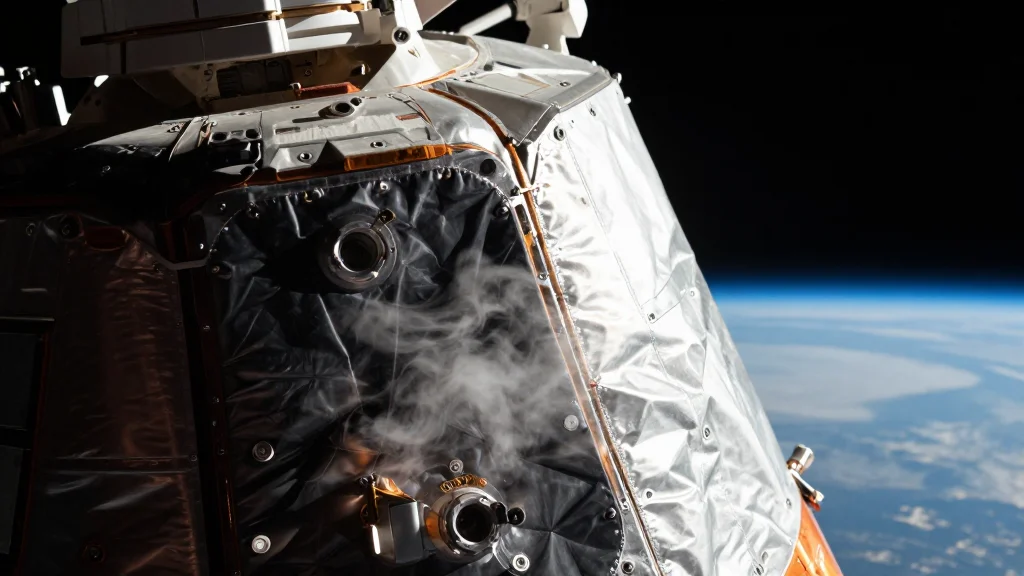
Zvezda Module on ISS Is Leaking Once Again
Why It Matters
A persistent leak threatens the ISS’s operational lifespan and accelerates the push for private commercial stations to replace aging hardware.
Key Takeaways
- •Leak rate ~1 lb/day mirrors 2019 levels, lower than recent years
- •Dockings stress Zvezda’s hull, reopening or creating new cracks
- •NASA and Roscosmos coordinate repressurization, but no permanent fix yet
- •ISS lifespan may shorten, boosting demand for commercial replacements
Pulse Analysis
The Zvezda service module, the Russian‑built backbone of the International Space Station, has once again shown a slow pressure loss of about one pound of air per day. This rate matches the leak observed in 2019 and is roughly one‑third of the higher losses recorded between 2019 and 2024, according to NASA’s Inspector General data. While the leak is modest, it reappears despite recent repairs that targeted stress fractures in the module’s hull, underscoring the difficulty of maintaining a structure that has been in orbit for over two decades.
Technical analysts attribute the recurring breach to the mechanical stresses imposed each time a spacecraft docks with Zvezda. Docking events can exacerbate existing micro‑cracks or generate new ones, especially in a module that has endured numerous thermal cycles and micrometeoroid impacts. NASA’s current mitigation—maintaining a lower pressure in the transfer tunnel and performing small repressurizations—acts as a temporary band‑aid rather than a long‑term solution. The risk of a catastrophic hull failure, while still low, cannot be dismissed, prompting both NASA and Roscosmos to monitor the situation closely and explore more durable repair techniques.
From a business perspective, the leak highlights the growing urgency for the United States to transition away from reliance on aging, internationally‑shared hardware. Private entities such as Axiom Space, Blue Origin’s Orbital Reef, and Sierra Space’s Dream Chaser are advancing commercial station concepts that could assume low‑Earth‑orbit research and manufacturing roles. A reliable, privately‑operated platform would not only mitigate the operational risks posed by Zvezda’s deterioration but also open new revenue streams and strategic autonomy for U.S. space activities. The continued degradation of Zvezda therefore serves as both a technical warning and a catalyst for accelerating commercial station deployment.
Zvezda module on ISS is leaking once again
Comments
Want to join the conversation?
Loading comments...